


The Right Career Path: How to Choose a Successful Future
Choosing the right career path is one of the most important decisions you will ever make. The career you select influences your lifestyle, financial stability, personal satisfaction, and long-term growth opportunities.
Yet millions of students and professionals struggle with career confusion. Some choose careers under family pressure, while others follow trends without understanding whether those paths align with their interests and strengths.
The good news is that career selection does not have to be a guessing game.
With the right approach, self-assessment, research, planning, and skill development, you can build a successful and fulfilling future.
If you are currently exploring your options, the educational guidance resources available through Vidya Udbhav can help you better understand various academic and professional pathways.
Quick Answer: How Do You Choose the Right Career Path?
The right career path is chosen by:
- Identifying your interests and strengths
- Understanding your personality and skills
- Researching career opportunities
- Evaluating future job demand
- Gaining practical experience
- Seeking expert guidance
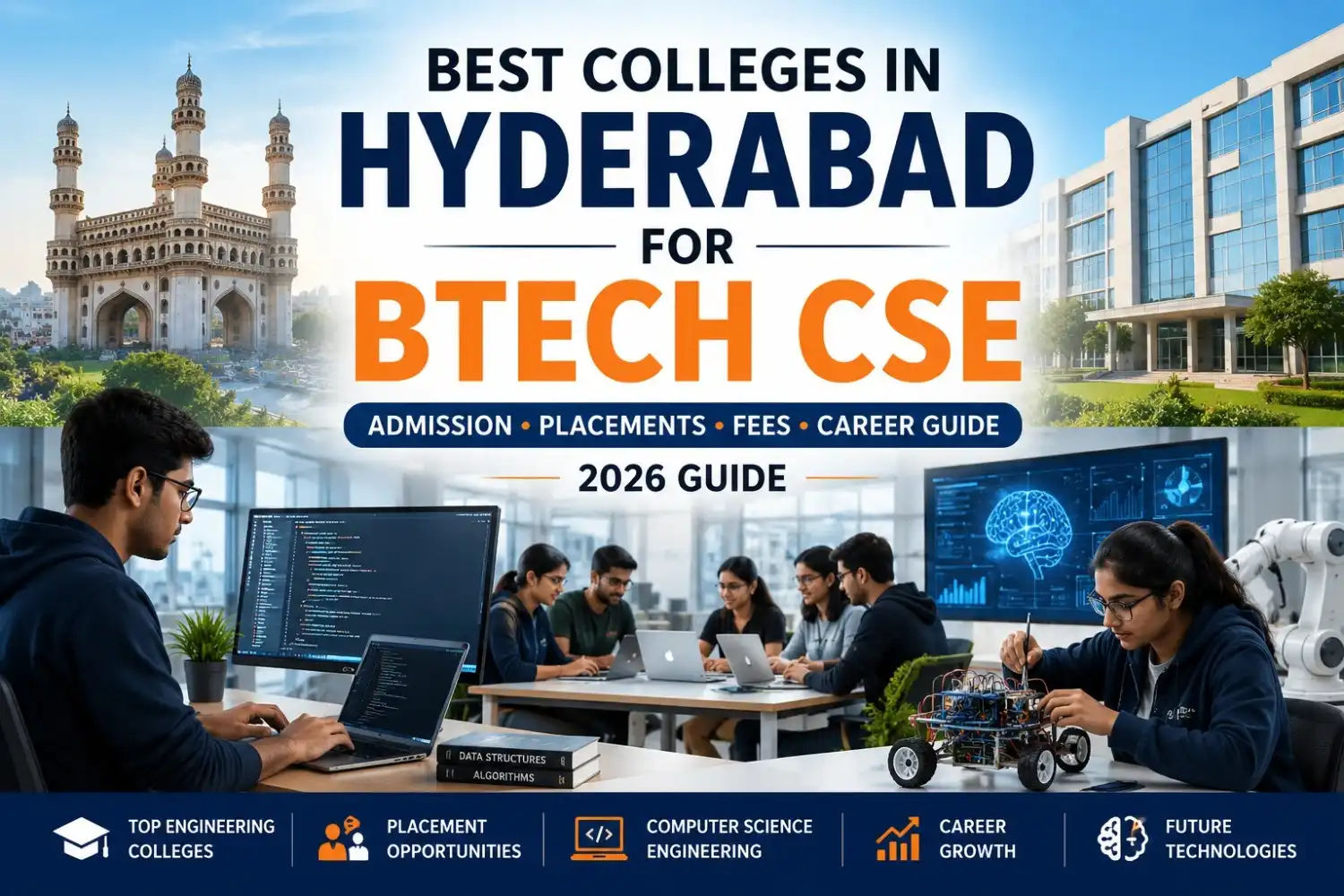
Best Colleges in Hyderabad for BTech CSE: Complete 2026 Student Guide
Introduction
Computer Science Engineering (CSE) continues to be one of the most sought-after engineering branches worldwide. With the rapid growth of Artificial Intelligence, Cybersecurity, Data Science, Cloud Computing, and Software Development, students are increasingly looking for institutions that offer quality education, strong placement opportunities, and industry exposure.
Hyderabad has emerged as one of India's leading technology hubs. Home to major IT companies, startups, innovation centers, and global technology firms, the city provides an excellent ecosystem for aspiring engineers.
If you are searching for the best colleges in Hyderabad for BTech CSE, this comprehensive guide will help you understand the top institutions, admission process, placements, career prospects, and factors to consider before making your decision.
Students planning their engineering journey can also explore career planning resources through Vidya Udbhav for admission guidance and educational counseling.
Quick Answer: Which Are the Best Colleges in Hyderabad for B.Tech. CSE?
Some of the top colleges include:
- International Institute of Information Technology Hyderabad (IIIT-H)
- University of Hyderabad
- Jawaharlal Nehru Technological University Hyderabad (JNTUH)
- Chaitanya Bharathi Institute of Technology (CBIT)
- Vasavi College of Engineering
- VNR Vignana Jyothi Institute of Engineering and Technology
- Gokaraju Rangaraju Institute of Engineering and Technology
- Mahindra University
- CMR Institute of Technology
- Malla Reddy Engineering College
Each institution offers unique advantages depending on academic goals, budget, specialization interests, and career aspirations.
Why Hyderabad Is a Preferred Destination for CSE Students
You might be wondering why thousands of engineering aspirants choose Hyderabad every year.
Here are the major reasons:
- Strong IT ecosystem
- Presence of multinational companies
- Growing startup culture
- Excellent internship opportunities
- Industry-academia collaborations
- Affordable living costs compared to other metro cities
- High placement potential
The city hosts major technology employers, including Microsoft, Google, Amazon, Oracle, Infosys, TCS, Accenture, Deloitte, and many emerging startups.
Top Colleges in Hyderabad for B.Tech. CSE
Comparison Table
| IIIT Hyderabad | Private Deemed | JEE Main, UGEE | Research & Innovation |
| University of Hyderabad | Central University | Entrance Based | Academic Excellence |
| JNTUH | State University | EAMCET | Strong Engineering Legacy |
| CBIT | Private | EAMCET | Placements |
| Vasavi College | Private | EAMCET | Industry Connections |
| VNR VJIET | Private | EAMCET | Placement Records |
| Mahindra University | Private | JEE Main | Modern Curriculum |
| GRIET | Private | EAMCET | Technical Education |
| CMR Institute | Private | EAMCET | Emerging Opportunities |
| Malla Reddy Group | Private | EAMCET | Infrastructure |
International Institute of Information Technology Hyderabad (IIIT-H)
IIIT Hyderabad is often considered one of India's most prestigious institutions for Computer Science Engineering.
Highlights
- Research-oriented curriculum
- Strong coding culture
- Excellent startup ecosystem
- International collaborations
- High placement packages
Best For
Students interested in:
- Artificial Intelligence
- Machine Learning
- Data Science
- Research
- Entrepreneurship
Jawaharlal Nehru Technological University Hyderabad (JNTUH)
JNTUH is among the most recognized engineering universities in Telangana.
Key Advantages
- Established reputation
- Experienced faculty
- Strong alumni network
- Affordable education
- Industry-recognized curriculum
Students seeking a balanced combination of academics and affordability often prefer JNTUH.
Chaitanya Bharathi Institute of Technology (CBIT)
CBIT consistently ranks among Hyderabad's top engineering colleges.
Why Students Choose CBIT
- Excellent placements
- Strong academic standards
- Industry-focused training
- Modern laboratories
- Active student clubs
Many recruiters visit the campus annually for software engineering and technology roles.
Vasavi College of Engineering
Vasavi College has developed a strong reputation for producing skilled software professionals.
Major Strengths
- Placement support
- Coding competitions
- Industry partnerships
- Internship opportunities
- Practical learning approach
One thing many beginners miss is that industry exposure often matters as much as academic scores when pursuing software careers.
VNR Vignana Jyothi Institute of Engineering and Technology
VNR VJIET has become a preferred destination for students aiming for technology careers.
Notable Features
- Advanced infrastructure
- Placement training programs
- Innovation centers
- Industry certifications
- Research opportunities
The institution focuses heavily on employability skills alongside technical education.
Admission Process for B.Tech. CSE in Hyderabad
Through TS EAMCET
Most engineering colleges in Hyderabad admit students through the Telangana State Engineering, Agriculture, and Medical Common Entrance Test.
Through JEE Main
Several institutions accept JEE Main scores for admission.
Management Quota
Some colleges offer management quota admissions based on eligibility criteria.
Direct Admission
Private universities may conduct their own admission processes.
Eligibility Criteria
Generally, candidates must:
- Complete Class 12 or equivalent
- Study Physics, Chemistry, and Mathematics
- Meet minimum percentage requirements.
- Qualify in relevant entrance examinations.
Specific eligibility may vary by institution.
Important Factors to Consider Before Choosing a College
Placement Performance
Look beyond the highest packages.
Focus on:
- Average package
- Placement percentage
- Number of recruiters
- Internship opportunities
Faculty Quality
Experienced professors contribute significantly to learning outcomes.
Infrastructure
Check for:
- Computer labs
- Research centers
- Libraries
- Innovation labs
- Incubation centers
Industry Exposure
Good colleges provide:
- Guest lectures
- Industry projects
- Hackathons
- Internships
- Corporate collaborations
Placement Opportunities for CSE Students
Computer Science Engineering graduates enjoy opportunities across multiple sectors.
Popular Job Roles
- Software Engineer
- Full Stack Developer
- Data Scientist
- AI Engineer
- Cybersecurity Analyst
- Cloud Engineer
- DevOps Engineer
- Mobile App Developer
- Systems Architect
- Product Engineer
Major Recruiters
Common recruiters include:
- Microsoft
- Amazon
- TCS
- Infosys
- Wipro
- Accenture
- Deloitte
- Cognizant
- Capgemini
Emerging Specializations in Computer Science Engineering
Now, let us understand where the industry is heading.
Artificial Intelligence
AI is transforming healthcare, finance, manufacturing, and education.
Cybersecurity
Growing cyber threats have increased demand for security professionals.
Data Science
Organizations increasingly depend on data-driven decision-making.
Cloud Computing
Cloud infrastructure remains one of the fastest-growing technology sectors.
Blockchain Technology
Many enterprises continue exploring blockchain-based solutions.
Beginner Strategy for Getting Into Top CSE Colleges
Students preparing for admission should focus on:
Step 1: Strengthen PCM Concepts
Build a strong foundation in:
- Mathematics
- Physics
- Chemistry
Step 2: Prepare for Entrance Exams
Prioritize:
- TS EAMCET
- JEE Main
- University entrance tests
Step 3: Research Colleges
Compare:
- Rankings
- Fees
- Placements
- Specializations
Students can also use educational guidance resources available through Vidya Udbhav for informed decision-making.
Advanced Strategy for Career Success During BTech
Getting admission is only the beginning.
Build Technical Skills
Learn:
- Python
- Java
- C++
- SQL
- Cloud Platforms
Participate in Hackathons
Practical projects strengthen resumes significantly.
Earn Certifications
Relevant certifications improve employability.
Build a Portfolio
Showcase:
- Projects
- Applications
- Open-source contributions
Network Early
Connect with:
- Alumni
- Industry experts
- Recruiters
Common Mistakes Students Should Avoid
Here is where many people make mistakes.
Choosing Only Based on Rankings
Rankings matter, but they should not be the sole factor.
Ignoring Placement Statistics
Always review detailed placement records.
Overlooking Skill Development
Technical skills ultimately determine career success.
Not Researching Faculty
Faculty quality directly impacts learning outcomes.
Ignoring Campus Culture
The student environment significantly affects overall growth.
Benefits of Studying B.Tech. CSE in Hyderabad
Access to Technology Companies
Students can explore internships and industrial visits more easily.
Startup Ecosystem
Hyderabad offers excellent entrepreneurial opportunities.
Research Opportunities
Many institutions actively support innovation and research.
Better Networking
Students gain exposure to technology communities and industry professionals.
Challenges Students May Face
Competitive Admissions
Top colleges have intense competition.
Rapid Technology Changes
Continuous learning becomes essential.
Placement Competition
Students must develop practical skills alongside academics.
Balancing Academics and Projects
Time management remains critical.
Practical Solutions for Success
To overcome these challenges:
- Create a learning roadmap.
- Focus on coding practice.
- Build projects regularly
- Participate in internships
- Stay updated with technology trends.
- Join technical communities
Real-Life Career Scenario
Consider two students graduating from similar colleges.
Student A focuses only on academic scores.
Student B combines academics with projects, certifications, internships, and networking.
In most cases, Student B secures better career opportunities because employers increasingly value practical experience.
Useful Tools for CSE Students
Free Tools
- VS Code
- GitHub
- Eclipse
- Jupyter Notebook
Beginner-Friendly Platforms
- HackerRank
- LeetCode
- CodeChef
Premium Learning Platforms
- Coursera
- Udemy
- Pluralsight
Future Trends in Computer Science Engineering
The future of CSE looks exceptionally promising.
Emerging areas include:
- Generative AI
- Quantum Computing
- Robotics
- Extended Reality (XR)
- Edge Computing
- Autonomous Systems
- AI Security
- Digital Twin Technology
Students entering BTech today are likely to work in technology domains that are still evolving rapidly.
Best Practices for Engineering Aspirants
- Start preparation early
- Compare colleges carefully
- Focus on skills and academics.
- Build practical experience
- Stay updated with industry trends.
- Seek career guidance when needed.
- Develop communication skills
Students interested in long-term career growth can also explore educational planning resources and student success roadmaps available on Vidya Udbhav.
Actionable Final Advice
If your goal is to build a successful technology career, prioritize colleges that offer:
- Strong placements
- Industry exposure
- Research opportunities
- Modern curriculum
- Practical learning
The best college is not always the one with the highest ranking. It is the institution that aligns with your career goals, budget, learning style, and future aspirations.
Conclusion
Choosing among the best colleges in Hyderabad for BTech CSE requires careful evaluation of academics, placements, faculty, infrastructure, and industry exposure. Hyderabad's thriving technology ecosystem makes it one of the best destinations for engineering education in India.
Whether you aim to become a software engineer, AI specialist, cybersecurity expert, or entrepreneur, selecting the right college can provide a strong foundation for long-term success. Research thoroughly, compare options wisely, and focus on building skills that complement your academic journey.
Frequently Asked Questions (FAQs)
1. Which is the best college in Hyderabad for B.Tech. CSE?
IIIT Hyderabad is widely regarded as one of the top institutions for Computer Science Engineering due to its research focus, innovation culture, and placement opportunities.
2. Is Hyderabad good for Computer Science Engineering students?
Yes. Hyderabad is one of India's leading technology hubs with strong industry presence, internship opportunities, and excellent placement prospects.
3. Which entrance exam is required for BTech CSE in Hyderabad?
Most colleges accept TS EAMCET, while some institutions also consider JEE Main scores or conduct their own admission processes.
4. What are the career opportunities after BTech CSE?
Graduates can pursue careers in software development, AI, cybersecurity, cloud computing, data science, DevOps, and many other technology fields.
5. What should I consider before selecting a CSE college?
Evaluate placement records, faculty quality, infrastructure, industry exposure, specializations, fees, and overall student development opportunities.
6. Do Hyderabad engineering colleges offer good placements?
Many top colleges in Hyderabad maintain strong placement records with recruitment from leading national and international technology companies.
7. Which CSE specialization has the highest future demand?
Artificial Intelligence, Cybersecurity, Data Science, Cloud Computing, and Machine Learning are among the most promising specializations for future career growth. Continuously upgrading your skills
The best career combines passion, ability, market demand, and long-term growth potential.
Understanding What a Career Path Really Means
A career path is not simply a job.
It is the long-term professional journey that includes:
- Education
- Training
- Skill development
- Work experience
- Career progression
- Leadership opportunities
For example:
| Software Engineer | Computer Science → Internship → Developer → Senior Engineer → Tech Lead |
| Doctor | Medical School → Residency → Specialist → Consultant |
| Business Leader | Bachelor's Degree → Management Training → Manager → Director |
| Digital Marketer | Certification → Content Specialist → Marketing Executive → Marketing Manager |
A career path evolves over time as your skills and opportunities grow.
Why Choosing the Right Career Path Matters
Many people spend decades working in careers they do not enjoy.
Choosing wisely offers several advantages.
Higher Job Satisfaction
People who align their work with their interests generally experience greater satisfaction and motivation.
Better Financial Stability
Careers selected based on market demand often provide stronger earning potential.
Continuous Growth
A suitable career path encourages learning and professional development.
Improved Work-Life Balance
When your career aligns with your values, stress levels are often lower.
Greater Confidence
Knowing you are moving toward meaningful goals increases personal confidence and motivation.
Common Reasons People Choose the Wrong Career
Before learning what works, it is important to understand what often goes wrong.
Following Friends
A career that suits your friend may not suit you.
Family Pressure
Family advice can be valuable, but your interests and strengths should also matter.
Chasing Salary Alone
High-paying jobs do not automatically create happiness or long-term success.
Lack of Research
Many students choose courses without understanding the careers connected to them.
Fear of Taking Risks
Some individuals avoid careers they love because they appear challenging.
One thing many beginners miss is that successful careers are built through consistent growth rather than instant results.
Step 1: Discover Your Interests
The first step is understanding what genuinely interests you.
Ask yourself:
- What subjects do I enjoy?
- What activities energize me?
- What topics do I naturally research?
- What problems do I enjoy solving?
Interest Categories
Creative Careers
- Graphic Design
- Content Creation
- Animation
- Architecture
Technical Careers
- Engineering
- Software Development
- Data Science
- Cybersecurity
Business Careers
- Finance
- Marketing
- Entrepreneurship
- Human Resources
Healthcare Careers
- Medicine
- Nursing
- Physiotherapy
- Healthcare Administration
Understanding your interests creates a stronger foundation for future decisions.
Step 2: Identify Your Strengths and Skills
Interest alone is not enough.
You should also identify your strengths.
Technical Skills
Examples include:
- Coding
- Mathematics
- Data Analysis
- Graphic Design
Soft Skills
Examples include:
- Communication
- Leadership
- Problem Solving
- Teamwork
Transferable Skills
These skills apply across industries:
- Critical Thinking
- Time Management
- Adaptability
- Decision Making
You might be surprised to discover that your strongest skills are often the best indicators of future success.
Step 3: Assess Your Personality
Different personalities thrive in different work environments.
For example:
| Analytical | Data Scientist, Engineer |
| Creative | Designer, Writer |
| Social | Teacher, Counselor |
| Organized | Project Manager, Administrator |
| Leadership-Oriented | Entrepreneur, Executive |
Career personality assessments can provide additional insights.
Step 4: Research Career Opportunities
Now, let us understand one of the most critical steps.
Research before making decisions.
Evaluate:
- Job responsibilities
- Required qualifications
- Salary expectations
- Industry growth
- Future demand
- Geographic opportunities
A career may sound attractive, but it may not align with your long-term goals.
Step 5: Understand Future Job Trends
The global workforce is changing rapidly.
Several industries are expected to experience significant growth.
High-Demand Careers
Artificial Intelligence
- AI Engineer
- Machine Learning Specialist
- AI Researcher
Data Science
- Data Analyst
- Business Intelligence Expert
- Data Engineer
Healthcare
- Healthcare Managers
- Nurses
- Medical Specialists
Renewable Energy
- Sustainability Consultants
- Renewable Energy Engineers
Cybersecurity
- Security Analysts
- Ethical Hackers
- Information Security Managers
This becomes more important when technology is continuously transforming industries.
Step 6: Gain Practical Experience
Theory alone is not enough.
Employers increasingly value practical skills.
Ways to Gain Experience
- Internships
- Freelancing
- Volunteer Work
- Personal Projects
- Industry Certifications
- Apprenticeships
For students, combining education with practical exposure often accelerates career growth.
You can also explore career planning guidance and educational pathways through the student-focused resources available on Vidya Udbhav.
Benefits of Career Planning
Career planning provides structure and direction.
Major Benefits
- Clear goals
- Better decision-making
- Improved motivation
- Increased employability
- Stronger confidence
- Enhanced financial planning
People with career plans often adapt more effectively to changing job markets.
Challenges in Choosing the Right Career
Too Many Options
Modern students face thousands of career possibilities.
Rapid Industry Changes
Technology creates new careers while transforming existing ones.
Skill Gaps
Many graduates discover they lack industry-relevant skills.
Information Overload
Conflicting advice can create confusion.
Fear of Failure
This prevents many individuals from exploring their true potential.
Practical Solutions to Career Confusion
If you feel uncertain, consider these solutions.
Speak With Professionals
Learn directly from people working in your field of interest.
Attend Career Counseling Sessions
Professional guidance often reveals opportunities you may not have considered.
Take Career Assessments
Structured assessments can identify strengths and preferences.
Experiment Through Projects
Practical experiences help clarify interests faster than theory alone.
Create a Career Roadmap
A written plan improves focus and accountability.
Real-Life Example
Consider two students.
Student A
Chooses engineering because friends selected it.
Result:
- Low motivation
- Poor academic performance
- Career dissatisfaction
Student B
Researches industries, evaluates strengths, completes internships, and consults career experts.
Result:
- Higher confidence
- Better job opportunities
- Greater long-term satisfaction
The difference lies in informed decision-making.
Career Planning Framework for Beginners
Follow this simple framework.
Phase 1: Self-Discovery
- Interests
- Strengths
- Values
- Personality
Phase 2: Exploration
- Career research
- Industry trends
- Education requirements
Phase 3: Skill Building
- Certifications
- Internships
- Projects
Phase 4: Career Entry
- Resume building
- Networking
- Job applications
Phase 5: Growth
- Upskilling
- Leadership development
- Professional specialization
Useful Career Development Tools
Beginner-Friendly Tools
- Google Career Certificates
- Coursera
- LinkedIn Learning
Free Learning Platforms
- Khan Academy
- edX
- FutureLearn
Premium Learning Platforms
- Udemy
- Pluralsight
- Skillshare
Select tools based on your career goals and learning style.
Advanced Career Growth Strategy
Once you enter your profession, continue growing strategically.
Build a Personal Brand
Create a professional online presence.
Develop Specialized Skills
Experts often earn more than generalists.
Expand Professional Networks
Networking frequently leads to career opportunities.
Learn Emerging Technologies
Future-ready professionals stay competitive.
Invest in Continuous Learning
Lifelong learning has become essential for career success.
Common Career Planning Mistakes to Avoid
Here is where many people make mistakes.
Choosing Without Research
Never select a career solely based on assumptions.
Ignoring Future Demand
Market trends matter.
Focusing Only on Salary
Career satisfaction remains important.
Avoiding Skill Development
Degrees alone are often insufficient.
Waiting Too Long to Start Planning
Early preparation creates significant advantages.
Expert Tips for Choosing the Right Career
Focus on Long-Term Growth
Think beyond your first job.
Build Skills Before Graduation
Employers value practical expertise.
Learn Communication Skills
Strong communication benefits every profession.
Stay Adaptable
Industries evolve rapidly.
Seek Mentorship
Guidance from experienced professionals accelerates growth.
Best Practices for Long-Term Career Success
Successful professionals often share similar habits.
- Set clear goals
- Track progress regularly
- Learn continuously
- Build meaningful relationships
- Develop resilience
- Stay informed about industry trends.
Small improvements over time create substantial career growth.
Future Trends Shaping Careers
The future workplace will continue evolving.
Artificial Intelligence Integration
AI will transform many job functions.
Remote and Hybrid Work
Global employment opportunities will expand.
Skill-Based Hiring
Employers increasingly value skills over degrees alone.
Micro-Credentials
Short certifications are becoming more valuable.
Global Workforce Competition
Professionals will compete internationally for opportunities.
Those who adapt early will have significant advantages.
Career Success Checklist
Before choosing a career, ask yourself:
✓ Do I enjoy this field?
✓ Am I naturally skilled in related tasks?
✓ Is there future demand?
✓ Can I gain practical experience?
✓ Does it match my long-term goals?
✓ Will it support my desired lifestyle?
If most answers are yes, you may be moving toward the right career path.
Actionable Final Advice
Choosing the right career path is not about finding a perfect job overnight.
It is about making informed decisions, learning continuously, and adapting as opportunities evolve.
Start by understanding yourself.
Research extensively.
Build relevant skills.
Gain practical experience.
Seek expert guidance.
Most importantly, remember that career success is a journey rather than a single decision.
Students and professionals looking for educational guidance, career exploration resources, and academic planning support can benefit from the career-focused content available at Vidya Udbhav, including career planning guides, student success roadmaps, higher education insights, and professional development resources.
Conclusion
The right career path is a combination of self-awareness, preparation, opportunity, and continuous growth.
There is no universal career that guarantees success for everyone. What works best is finding a path that aligns with your interests, strengths, values, and future aspirations.
By taking a structured approach to career planning, developing relevant skills, and staying adaptable in a changing world, you can create a successful future that offers both professional achievement and personal fulfillment.
The decisions you make today can shape the opportunities you enjoy tomorrow.
Choose wisely, stay curious, and never stop learning.
Frequently Asked Questions (FAQs)
1. How do I know if I am choosing the right career path?
A suitable career aligns with your interests, strengths, values, and long-term goals while offering growth opportunities and market demand.
2. At what age should career planning begin?
Career planning should ideally begin during secondary education, but it is never too late to evaluate and improve your career direction.
3. Should salary be the main factor in choosing a career?
No. Salary is important, but career satisfaction, growth opportunities, skill alignment, and work-life balance should also be considered.
4. Can I change my career later in life?
Yes. Many professionals successfully transition into new industries through upskilling, certifications, and practical experience.
5. What is the most important factor in career success?
Continuous learning, adaptability, skill development, and consistent effort are among the most important factors.
6. Are career assessments useful?
Yes. Career assessments can help identify interests, strengths, personality traits, and suitable career options.
7. What careers are expected to grow in the future?
Artificial Intelligence, Data Science, Cybersecurity, Healthcare, Renewable Energy, Digital Marketing, and Technology-related fields are expected to experience strong growth.