

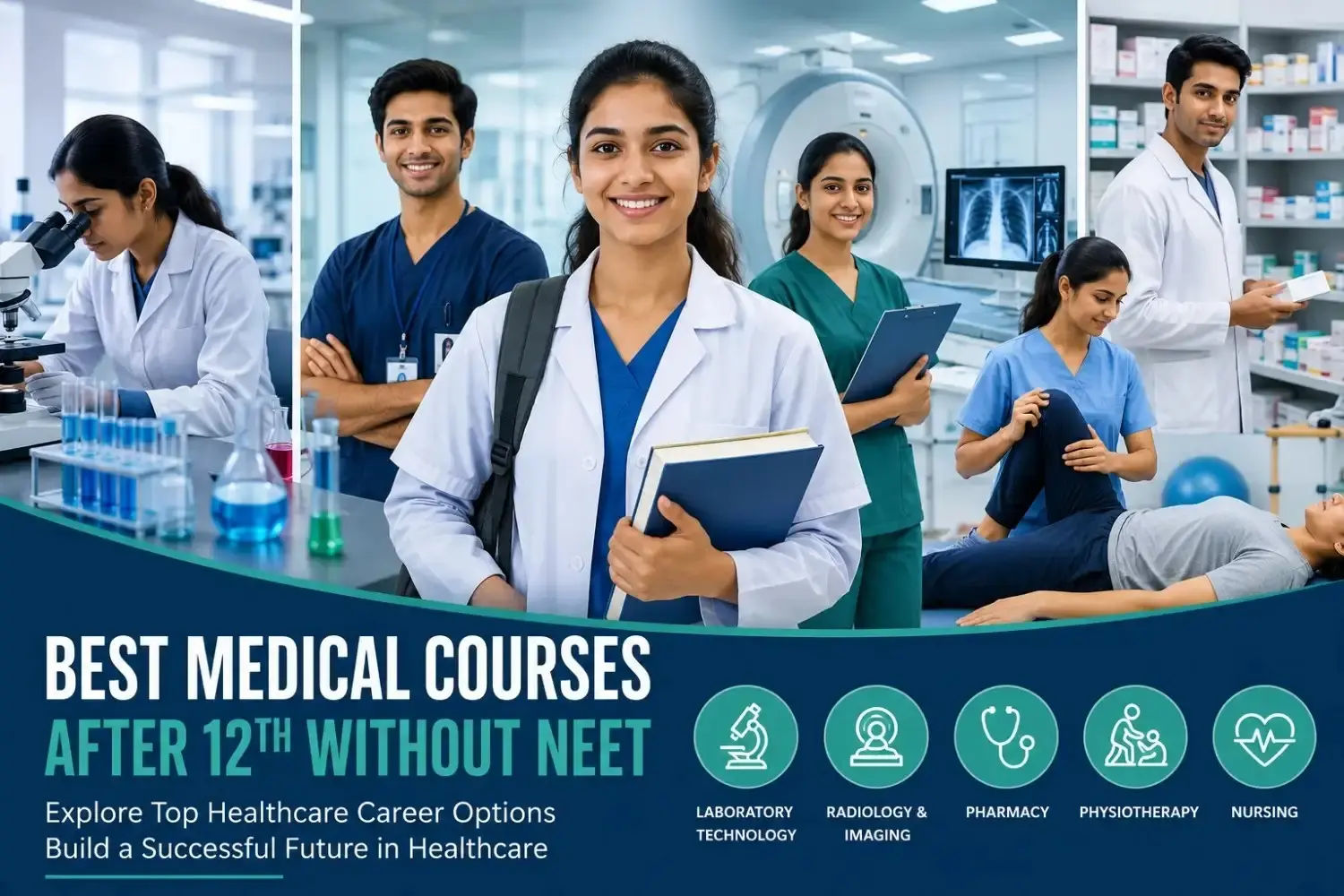
Best Healthcare Careers for PCB Students
Choosing the right career after completing Physics, Chemistry, and Biology (PCB) can feel overwhelming. While many students dream of becoming doctors, the healthcare industry offers far more opportunities than just MBBS. From diagnostic technology and rehabilitation sciences to hospital management and emergency care, today's healthcare sector needs professionals with diverse skills.
Healthcare has become one of the fastest-growing industries worldwide. Advancements in medical technology, an aging population, and increasing awareness of preventive healthcare have created thousands of rewarding career opportunities for PCB students.
If you're exploring career options after Class 12, this guide will help you understand the best healthcare careers, their eligibility, expected salaries, required skills, and future growth prospects.
The best healthcare careers for PCB students include:
- Nursing
- Dialysis Technology
- Medical Laboratory Technology (MLT)
- Radiology & Imaging Technology
- Operation Theatre Technology
- Physiotherapy
- Occupational Therapy
- Optometry
- Emergency Medical Technology
- Cardiac Care Technology
- Hospital Administration
- Public Health
- Nutrition & Dietetics
- Respiratory Therapy
- Medical Research
These careers offer excellent job security, competitive salaries, and global employment opportunities.
Why Healthcare Is One of the Best Career Choices
Healthcare is not just a profession—it is a service that directly improves people's lives. Unlike many industries that fluctuate with economic conditions, healthcare continues to grow because medical services remain essential.
Some major advantages include:
- High demand worldwide
- Excellent job stability
- Multiple specialization options
- Opportunities for higher education
- Global career prospects
- Attractive salary packages
- Personal satisfaction from helping others
One thing many students miss is that healthcare careers extend well beyond hospitals. Professionals also work in research centers, diagnostic laboratories, rehabilitation clinics, pharmaceutical companies, government organizations, educational institutions, and international healthcare agencies.
Top Healthcare Careers for PCB Students
| Nursing | 4 Years | Good | Excellent |
| Dialysis Technology | 3-4 Years | Good | High |
| Medical Laboratory Technology | 3 Years | Good | Excellent |
| Radiology Technology | 3-4 Years | Very Good | Excellent |
| Physiotherapy | 4.5 Years | Very Good | Excellent |
| Operation Theatre Technology | 3-4 Years | Good | High |
| Cardiac Care Technology | 4 Years | Very Good | Excellent |
| Optometry | 4 Years | Good | High |
| Emergency Medical Technology | 3-4 Years | Good | Excellent |
| Hospital Administration | 2-3 Years | Good | Growing |
1. Medical Laboratory Technology (MLT)
Medical Laboratory Technologists play a crucial role in disease diagnosis. Doctors depend on laboratory reports for accurate treatment decisions.
Responsibilities
- Blood testing
- Urine analysis
- Biochemistry testing
- Microbiology
- Pathology support
Why Choose MLT?
- Strong industry demand
- Modern laboratory exposure
- Career growth opportunities
- Opportunities in hospitals and diagnostic chains
2. Dialysis Technology
Kidney-related diseases are increasing globally, making dialysis technologists highly valuable healthcare professionals.
Job Responsibilities
- Operating dialysis machines
- Monitoring patient health
- Assisting nephrologists
- Managing dialysis procedures safely
Future Scope
The growing number of chronic kidney disease patients has significantly increased demand for trained dialysis technologists.
3. Radiology and Imaging Technology
Medical imaging professionals assist doctors in diagnosing diseases using advanced equipment.
Common Technologies
- X-Ray
- MRI
- CT Scan
- Ultrasound
- Mammography
Skills Required
- Technical knowledge
- Patient handling
- Equipment operation
- Attention to detail
Radiology professionals are among the most sought-after allied healthcare experts worldwide.
4. Physiotherapy
Physiotherapists help patients recover from injuries, surgeries, neurological disorders, and chronic pain through movement-based rehabilitation.
Work Areas
- Sports medicine
- Rehabilitation centers
- Hospitals
- Private clinics
- Fitness centers
As awareness about physical rehabilitation continues to grow, physiotherapy offers excellent long-term career stability.
5. Nursing
Nursing remains one of the most respected and globally recognized healthcare professions.
Key Responsibilities
- Patient care
- Medication administration
- Emergency response
- Health education
- Clinical documentation
Qualified nurses have opportunities to work in hospitals, community healthcare, military services, international healthcare organizations, and specialized medical departments.
6. Operation Theatre Technology
Operation Theatre Technologists ensure surgical procedures run safely and efficiently.
Daily Duties
- Preparing operating theatres
- Sterilizing surgical equipment
- Assisting surgeons
- Monitoring surgical instruments
- Maintaining infection control
Hospitals increasingly depend on skilled OT technologists to support successful surgeries.
7. Cardiac Care Technology
Heart disease remains one of the leading causes of mortality worldwide, creating significant demand for cardiac care professionals.
Career Opportunities
- Cath Labs
- Cardiology Departments
- ICU Units
- Emergency Care
- Cardiac Diagnostic Centers
Students interested in cardiovascular healthcare can expect excellent career growth over the coming decade.
Skills Every Healthcare Professional Needs
Technical knowledge alone is not enough. Successful healthcare professionals also develop:
- Communication skills
- Compassion
- Critical thinking
- Teamwork
- Problem-solving
- Attention to detail
- Time management
- Professional ethics
These skills improve patient care and contribute to long-term career success.
Eligibility Criteria
Most healthcare courses require:
- Physics
- Chemistry
- Biology
Some universities may also require entrance examinations depending on the course and institution.
Students should carefully review admission requirements before applying.
For admission guidance and healthcare program updates, explore the student admission resources available on Vidya Udbhav.
Benefits of Choosing Healthcare Careers
Healthcare offers several long-term advantages:
- Stable employment
- Continuous learning opportunities
- Career advancement
- International mobility
- High social respect
- Diverse specialization options
- Positive societal impact
Unlike many professions, healthcare provides the opportunity to make a meaningful difference in people's lives every day.
Common Challenges
Every profession has its challenges. Healthcare professionals may encounter:
- Long working hours
- Emotional stress
- Continuous learning requirements
- Emergency situations
- Shift-based schedules
However, proper training, resilience, and professional development help individuals manage these challenges effectively.
Practical Tips for Beginners
If you're just starting your healthcare journey:
- Research multiple career options.
- Understand your interests and strengths.
- Develop communication skills.
- Gain practical exposure through internships.
- Stay updated with medical technology.
- Focus on lifelong learning.
One thing many beginners overlook is the importance of soft skills. Empathy, patience, and professionalism often distinguish exceptional healthcare professionals from average ones.
Career Growth and Future Scope
Healthcare is evolving faster than ever. Advances in artificial intelligence, digital health records, robotic surgery, telemedicine, and precision medicine are creating exciting new roles for healthcare professionals. This means that PCB students who choose allied health sciences today are likely to have strong career opportunities for decades.
Industries Hiring Healthcare Professionals
Healthcare graduates can work in a variety of settings, including:
- Multi-specialty hospitals
- Government healthcare departments
- Private clinics
- Diagnostic laboratories
- Rehabilitation centers
- Medical research organizations
- Pharmaceutical companies
- Healthcare startups
- Medical device companies
- Educational institutions
- International healthcare organizations
The demand for qualified healthcare professionals continues to grow across developed and developing countries, making these careers highly future-proof.
Salary Expectations
Salary depends on several factors such as qualifications, specialization, experience, location, and employer.
| Nursing | Moderate | High | Excellent |
| Physiotherapy | Moderate | High | Excellent |
| Medical Laboratory Technology | Moderate | High | Very High |
| Radiology Technology | High | Very High | Excellent |
| Dialysis Technology | Moderate | High | Very High |
| Cardiac Care Technology | High | Very High | Excellent |
| Hospital Administration | Moderate | High | Excellent |
Professionals who pursue postgraduate education, certifications, or international licensing often experience faster salary growth and better career opportunities.
Step-by-Step Career Planning Guide
If you're unsure where to begin, follow this roadmap:
Step 1: Know Your Interests
Ask yourself:
- Do you enjoy patient care?
- Are you interested in laboratory work?
- Do you prefer technology-driven careers?
- Would you like to work behind the scenes in diagnostics?
Your interests should guide your career choice.
Step 2: Research the Course
Before applying, understand:
- Course duration
- Eligibility
- Curriculum
- Internship opportunities
- Career outcomes
Step 3: Choose the Right Institution
A quality institution should offer:
- Modern laboratories
- Clinical training
- Experienced faculty
- Industry exposure
- Placement assistance
You can explore healthcare admission guidance, student counselling resources, and career planning articles on Vidya Udbhav to make informed decisions.
Step 4: Develop Practical Skills
Healthcare employers value practical experience. During your studies:
- Attend workshops
- Complete internships
- Participate in clinical training.
- Build communication skills
- Learn teamwork
Step 5: Continue Learning
Healthcare is constantly evolving. Stay updated through:
- Professional certifications
- Conferences
- Research publications
- Skill development programs
Continuous learning improves both employability and career progression.
Beginner Strategy
Students often believe MBBS is the only successful medical career. In reality, allied healthcare professionals are equally important in delivering quality patient care.
As a beginner:
- Explore multiple healthcare disciplines.
- Compare career growth instead of popularity.
- Focus on long-term opportunities.
- Consider your strengths, interests, and work style.
- Seek professional career counselling before making a final decision.
Advanced Career Strategy
Once you've entered the healthcare field, focus on long-term growth.
Specialize in High-Demand Areas
Examples include:
- Critical Care
- Cardiology
- Medical Imaging
- Rehabilitation
- Oncology
- Emergency Medicine
- Clinical Research
Build Professional Credentials
Additional certifications can help you:
- Improve technical expertise
- Increase earning potential
- Qualify for leadership roles.
- Access international opportunities
Develop Leadership Skills
Healthcare organizations increasingly seek professionals who can manage teams, improve patient outcomes, and lead quality improvement initiatives.
Common Mistakes to Avoid
Here is where many students make mistakes:
Choosing a Course Only Because Others Recommend It
A career should align with your interests and strengths, not just trends.
Ignoring Practical Training
Clinical exposure is just as important as classroom learning.
Focusing Only on Salary
Job satisfaction, career growth, and learning opportunities matter just as much.
Not Researching Career Scope
Before enrolling, understand where the course can take you in the next five to ten years.
Neglecting Communication Skills
Healthcare professionals interact with patients, families, and multidisciplinary teams every day. Strong communication builds trust and improves outcomes.
Expert Tips for Success
Professionals with long-term success in healthcare often follow these practices:
- Stay curious and keep learning.
- Build empathy alongside technical knowledge.
- Maintain professionalism in every interaction.
- Learn to adapt to new technologies.
- Develop problem-solving abilities.
- Build a strong professional network.
- Focus on patient-centred care.
One thing many beginners miss is that technical skills may get you hired, but communication, ethics, and professionalism help you grow into leadership roles.
Future Trends in Healthcare Careers
The healthcare industry is expected to undergo major transformations in the coming years.
Emerging trends include:
- Artificial Intelligence in diagnostics
- Digital healthcare systems
- Telemedicine
- Personalized medicine
- Wearable health technology
- Robotic-assisted surgeries
- Remote patient monitoring
- Preventive healthcare
- Healthcare data analytics
Professionals who embrace these advancements will have a competitive advantage in the job market.
Final Actionable Advice
If you are a PCB student, don't limit yourself to traditional career paths. The healthcare sector offers diverse, meaningful, and rewarding opportunities beyond MBBS.
Before making a decision:
- Understand your interests.
- Research every available option.
- Compare career scope and growth.
- Choose an institution with strong clinical exposure.
- Invest in continuous learning.
- Build both technical and interpersonal skills.
For more educational insights, admission updates, and healthcare career guidance, explore the healthcare career resources, admission guidance articles, and student success blogs available on Vidya Udbhav.
Conclusion
Healthcare is one of the most resilient and rewarding industries in the world. Whether you choose Medical Laboratory Technology, Physiotherapy, Radiology, Nursing, Dialysis Technology, or Hospital Administration, each profession plays a vital role in improving lives.
Success in healthcare isn't defined by a single degree—it is built through dedication, continuous learning, compassion, and practical experience. By selecting the right course and preparing strategically, PCB students can build fulfilling careers with excellent growth, financial stability, and global opportunities.
The future of healthcare is bright, and there has never been a better time to become part of this dynamic industry.
Frequently Asked Questions (FAQs)
1. Which is the best healthcare career for PCB students besides MBBS?
Some of the best options include Nursing, Physiotherapy, Medical Laboratory Technology, Radiology, Dialysis Technology, Cardiac Care Technology, and Hospital Administration. The ideal choice depends on your interests, skills, and long-term career goals.
2. Can PCB students get high-paying jobs without becoming doctors?
Yes. Many allied healthcare professionals earn competitive salaries, especially after gaining experience, pursuing advanced certifications, or specializing in high-demand areas.
3. Which healthcare career has the highest demand?
Radiology Technology, Nursing, Physiotherapy, Medical Laboratory Technology, Emergency Medical Technology, and Cardiac Care Technology are among the fastest-growing healthcare careers globally.
4. Is allied healthcare a good career option?
Absolutely. Allied healthcare professionals are essential members of the medical team and enjoy strong job demand, career stability, and opportunities for advancement.
5. Which healthcare course is best for international career opportunities?
Nursing, Physiotherapy, Medical Laboratory Technology, Radiology Technology, and Dialysis Technology are widely recognized and offer excellent opportunities in many countries, subject to local licensing requirements.
6. How can I choose the right healthcare course after Class 12 PCB?
Evaluate your interests, research career prospects, compare course curricula, understand eligibility requirements, and seek professional career counselling before making a decision.