

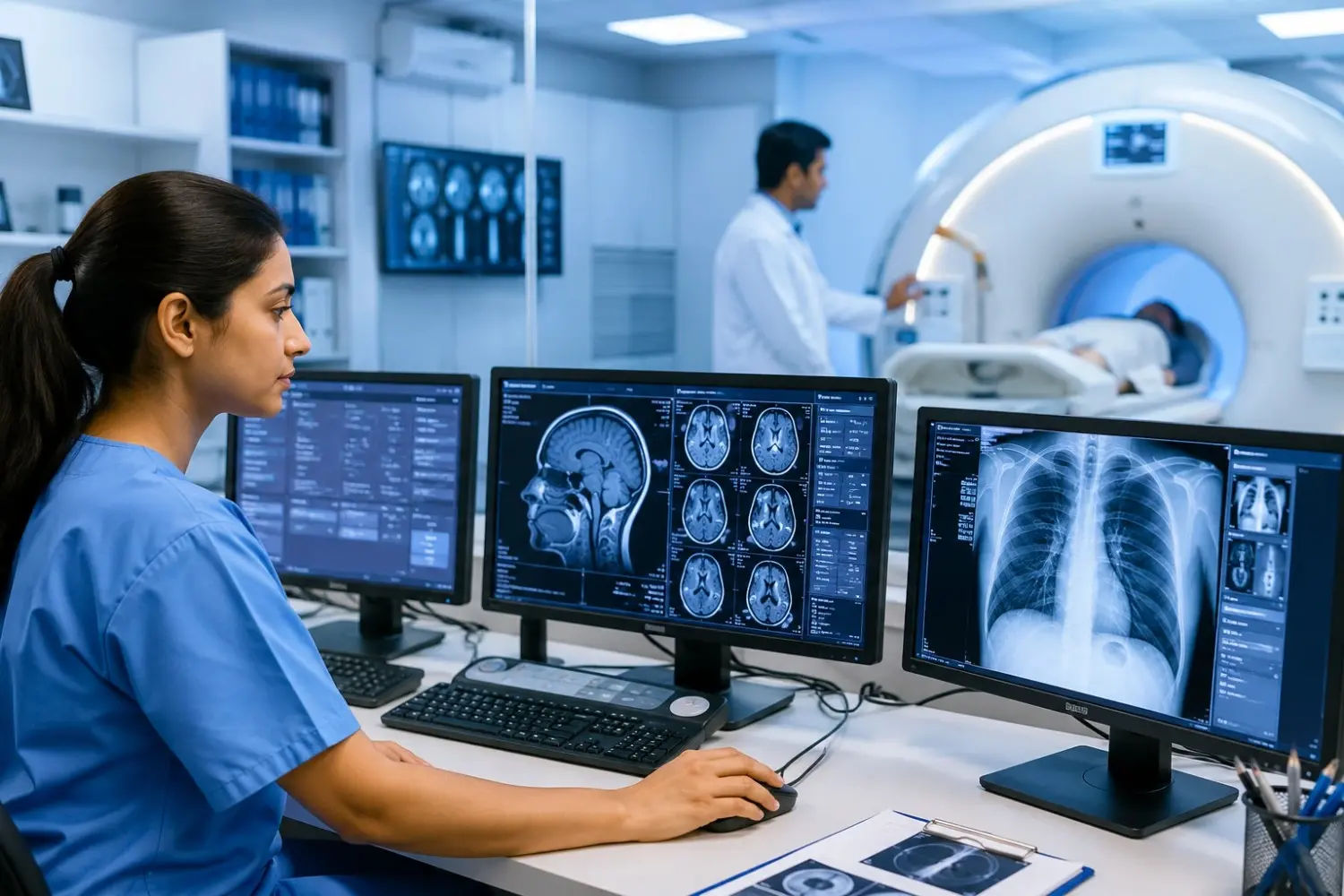
What is B.Sc Radiology? Course Overview & Career Scope 2026
The healthcare industry is evolving rapidly, and medical imaging has become one of the most important pillars of modern diagnosis and treatment. Among the many healthcare programs available today, B.Sc Radiology has emerged as a highly sought-after career path for students interested in medical technology and patient care.
With increasing demand for advanced diagnostic services, hospitals, diagnostic centers, and healthcare institutions are actively hiring skilled radiology professionals worldwide. If you are considering a healthcare career that combines technology, science, and patient interaction, a B.Sc. in Radiology could be an excellent choice.
For students exploring healthcare education pathways, career planning resources available through Vidya Udbhav can help in making informed academic decisions.
Quick Answer: What is B.Sc Radiology?
B.Sc Radiology (Bachelor of Science in Radiology) is a 3 to 4-year undergraduate degree program focused on medical imaging technologies used to diagnose and monitor diseases.
Students learn to operate diagnostic equipment such as:
- X-Ray machines
- CT Scanners
- MRI Machines
- Ultrasound Systems
- Mammography Equipment
- Fluoroscopy Systems
Radiology professionals work closely with doctors to provide accurate diagnostic images that support medical treatment and patient care.
B.Sc Radiology Course Overview
| Course Name | Bachelor of Science in Radiology |
| Duration | 3–4 Years |
| Eligibility | 10+2 with Science Stream |
| Admission Process | Merit-Based or Entrance Exam |
| Course Level | Undergraduate |
| Field | Allied Health Sciences |
| Career Opportunities | Hospitals, Diagnostic Centers, Research Institutes |
| Average Starting Salary | Varies by country, employer, and experience |
| Higher Studies | M.Sc Radiology, MBA Healthcare, Hospital Administration |
Understanding the Role of Radiology in Modern Healthcare
Radiology is the branch of medical science that uses imaging technologies to diagnose injuries, diseases, and internal health conditions.
Doctors rely heavily on radiological images to identify:
- Fractures
- Tumors
- Internal bleeding
- Organ disorders
- Neurological conditions
- Cardiovascular diseases
Without medical imaging, many conditions would be difficult to diagnose accurately.
This is why trained radiology professionals remain critical members of healthcare teams.
Why is B.Sc Radiology Becoming Popular in 2026?
Healthcare systems worldwide are experiencing unprecedented growth.
Several factors are driving demand for radiology professionals:
Growing Diagnostic Needs
An aging population and increased healthcare awareness have significantly boosted demand for diagnostic imaging.
Technological Advancements
Modern hospitals are investing heavily in:
- Artificial Intelligence-assisted imaging
- Digital radiography
- Advanced MRI systems
- High-resolution CT scanning
Expanding Healthcare Infrastructure
New hospitals, diagnostic centers, and specialty clinics require skilled imaging professionals.
Global Employment Opportunities
Radiology qualifications often open doors to international healthcare careers.
Eligibility Criteria for B.Sc Radiology
Although requirements vary by institution, most colleges follow similar eligibility criteria.
Academic Requirements
Students typically need:
- Completion of 10+2 education
- Science background
- Physics
- Chemistry
- Biology or Mathematics
Minimum Marks
Many institutions require a minimum percentage in qualifying examinations.
Entrance Exams
Some universities conduct entrance examinations, while others offer admission based on academic merit.
Students can explore educational guidance and admission support through the career planning guide available at Vidya Udbhav.
B.Sc Radiology Course Duration
The duration generally ranges from:
Three-Year Program
- Six semesters
- Classroom learning
- Laboratory training
- Clinical exposure
Four-Year Program
Some institutions include:
- Internship training
- Extended clinical rotations
- Research projects
Practical exposure plays a significant role in developing professional competence.
B.Sc Radiology Syllabus
The curriculum is designed to balance theoretical knowledge with practical skills.
First Year Subjects
- Human Anatomy
- Human Physiology
- Biochemistry
- Pathology Basics
- Medical Terminology
Second Year Subjects
- Radiographic Techniques
- Radiation Physics
- Imaging Equipment
- Diagnostic Procedures
- Patient Care
Third Year Subjects
- CT Imaging
- MRI Technology
- Ultrasound Imaging
- Advanced Radiology
- Radiation Safety
Clinical Training
Students gain hands-on experience in:
- Hospital imaging departments
- Diagnostic laboratories
- Clinical settings
This practical component helps bridge the gap between classroom learning and professional responsibilities.
Essential Skills Required for Success in Radiology
A degree alone is not enough.
Successful radiology professionals typically develop several important skills.
Technical Skills
- Equipment handling
- Imaging techniques
- Software operation
- Quality assurance
Communication Skills
Professionals must communicate effectively with:
- Patients
- Physicians
- Nurses
- Healthcare teams
Attention to Detail
Even minor imaging errors can affect diagnosis accuracy.
Problem-Solving Ability
Unexpected technical challenges often arise during imaging procedures.
Patient Management
Radiology professionals frequently work with anxious or critically ill patients.
Empathy and professionalism are essential.
Step-by-Step Career Path After B.Sc Radiology
Step 1: Complete Your Degree
Focus on both academic excellence and clinical experience.
Step 2: Internship or Clinical Training
Gain practical exposure in real healthcare environments.
Step 3: Obtain Required Certifications
Depending on the country or region, professional certifications may improve employability.
Step 4: Apply for Entry-Level Roles
Begin working in:
- Hospitals
- Diagnostic centers
- Imaging laboratories
Step 5: Pursue Specialization
Develop expertise in advanced imaging modalities such as MRI or CT scanning.
Career Opportunities After B.Sc Radiology
One of the biggest advantages of this degree is career versatility.
Radiology Technologist
Operates diagnostic imaging equipment and assists physicians.
MRI Technologist
Specializes in magnetic resonance imaging procedures.
CT Scan Technologist
Focuses on computed tomography imaging.
Diagnostic Imaging Technologist
Works with multiple imaging technologies.
Ultrasound Technician
Assists in diagnostic sonography procedures.
Radiation Safety Officer
Ensures compliance with radiation protection protocols.
Research Assistant
Supports medical imaging research projects.
Healthcare Equipment Specialist
Works with imaging technology manufacturers and service providers.
Industries Hiring Radiology Graduates
Hospitals
Public and private healthcare institutions remain the largest employers.
Diagnostic Imaging Centers
Dedicated imaging facilities offer specialized career opportunities.
Research Organizations
Medical research increasingly depends on advanced imaging technologies.
Educational Institutions
Experienced professionals may enter teaching and training roles.
Medical Equipment Companies
Imaging manufacturers hire radiology graduates for technical support and training.
B.Sc Radiology Salary Expectations in 2026
Salary depends on factors such as:
- Country
- Location
- Experience
- Employer type
- Specialization
- Certifications
Factors Influencing Salary Growth
| Clinical Experience | High |
| Advanced Certifications | High |
| MRI Specialization | High |
| CT Expertise | High |
| Leadership Roles | Very High |
| International Experience | Very High |
Professionals with advanced imaging expertise generally command higher compensation.
Benefits of Choosing B.Sc Radiology
Strong Job Demand
Healthcare services continue expanding worldwide.
Technology-Driven Profession
Ideal for students interested in medical technology.
Diverse Career Options
Multiple specialization pathways are available.
Global Career Scope
Many countries actively recruit imaging professionals.
Opportunities for Advancement
Advanced education can lead to leadership positions.
Challenges in the Radiology Profession
Every profession comes with challenges.
Radiation Exposure Risks
Proper safety protocols must always be followed.
Continuous Learning Requirements
Technology evolves rapidly.
Shift-Based Work
Hospitals often operate 24/7.
High Responsibility
Accurate imaging is critical for diagnosis.
The good news is that proper training prepares professionals to manage these challenges effectively.
Real-Life Example
Consider a patient arriving at the emergency department after a road accident.
Doctors may suspect internal injuries, but cannot confirm them immediately.
A radiology professional performs:
- X-rays
- CT scans
- Imaging assessments
The resulting images help doctors identify injuries quickly and initiate life-saving treatment.
This example highlights how radiology directly impacts patient outcomes.
Case Study: Growth of Medical Imaging Careers
A healthcare network expanded its diagnostic imaging facilities across multiple locations.
The result:
- Increased hiring of radiology professionals
- Greater demand for MRI technicians
- Higher need for CT specialists
- Expansion of diagnostic services
This reflects a broader global trend where imaging professionals are becoming increasingly essential.
Best Tools and Technologies Used in Radiology
Beginner-Friendly Technologies
- Digital X-Ray Systems
- Basic Ultrasound Equipment
Intermediate Technologies
- CT Scanners
- Mammography Systems
Advanced Technologies
- MRI Systems
- PET Scanners
- AI-Assisted Imaging Platforms
Understanding these technologies significantly enhances employability.
Beginner Strategy for Building a Successful Career
If you are just starting out, focus on:
- Strong academic performance
- Clinical exposure
- Communication skills
- Radiation safety knowledge
- Internship opportunities
One thing many beginners miss is the importance of patient interaction skills.
Technical knowledge is crucial, but professionalism and empathy also matter.
Advanced Career Growth Strategy
Experienced professionals can accelerate career growth through:
Specialization
Focus on:
- MRI Imaging
- CT Imaging
- Interventional Radiology
Leadership Development
Move into:
- Department supervision
- Imaging management
- Hospital administration
Higher Education
Popular options include:
- M.Sc Radiology
- MHA
- MBA Healthcare Management
- Hospital Administration
Common Mistakes Students Should Avoid
Choosing the Course Without Research
Understand the curriculum before enrolling.
Ignoring Practical Training
Clinical exposure is extremely valuable.
Neglecting Soft Skills
Communication affects career success.
Avoiding New Technologies
Stay updated with industry developments.
Lack of Networking
Professional connections often lead to better opportunities.
Expert Tips for Success in Radiology
Build Technical Expertise Early
Master imaging equipment during training.
Focus on Patient Safety
Radiation safety remains a core responsibility.
Pursue Certifications
Specialized certifications can improve career prospects.
Learn Healthcare Technology
Digital imaging systems continue to evolve.
Stay Curious
Lifelong learning is one of the most important qualities in healthcare.
Best Practices for Radiology Professionals
- Follow imaging protocols accurately.
- Maintain patient confidentiality
- Ensure radiation safety compliance.
- Participate in continuing education.
- Develop multidisciplinary collaboration skills.
These practices contribute to professional credibility and long-term success.
Future Trends in Radiology for 2026 and Beyond
The future of radiology looks highly promising.
Artificial Intelligence Integration
AI is assisting with image analysis and workflow optimization.
Digital Healthcare Expansion
Healthcare systems increasingly rely on digital imaging.
Tele-Radiology Growth
Remote image interpretation is becoming common worldwide.
Precision Medicine
Advanced imaging supports personalized treatment approaches.
Smart Diagnostic Systems
Machine learning continues to improve diagnostic efficiency.
Students entering radiology today are joining a field with significant future potential.
Related Educational Resources
Students interested in healthcare careers can also benefit from exploring:
- Student success roadmap
- Healthcare career planning resources
- Higher education guidance
- Professional course selection support
- Internship preparation resources
These educational resources can help students make informed academic and career decisions.
Actionable Final Advice
If you enjoy science, healthcare, technology, and helping people, B.Sc Radiology can be a rewarding career choice.
Start by:
- Researching accredited institutions.
- Understanding the curriculum.
- Developing technical and communication skills.
- Seeking practical training opportunities.
- Planning long-term specialization goals.
The combination of growing healthcare demand and rapid technological advancement makes radiology one of the most promising allied health science careers in 2026.
Conclusion
B.Sc Radiology is far more than a medical imaging course. It is a gateway to a technology-driven healthcare profession that plays a vital role in modern diagnosis and treatment.
As healthcare systems continue expanding globally, the demand for qualified radiology professionals is expected to remain strong. From hospitals and diagnostic centers to research organizations and medical technology companies, career opportunities are diverse and continually growing.
For students seeking a healthcare career with strong future prospects, practical impact, and opportunities for specialization, B.Sc Radiology stands out as an excellent choice in 2026 and beyond.
Frequently Asked Questions (FAQs)
1. What is B.Sc Radiology?
B.Sc Radiology is an undergraduate degree focused on medical imaging technologies such as X-ray, CT scan, MRI, and ultrasound used for diagnosing diseases and injuries.
2. What is the duration of a B.Sc Radiology course?
The course generally lasts between 3 and 4 years, depending on the institution and internship requirements.
3. Is B.Sc Radiology a good career option in 2026?
Yes. Growing healthcare infrastructure, increasing diagnostic needs, and advancements in imaging technology continue to create strong demand for radiology professionals.
4. What jobs can I get after B.Sc Radiology?
Graduates can work as Radiology Technologists, MRI Technologists, CT Scan Technologists, Diagnostic Imaging Technologists, Ultrasound Technicians, and Research Assistants.
5. Can I pursue higher studies after B.Sc Radiology?
Yes. Popular options include M.Sc Radiology, Hospital Administration, Healthcare Management, and specialized imaging certifications.
6. Is radiology difficult to study?
Radiology requires dedication to science and technology, but students with an interest in healthcare and medical imaging generally find it manageable and rewarding.
7. What skills are important for radiology professionals?
Key skills include technical expertise, attention to detail, communication skills, patient care abilities, problem-solving, and knowledge of radiation safety.