

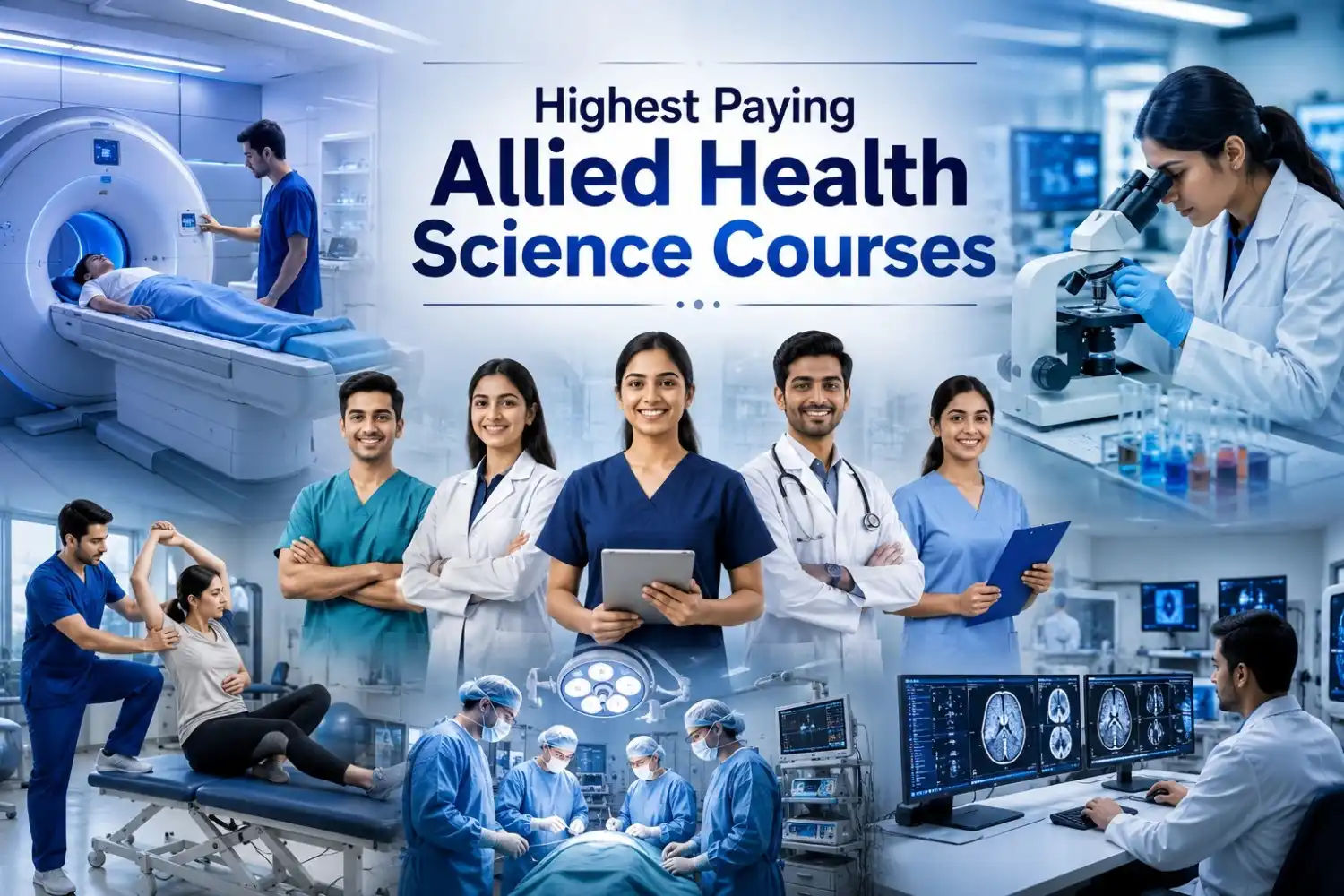
Highest-Paying Allied Health Science Courses
Healthcare is evolving rapidly, and the demand for skilled allied health professionals has never been higher. While doctors and nurses often receive the spotlight, allied health professionals play an equally important role in diagnosis, treatment, rehabilitation, and patient care.
If you're looking for a healthcare career that offers excellent earning potential, job security, and opportunities to work around the world, allied health science courses deserve serious consideration.
Whether you're a student planning your future or a professional considering a career switch, this guide explains the highest-paying allied health science courses, their career prospects, expected salaries, and how to choose the right specialization.
For more career planning resources, explore the career planning guide and student success roadmap available on www.vidyaudbhav.com.
What Are Allied Health Science Courses?
Quick Definition
Allied Health Science courses prepare professionals who support doctors, surgeons, nurses, and healthcare teams through specialized medical services such as diagnostics, imaging, rehabilitation, laboratory testing, anesthesia support, emergency care, and patient management.
Unlike MBBS, allied health professionals specialize in a particular healthcare field while working closely with multidisciplinary medical teams.
Search Intent Summary
| What are allied health science courses? | Healthcare programs that prepare specialists in diagnostics, therapy, imaging, rehabilitation, and patient care. |
| Are they high paying? | Yes. Many allied healthcare professions offer competitive salaries worldwide. |
| Who can apply? | Students after Class 12 (Science) and graduates seeking specialization. |
| Are global opportunities available? | Yes. Many countries actively recruit qualified allied health professionals. |
Why Allied Health Careers Are Growing Worldwide
Healthcare systems worldwide are experiencing shortages of skilled professionals.
Several factors are driving demand:
- Aging populations
- Growth of medical technology
- Expansion of diagnostic services
- Increased focus on preventive healthcare
- Rising demand for rehabilitation services
- Telemedicine and digital healthcare adoption
This means qualified allied health professionals enjoy excellent employment opportunities across hospitals, clinics, research centers, diagnostic laboratories, sports medicine facilities, and international healthcare organizations.
Highest-Paying Allied Health Science Courses
1. Medical Laboratory Science (MLS)
Medical Laboratory Scientists perform laboratory tests that help physicians diagnose diseases accurately.
Career Roles
- Clinical Laboratory Scientist
- Pathology Technologist
- Microbiology Specialist
- Molecular Diagnostics Professional
Global Salary Potential
High
Best For
Students interested in laboratory work, biology, and disease diagnosis.
2. Radiology and Medical Imaging Technology
Radiology professionals operate advanced imaging equipment, including MRI, CT Scan, PET Scan, Ultrasound, and Digital X-ray systems.
Career Opportunities
- MRI Technologist
- CT Scan Technologist
- Radiographer
- Imaging Specialist
Why It Pays Well
Advanced imaging technology requires specialized expertise, making experienced professionals highly valuable worldwide.
3. Cardiovascular Technology
Cardiovascular technologists assist cardiologists by conducting diagnostic tests for heart diseases.
Responsibilities include:
- ECG
- Echocardiography
- Stress testing
- Cardiac catheterization support
With cardiovascular diseases increasing globally, specialists remain in strong demand.
4. Operation Theatre and Anaesthesia Technology
Operation Theatre (OT) professionals ensure surgeries run safely and efficiently.
They assist surgeons and anesthesiologists by preparing equipment, monitoring instruments, and maintaining sterile environments.
Career Settings
- Multi-specialty hospitals
- Trauma centers
- Surgical hospitals
- Emergency care units
5. Physiotherapy
Physiotherapists help patients recover mobility after injuries, surgeries, strokes, and neurological disorders.
Career Options
- Sports Rehabilitation
- Orthopedic Clinics
- Neurological Rehabilitation
- Pediatric Physiotherapy
- Geriatric Care
One thing many beginners miss is that physiotherapy also offers opportunities in professional sports, fitness centers, and private practice.
6. Respiratory Therapy
Respiratory Therapists specialize in treating patients with breathing disorders.
Demand continues to grow due to:
- Chronic respiratory diseases
- Intensive care requirements
- Emergency medicine
- Neonatal care
7. Optometry
Optometrists diagnose vision problems and prescribe corrective solutions.
Career opportunities include:
- Eye Hospitals
- Optical Chains
- Vision Care Centers
- Private Practice
Growing awareness of eye health and increased screen usage continue to boost demand.
8. Nuclear Medicine Technology
This highly specialized field combines healthcare with advanced imaging technologies.
Professionals work with radioactive materials for diagnosis and treatment planning.
Although the training is more specialized, salaries are among the highest within allied healthcare.
9. Healthcare Management
Healthcare organizations require professionals who understand hospital operations, finance, quality management, and healthcare administration.
Suitable for students interested in leadership rather than direct patient care.
10. Emergency Medical Technology (EMT)
Emergency Medical Technicians provide immediate medical assistance during emergencies.
They work in:
- Ambulance services
- Emergency departments
- Disaster response
- Trauma centers
The role requires quick decision-making and strong clinical skills.
Salary Comparison
| Medical Laboratory Science | ★★★★★ | High | Excellent |
| Radiology & Imaging | ★★★★★ | Very High | Excellent |
| Physiotherapy | ★★★★★ | High | Excellent |
| Optometry | ★★★★☆ | High | Very Good |
| Cardiovascular Technology | ★★★★★ | Very High | Excellent |
| OT & Anaesthesia Technology | ★★★★★ | High | Excellent |
| Respiratory Therapy | ★★★★★ | Very High | Excellent |
| Nuclear Medicine Technology | ★★★★☆ | Extremely High | Excellent |
| Healthcare Management | ★★★★★ | High | Excellent |
| Emergency Medical Technology | ★★★★☆ | High | Strong |
How to Choose the Right Allied Health Course
Now let us understand how to make the right decision.
Consider these factors:
- Personal interests
- Academic strengths
- Global job demand
- Salary expectations
- Duration of study
- Licensing requirements
- Future specialization opportunities
Choosing a course based solely on salary often leads to dissatisfaction. Instead, look for a balance between passion, career stability, and earning potential.
For additional guidance, explore the career counselling resources and course selection guidance on www.vidyaudbhav.com.
Benefits of Allied Health Science Careers
- High employability
- Competitive salaries
- Global career opportunities
- Diverse specializations
- Opportunities for higher education
- Stable long-term career growth
- Direct contribution to patient care
- Strong work-life balance in many specialties
Challenges You Should Know
Every profession has its challenges.
Common ones include:
- Continuous skill upgrades
- Shift-based work in hospitals
- Emotional demands of patient care
- Licensing requirements in some countries
- Keeping pace with rapidly evolving medical technology
Understanding these challenges early helps you prepare for long-term success.
Real-Life Career Example
Imagine two students who both completed Class 12 with Science.
One chooses Radiology and Medical Imaging Technology, while the other opts for Medical Laboratory Science.
Within a few years, both secured positions in modern hospitals. As they gain certifications and experience, they become eligible for senior roles, specialized departments, international recruitment, and leadership opportunities.
This illustrates how allied healthcare careers reward continuous learning and professional development.
Helpful Tools for Students
Beginner-Friendly
- Google Scholar
- Coursera
- Khan Academy
Free Learning Resources
- WHO Learning Resources
- Open Educational Resources
Premium Learning Platforms
- LinkedIn Learning
- Udemy
- Elsevier Learning
Beginner Strategy
If you're just starting:
- Understand different healthcare specializations.
- Research career outcomes.
- Compare course duration and eligibility.
- Speak with career counsellors.
- Choose a recognized institution.
- Build practical skills through internships.
- Continue learning after graduation.
Advanced Career Growth Strategy
Professionals can increase their earning potential by:
- Pursuing postgraduate qualifications
- Obtaining international certifications
- Learning advanced medical technologies
- Developing leadership skills
- Participating in research projects
- Specializing in high-demand healthcare fields
Common Mistakes to Avoid
Here is where many people make mistakes.
- Choosing a course only because friends selected it
- Ignoring practical training opportunities
- Overlooking global licensing requirements
- Not researching future demand.
- Ignoring communication and soft skills
- Focusing only on starting salary
Expert Tips
Healthcare recruiters consistently value candidates who combine technical knowledge with communication, teamwork, and adaptability.
Here is what actually works:
- Build clinical confidence during internships.
- Stay updated with healthcare technology.
- Develop digital healthcare skills.
- Learn medical documentation standards.
- Invest in continuous professional education.
These habits often create better career growth than academic grades alone.
Future Trends in Allied Health Science
The future of allied healthcare is being shaped by:
- Artificial Intelligence in diagnostics
- Robotic-assisted healthcare
- Digital imaging innovations
- Precision medicine
- Personalized rehabilitation
- Telehealth services
- Remote patient monitoring
- Healthcare data analytics
Professionals who embrace these innovations will likely enjoy stronger career prospects over the coming decade.
Final Actionable Advice
If your goal is to build a meaningful healthcare career with excellent salary potential and global opportunities, allied health science is one of the smartest choices available today.
Research your interests, compare specializations carefully, seek guidance from experienced career counsellors, and select a program that aligns with your long-term aspirations.
You can also explore the healthcare career resources, admission guidance, and student success roadmap available on www.vidyaudbhav.com to make a well-informed decision.
Conclusion
Allied health science professionals are essential to modern healthcare systems. From diagnosing diseases and operating advanced medical equipment to helping patients recover and improving healthcare management, these careers offer both purpose and financial stability.
With healthcare demand increasing worldwide, students who choose the right allied health science course today can build rewarding, future-ready careers with opportunities across hospitals, research institutions, diagnostic centers, rehabilitation facilities, and international healthcare organizations.
The key is choosing a specialization that matches your interests, developing practical skills, and committing to lifelong learning.
Frequently Asked Questions (FAQs)
1. Which allied health science course has the highest salary?
Radiology and Medical Imaging Technology, Nuclear Medicine Technology, Cardiovascular Technology, and Respiratory Therapy are among the highest-paying allied health science specializations globally.
2. Are allied health science courses good for international careers?
Yes. Many countries actively recruit qualified allied health professionals due to growing healthcare demands and workforce shortages.
3. Can I pursue allied health science after Class 12?
Yes. Most undergraduate allied health science programs are open to students who have completed Class 12 with a Science background, depending on the institution's eligibility criteria.
4. Which allied health course has the best job opportunities?
Medical Laboratory Science, Physiotherapy, Radiology, Operation Theatre Technology, and Healthcare Management consistently offer strong employment opportunities worldwide.
5. Is allied health science a good career in the future?
Absolutely. Advances in medical technology, aging populations, and expanding healthcare systems are expected to increase demand for allied health professionals for many years.
6. What skills are important for allied health professionals?
Technical knowledge, communication, critical thinking, teamwork, empathy, adaptability, and continuous learning are all essential for long-term success.