

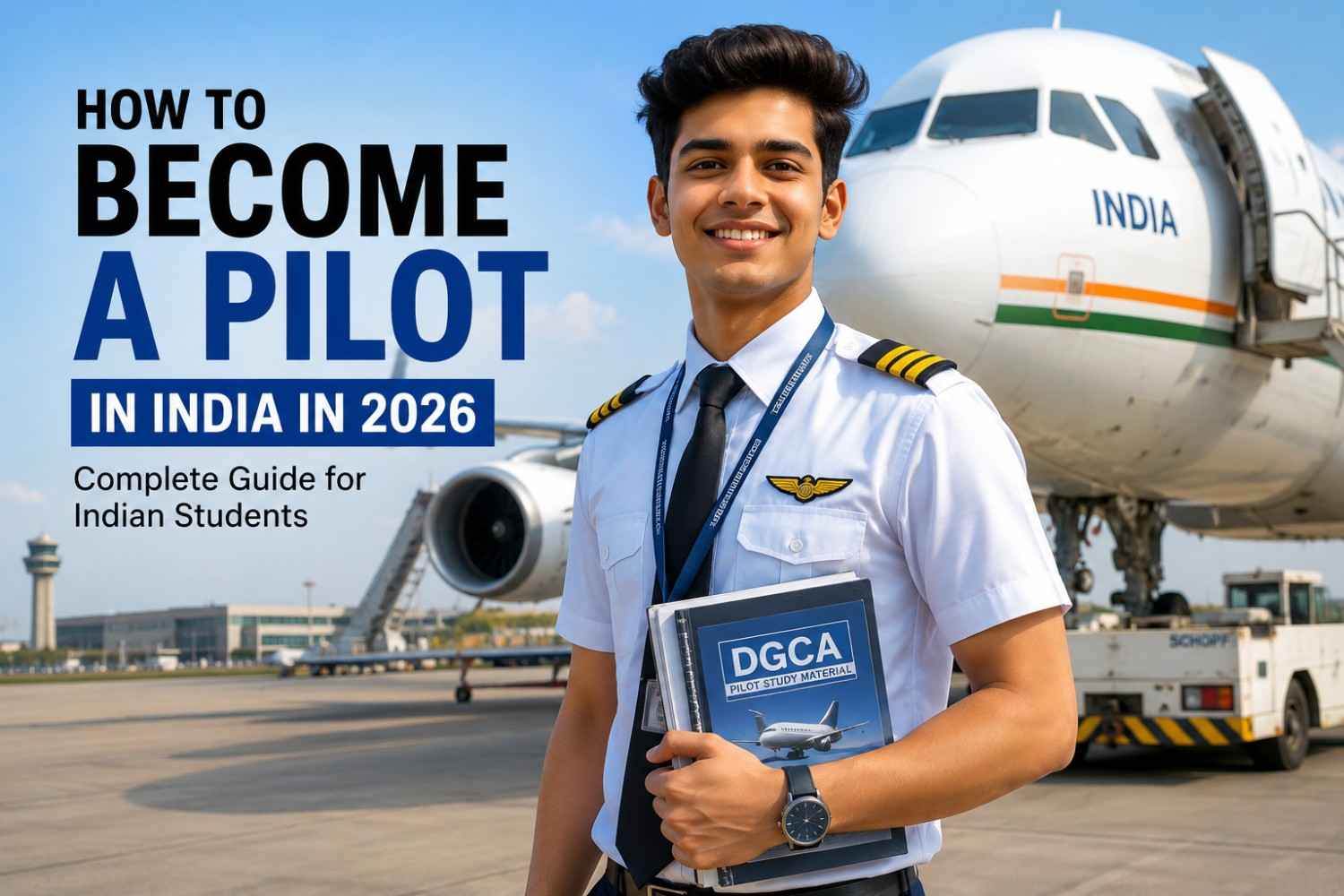
How to Become a Pilot in India in 2026
Introduction
Becoming a pilot is one of the biggest dreams for many students in India. Every year, thousands of students imagine themselves flying commercial aircraft for top airlines like IndiGo, Air India, and Akasa Air. But when it comes to actually starting the journey, most students get confused.
Which course should you choose?
How much money is required?
Can an average student become a pilot?
Is becoming a pilot possible without a rich family background?
How much money is required?
Can an average student become a pilot?
Is becoming a pilot possible without a rich family background?
If you are thinking the same, you are not alone.
The good news is that becoming a pilot in India in 2026 is more achievable than before. New airlines are growing, aviation demand is increasing, and more training options are now available for Indian students.
This detailed guide by Vidya Udbhav will help you understand everything step by step in simple language.
You will learn:
- Eligibility requirements
- Pilot courses after 12th
- Fees and budget planning
- Types of pilot licenses
- Best flying schools in India
- Career opportunities
- Common mistakes students make
- Affordable ways to start your aviation career
If you seriously want to become a pilot in India in 2026, this guide can save you time, money, and confusion.
What Does a Pilot Actually Do?
A pilot is responsible for operating an aircraft safely. But the job is not only about flying planes.
A professional pilot also:
- Checks weather conditions
- Understands flight routes
- Handles aircraft systems
- Communicates with air traffic control
- Ensures passenger safety
- Makes quick decisions during emergencies
You might be thinking that pilots only need confidence and good English. Here is what actually works: discipline, technical understanding, patience, and continuous training matter much more.
Why Pilot Career Is Growing Fast in India
India is one of the fastest-growing aviation markets in the world. More airports are opening in smaller cities under the government’s regional connectivity programs.
Because of this:
- Airlines need more pilots
- Domestic flights are increasing
- International travel demand is rising
- Aviation jobs are expanding
According to aviation industry reports, India may require thousands of new pilots in the coming years.
That means students starting preparation in 2026 can have strong career opportunities ahead.
Eligibility to Become a Pilot in India
Before choosing any aviation course, you must know the basic eligibility requirements.
Educational Qualification
To become a commercial pilot in India, you must:
- Pass 12th class from a recognized board
- Have Physics and Mathematics subjects
- Score at least 50% marks in many institutes
Students from CBSE, ICSE, and state boards are all eligible.
What If You Did Not Have Physics or Maths?
Many students from a commerce or arts background feel disappointed here.
But there is a solution.
You can complete Physics and Maths through:
- NIOS (National Institute of Open Schooling)
- Open schooling programs
- Additional subject exams
This is very common in India now.
Age Requirement
- Minimum age for Student Pilot License: 16 years
- Minimum age for Commercial Pilot License (CPL): 18 years
Medical Fitness
Pilot training requires medical fitness approved by DGCA.
Main checks include:
- Eyesight
- Hearing
- Blood pressure
- General physical fitness
Do not panic if you wear glasses. Many pilots fly with corrected vision.
Types of Pilot Licenses in India
Understanding pilot licenses is very important.
1. Student Pilot License (SPL)
This is the beginner-level license.
It allows students to start flight training.
2. Private Pilot License (PPL)
PPL allows you to fly privately but not earn money as a commercial pilot.
Many students skip directly toward CPL training.
3. Commercial Pilot License (CPL)
This is the most important license if you want to work for airlines.
You need:
- Flight training hours
- DGCA exams
- Medical clearance
4. Airline Transport Pilot License (ATPL)
This is a higher-level license required for senior airline captains.
Most students first complete CPL and later move toward ATPL.
Step-by-Step Guide to Becoming a Pilot in India in 2026
Step 1: Complete 12th with Physics and Maths
Focus on:
- Physics basics
- Mathematics calculations
- English communication
Even average students can become pilots with proper preparation.
Helpful Subjects for Aviation
| Physics | Aircraft principles |
| Mathematics | Navigation and calculations |
| English | Communication with ATC |
| Geography | Weather and routes |
Step 2: Clear DGCA Medical Test
DGCA medical approval is compulsory.
You should:
- Avoid unhealthy lifestyle habits.
- Maintain proper eye care.
- Stay physically active
Many students ignore medical checks and later face problems. It is smarter to complete medical fitness early.
Step 3: Choose a Flying School
India has many flying academies. But choosing the right one is extremely important.
Things to Check Before Admission
- DGCA approval
- Aircraft availability
- Instructor quality
- Placement support
- Safety record
- Hidden charges
Do not select a flying school only because of social media advertisements.
Best Flying Schools in India
Some well-known flying academies include:
- Indira Gandhi Rashtriya Uran Akademi
- Bombay Flying Club
- Madhya Pradesh Flying Club
- CAE Gondia
- IndiGo Cadet Pilot Program
Before taking admission, compare:
- Total cost
- Training duration
- Student reviews
- Aircraft condition
Step 4: Pass DGCA Exams
DGCA exams are mandatory for pilot training.
Main subjects include:
- Air Navigation
- Meteorology
- Air Regulations
- Technical General
How Indian Students Can Prepare Smartly
You do not always need expensive coaching.
Affordable preparation options:
- YouTube aviation channels
- DGCA question banks
- Online mock tests
- Telegram aviation groups
- Aviation study apps
Students from smaller cities are now clearing DGCA exams through online preparation itself.
Step 5: Complete Flight Training Hours
To get a CPL in India, students usually need around 200 flying hours.
Training includes:
- Solo flying
- Cross-country flights
- Night flying
- Instrument training
This stage develops real flying confidence.
How Much Does Pilot Training Cost in India in 2026?
This is the biggest question for most families.
Pilot training is expensive, but proper planning helps.
Estimated Cost Breakdown
| Ground Classes | ₹2 lakh to ₹5 lakh |
| Flying Training | ₹35 lakh to ₹55 lakh |
| Medical Tests | ₹10,000 to ₹25,000 |
| DGCA Exams | ₹20,000 to ₹50,000 |
| Accommodation | ₹2 lakh to ₹6 lakh |
Total Estimated Cost
Around ₹40 lakh to ₹70 lakh depending on:
- Flying school
- Aircraft type
- Location
- Training duration
Budget-Friendly Ways for Indian Students
Many students believe pilot training is impossible financially.
But here are practical options that actually help.
1. Education Loans
Many Indian banks offer aviation education loans.
Banks may consider:
- Family income
- Institute approval
- Future earning potential
2. Cadet Pilot Programs
Some airlines offer cadet programs where training is structured directly for airline jobs.
3. Scholarships
Aviation scholarships are limited but available in some institutes.
4. Part-Time Study Planning
Some students complete graduation alongside aviation theory preparation.
This reduces career pressure.
Can Middle-Class Students Become Pilots?
Yes, absolutely.
Many Indian pilots come from:
- Small towns
- Middle-class families
- Hindi-medium schools
The key difference is planning and consistency.
Here is what actually works:
- Starting preparation early
- Researching properly
- Avoiding fake institutes
- Improving English communication gradually
- Staying disciplined
Do not compare yourself with students who already have aviation backgrounds.
How Long Does It Take to Become a Pilot in India?
Average duration:
- 18 months to 3 years
Sometimes delays happen because of:
- Weather conditions
- Aircraft availability
- Exam schedules
- Medical approval issues
Patience is very important in aviation training.
Skills Required to Become a Successful Pilot
Aviation is not only about marks.
You should also develop:
Communication Skills
Pilots must communicate clearly with the crew and air traffic control.
Decision-Making Ability
Quick thinking matters during unexpected situations.
Confidence
Pilots handle the responsibility for many passengers.
Discipline
Training schedules can be strict and demanding.
Technical Understanding
Basic aircraft systems knowledge is important.
Best Courses Related to Aviation After 12th
If direct pilot training feels expensive initially, you can also explore aviation-related courses.
Popular Aviation Courses
| BSc Aviation | 3 Years |
| Diploma in Aviation | 1 to 2 Years |
| Aircraft Maintenance Engineering | 2 to 4 Years |
| Cabin Crew Training | 6 Months to 1 Year |
| Airport Management | 1 to 3 Years |
These courses can also create aviation career opportunities.
Online Platforms Helpful for Indian Aviation Students
Students today can learn much faster using online resources.
Useful Learning Platforms
| YouTube | Free aviation concepts |
| Udemy | Affordable aviation courses |
| Unacademy | Competitive exam preparation |
| DGCA Portal | Official updates |
| Coursera | Aviation basics |
Common Mistakes Students Make
Avoiding these mistakes can save lakhs of rupees.
Choosing Cheap But Poor Institutes
Low fees sometimes mean:
- Fewer aircraft
- Delayed flying hours
- Poor management
Ignoring Medical Fitness
Some students start training without medical approval.
Always complete DGCA medical first.
Poor English Communication
You do not need foreign-level English.
But basic speaking confidence is necessary.
Practice daily:
- Aviation vocabulary
- Listening skills
- English conversations
Believing Social Media Hype
Many aviation influencers only show a luxury lifestyle.
Real pilot training includes:
- Stress
- Exams
- Long study hours
- Financial planning
Career Opportunities After Becoming a Pilot
After CPL, pilots can work in multiple sectors.
Airline Pilot
Work with domestic or international airlines.
Cargo Pilot
Transport goods and shipments.
Charter Pilot
Fly private aircraft for companies or individuals.
Flight Instructor
Train future pilots.
Government Aviation Roles
Some pilots work in:
- State aviation departments
- Emergency services
- Special aviation operations
Salary of Pilots in India in 2026
Pilot salaries depend on:
- Experience
- Airline
- Aircraft type
Approximate Salary Range
| Fresher Pilot | ₹1.5 lakh to ₹4 lakh per month |
| Experienced First Officer | ₹5 lakh to ₹8 lakh per month |
| Captain | ₹10 lakh+ per month |
These figures vary based on airline and experience.
Is Pilot Career Safe in the Future?
Many students worry about automation and AI.
But aviation still requires trained human pilots for:
- Decision-making
- Safety handling
- Passenger management
- Emergency response
The aviation industry continues to grow globally.
Tips for Students from Small Cities in India
Students from places like Dadri, Meerut, Patna, Ranchi, Guwahati, or Jaipur often feel aviation is only for metro-city students.
That is not true anymore.
Practical Advice
- Improve spoken English slowly
- Use free online aviation resources
- Join aviation discussion groups
- Watch real pilot interviews
- Visit nearby airports if possible
- Build confidence gradually
Even small daily progress matters.
How to Prepare at the School Level
If you are in Class 9th, 10th, or 11th, start early.
Focus Areas
- Physics basics
- Mental maths
- English speaking
- General awareness
- Discipline
You do not need expensive coaching from the beginning.
Difference Between Cadet Pilot Program and Traditional CPL
| Airline Tie-Up | Yes | Usually No |
| Cost | Higher | Flexible |
| Job Structure | More direct | Depends on placements |
| Training Process | Structured | Independent |
Choose based on:
- Budget
- Career goals
- Risk comfort
Reality of Pilot Training in India
Let us be honest.
Pilot training is exciting, but it is also demanding.
You may face:
- Financial pressure
- Delays
- Exam stress
- Self-doubt
But students who stay consistent usually move ahead successfully.
The aviation industry values discipline more than shortcuts.
Final Action Plan for Beginners
If you seriously want to become a pilot in India in 2026, follow this roadmap:
Beginner Action Checklist
- Complete 12th with Physics and Maths
- Research DGCA-approved flying schools
- Clear medical examination early
- Improve English communication
- Start DGCA subject preparation
- Plan finances smartly
- Compare the institutes carefully
- Stay consistent during training
Final Words
Becoming a pilot in India is a big dream, but it is no longer limited to only wealthy families or metro-city students.
With proper planning, smart financial decisions, and consistent effort, many Indian students are successfully entering the aviation industry.
You might feel confused in the beginning. That is normal.
The important thing is to start learning step by step instead of delaying your dream.
At Vidya Udbhav, students can explore career guidance, education support, and practical advice for building a successful future in India.
Whether you are in school, college, or preparing after 12th, aviation can become a realistic career path if you stay focused and informed.
External Reference
Official DGCA Website: Directorate General of Civil Aviation (DGCA)