

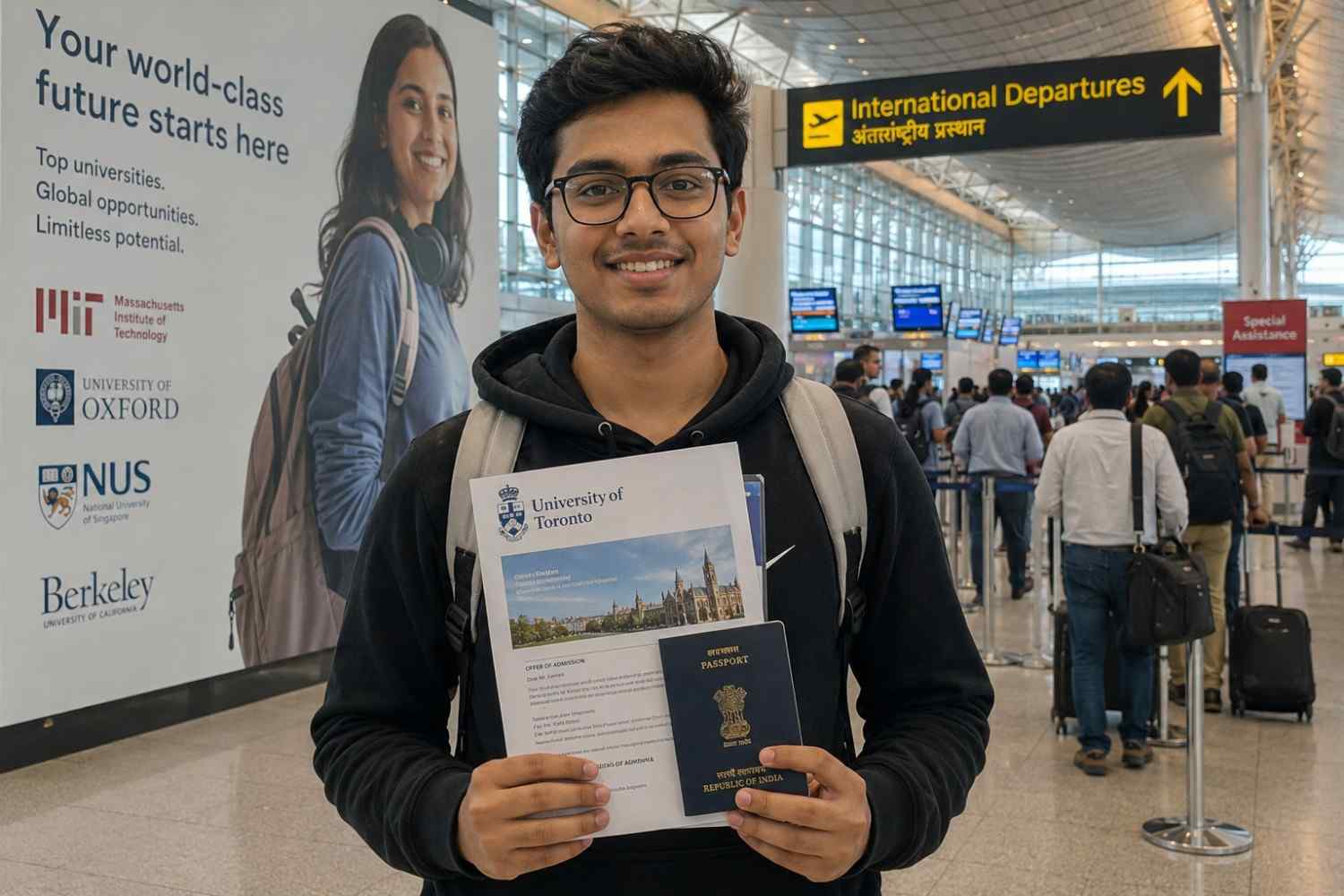
Studying abroad is a dream for many Indian students. Every year, thousands of students from India move to countries like the USA, Canada, the UK, Australia, Germany, and Dubai for higher education. Some students want better career opportunities, while others look for global exposure, practical learning, and international degrees.
But one common question comes to almost every student’s mind:
“How do I actually get admission in foreign universities?”
The process may look confusing at first. There are exams, documents, applications, visas, scholarships, and deadlines. You might be thinking that only rich students or toppers can study abroad. Here is what actually works — with proper planning, the right guidance, and smart budgeting, even middle-class Indian students can study in top international universities.
In this complete guide, you will learn the step-by-step admission process for study abroad universities in simple language.
Why Indian Students Choose to Study Abroad Universities
Many Indian students prefer foreign universities because they offer:
- Better practical education
- Global job opportunities
- Advanced research facilities
- International exposure
- Better salary packages
- Modern teaching methods
- Internship opportunities during studies
Countries like Canada and Germany are especially popular among Indian students because of affordable education and good career opportunities.
Best Countries for Indian Students to Study Abroad
Here is a quick comparison of popular study abroad destinations:
| USA | MBA, Computer Science, Engineering | High | Excellent |
| Canada | Business, IT, Healthcare | Medium | Very Good |
| UK | Management, Law, Data Science | Medium to High | Good |
| Australia | Nursing, Hospitality, Engineering | Medium | Very Good |
| Germany | Mechanical, Automotive, IT | Low or Free in public universities | Good |
| Dubai | Business, Aviation, Hospitality | Medium | Growing |
| Ireland | Data Analytics, IT | Medium | Strong Tech Industry |
Indian students usually select countries based on budget, career goals, visa success rate, and job opportunities.
Basic Eligibility for Admission in Foreign Universities
Different universities have different requirements, but most universities ask for these:
For Undergraduate Courses
- 10th and 12th marksheets
- Good English communication
- Passport
- Statement of Purpose (SOP)
- IELTS or equivalent English test
For Master’s Courses
- Graduation degree
- Academic transcripts
- Resume or CV
- SOP
- Recommendation letters
- English proficiency test
Some universities may also ask for entrance exams like GRE, GMAT, SAT, or ACT.
Step-by-Step Process to Get Admission in Study Abroad Universities
Step 1: Choose Your Course and Career Goal
This is the most important step.
Do not choose a course just because your friend selected it. Think carefully about:
- Your interests
- Career opportunities
- Salary potential
- Budget
- Future demand
For example:
- Students interested in technology can choose Data Science, AI, or Cyber Security.
- Students from commerce backgrounds may prefer an MBA or Business Analytics.
- Healthcare students can explore Nursing or Public Health.
Choosing the right course early saves time and money.
Step 2: Select the Right Country
Every country has different advantages.
Choose Canada if:
- You want PR opportunities.
- You want affordable education compared to the USA.
- You want part-time work options.
Choose Germany if:
- You want low tuition fees.
- You are interested in engineering.
- You can manage basic German language learning.
Choose the USA if:
- You want top-ranked universities.
- You aim for high-paying jobs.
- You are interested in research.
Budget is also very important. Many Indian students make the mistake of selecting expensive universities without financial planning.
Step 3: Research Universities Properly
Now shortlist universities based on:
- Course quality
- Tuition fees
- Scholarship opportunities
- Location
- Internship opportunities
- University ranking
- Student reviews
You can check university details on official websites and educational portals.
A good approach is:
- 3 dream universities
- 4 moderate universities
- 3 safe universities
This increases your chances of admission.
You can also explore guidance articles on Vidya Udbhav Blog for career and admission-related support.
Step 4: Prepare for English Proficiency Tests
Most universities require proof of English skills.
Popular tests include:
- IELTS
- TOEFL
- PTE
- Duolingo English Test
IELTS is the most popular among Indian Students
Generally:
- 6.0 to 6.5 bands are accepted in many universities
- Top universities may require 7.0 or higher.
Budget-Friendly Preparation Tips
- Use YouTube IELTS channels
- Practice on free mock test websites
- Join affordable online coaching.
- Practice speaking daily
Many students from small towns in India clear IELTS through self-study.
Step 5: Prepare Required Documents
Documentation is a very important part of the study abroad admission.
Main Documents Required
Academic Documents
- 10th marksheet
- 12th marksheet
- Graduation certificates
- Transcripts
Personal Documents
- Passport
- Passport-size photos
- Resume
University Documents
- SOP
- Recommendation Letters
- English test score
What is SOP and why is it Important?
SOP means Statement of Purpose.
This is where you explain:
- Why did you select the course
- Why did you select the university
- Your future goals
- Your background
A strong SOP can improve admission chances even if your marks are average.
Common SOP Mistakes
- Copy-pasting from the internet
- Using difficult English unnecessarily
- Writing fake achievements
- Making it too lengthy
Keep it honest and simple.
Step 6: Apply to Universities
Most universities accept online applications.
You need to:
- Create an account
- Upload documents
- Pay application fees
- Submit forms
Important Tip
Always apply early.
Many universities provide:
- Early scholarships
- Faster admission decisions
- Better visa preparation time
Indian students often delay applications and miss good opportunities.
Step 7: Apply for Scholarships
Studying abroad can be expensive, but scholarships help reduce costs.
Popular Scholarship Types
- Merit-based scholarships
- Need-based scholarships
- Government scholarships
- University scholarships
Scholarships Popular Among Indian Students
- Chevening Scholarship
- Erasmus Scholarship
- DAAD Scholarship
- Commonwealth Scholarship
Some universities automatically consider students for scholarships after admission applications.
Step 8: Receive Offer Letter
If your application is accepted, the university sends:
- Conditional Offer Letter
or - Unconditional Offer Letter
Conditional Offer Letter
Means you still need to:
- Submit pending documents
- Clear English test
- Complete graduation
Unconditional Offer Letter
Means your admission is confirmed.
Step 9: Arrange Finances and Education Loan
Now comes the financial planning stage.
Major Expenses Include
- Tuition fees
- Visa fees
- Air tickets
- Accommodation
- Health insurance
- Daily expenses
Education Loans in India
Indian students commonly take loans from:
- SBI
- HDFC Credila
- ICICI Bank
- Axis Bank
Compare:
- Interest rates
- Moratorium period
- Processing fees
Some countries also require proof of funds for visa approval.
Step 10: Apply for a Student Visa
After admission confirmation, apply for a student visa.
Visa requirements vary by country.
Usually required:
- Passport
- Offer letter
- Financial proof
- Medical reports
- Visa forms
Common Visa Interview Questions
- Why this country?
- Why this course?
- Who is sponsoring your education?
- What are your future plans?
Confidence and honesty are very important during interviews.
Affordable Ways to Study Abroad for Indian Students
Many students think foreign education always costs lakhs and crores. That is not always true.
Here are some low-cost options.
Choose Public Universities
Countries like Germany have low-cost public universities.
Work Part-Time
Most countries allow students to work:
- 20 hours per week during studies
- Full-time during vacations
This helps manage living expenses.
Apply for Scholarships
Even partial scholarships reduce financial burden.
Use Budget-Friendly Accommodation
Students often save money by:
- Sharing apartments
- Staying in student housing
- Cooking food themselves
Best Online Platforms for Study Abroad Preparation
Here are some useful platforms Indian students use:
| Coursera | Skill courses |
| Duolingo | Language practice |
| IELTS Liz | IELTS preparation |
| LinkedIn Learning | Professional skills |
| YouTube | Free guidance |
| Government scholarship portals | Funding opportunities |
Common Mistakes Indian Students Should Avoid
Selecting Country Only Because Friends Are Going
Your career goals may be completely different.
Ignoring Budget Planning
Always calculate:
- Tuition
- Rent
- Food
- Travel
- Emergency expenses
Applying Late
Late applications reduce:
- Scholarship chances
- Visa preparation time
Not Checking University Accreditation
Always apply to recognised universities only.
Fake Documents or Wrong Information
This can lead to:
- Visa rejection
- Admission cancellation
- Future travel problems
Practical Tips That Actually Help
Start Early
Begin planning at least:
- 12 months before intake
Improve Communication Skills
Good English communication helps in:
- Interviews
- Visa process
- Part-time jobs
Learn Basic Skills
Students with extra skills get better opportunities.
Examples:
- Excel
- Coding
- Communication
- Presentation skills
Build LinkedIn Profile
Many international universities and recruiters check professional profiles.
Study Abroad Timeline for Indian Students
Here is a simple timeline:
| 12 Months | Research countries and courses |
| 10 Months | Prepare IELTS/GRE |
| 8 Months | Apply to universities |
| 6 Months | Receive offers |
| 5 Months | Arrange finances |
| 3 Months | Apply for visa |
| 1 Month | Book flights and accommodation |
Is Study Abroad Worth It?
For many students, yes.
But success depends on:
- Course selection
- Financial planning
- Skills
- Hard work
A foreign degree alone does not guarantee success. Students who actively build skills, network, and gain experience usually get better outcomes.
You might see students posting glamorous foreign lifestyle videos online. Reality is different. Most students abroad manage studies, cooking, assignments, and part-time jobs together.
Still, the exposure and opportunities can completely change your career.
How Vidya Udbhav Guidance Can Help Students
Many students feel confused during:
- University selection
- SOP writing
- Visa preparation
- Scholarship applications
This is where proper guidance becomes useful.
Professional counselling helps students:
- Avoid mistakes
- Select suitable universities
- Understand career options
- Save time and money
Final Thoughts
Getting admission to study at a university abroad is not as difficult as many students think. The key is proper planning, early preparation, realistic budgeting, and choosing the right path.
Thousands of Indian students from small towns and middle-class families successfully study abroad every year. Many begin with limited knowledge and average academic backgrounds.
What makes the difference is:
- Consistency
- Research
- Good guidance
- Smart preparation
Start step by step. Research your options carefully. Build your skills. Prepare documents early. Most importantly, choose a course and country that genuinely match your goals.
Your study abroad journey can become a life-changing experience if planned correctly.