

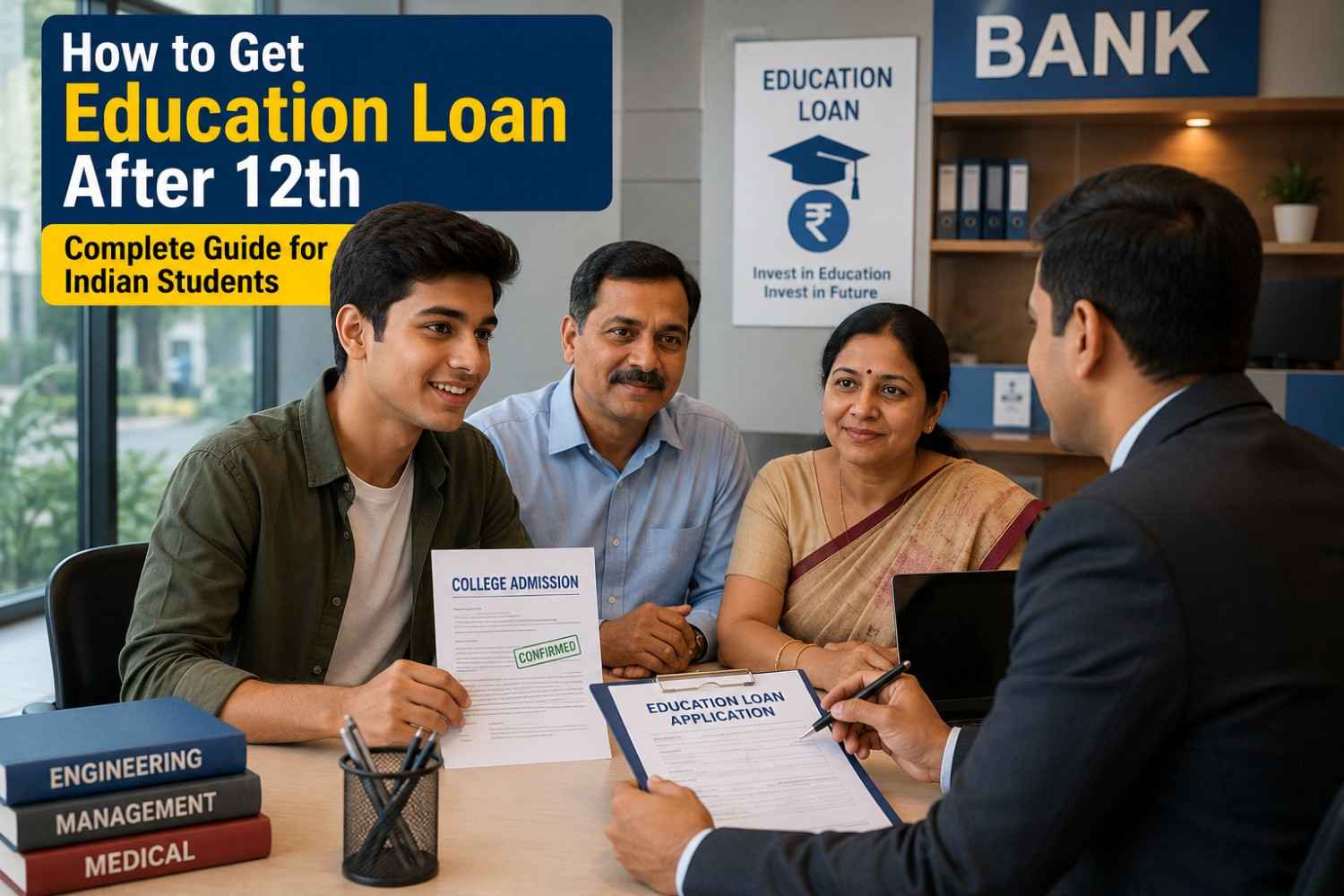
Choosing what to do after Class 12 is one of the biggest decisions in a student’s life. Some students want to become engineers, doctors, designers, lawyers, or pilots. Others want to study abroad or join professional courses. But there is one common problem many Indian families face — money.
Higher education is becoming expensive every year. Tuition fees, hostel charges, books, travel expenses, coaching, and laptop costs can put pressure on middle-class families. This is where an education loan becomes helpful.
If you are wondering how to get an education loan after 12th, this guide will help you understand the complete process in simple language. Whether you are planning to study in India or abroad, this article explains eligibility, documents, banks, repayment rules, mistakes to avoid, and smart tips for Indian students.
You might think getting an education loan is difficult. Actually, it becomes much easier when you understand the process step by step.
What Is an Education Loan?
An education loan is money borrowed from a bank or financial institution to pay for higher studies. The student repays the loan later after completing the course and getting a job.
Education loans usually cover:
- College tuition fees
- Hostel and accommodation charges
- Examination fees
- Books and study materials
- Laptop or equipment
- Travel expenses for abroad studies
- Course-related expenses
Many Indian students use education loans for courses like:
- B.Tech
- MBBS
- BBA
- MBA
- Nursing
- Law
- Pharmacy
- Hotel Management
- Aviation
- Foreign education programs
Why Indian Students Need Education Loans After 12th
In India, many families save for education, but professional courses can still become expensive.
Here are some common situations:
| Private Engineering College | ₹6 to ₹15 lakh |
| MBBS in Private College | ₹30 lakh to ₹1 crore |
| Study Abroad | ₹15 lakh to ₹50 lakh |
| MBA Programs | ₹8 lakh to ₹25 lakh |
| Hostel and Living Costs | ₹1 lakh to ₹5 lakh yearly |
For many middle-class families, paying the full amount together is not possible. Education loans allow students to continue their studies without having to stop their dreams.
Who Can Apply for an Education Loan After 12th?
Most banks in India allow students to apply for education loans after completing Class 12.
Basic Eligibility
You should:
- Be an Indian citizen.
- Have passed Class 12
- Get admission into a recognised college or university.
- Choose a job-oriented course.
- Have a co-applicant, such as a parent or guardian.
Accepted Courses
Banks usually approve loans for:
- Undergraduate courses
- Diploma courses
- Professional certifications
- Technical education
- Skill-based programs
- Foreign university programs
Types of Education Loans in India
Understanding loan types helps you choose the right option.
1. Domestic Education Loan
This is for students studying within India.
Example:
- Delhi University
- IITs
- NITs
- AIIMS
- Private universities
2. Overseas Education Loan
This is for students going abroad.
Countries include:
- USA
- Canada
- UK
- Germany
- Australia
- Ireland
3. Skill Development Loan
These loans support vocational training and skill courses.
Example:
- Animation
- Digital marketing
- Hospitality
- IT certifications
- Nursing assistant programs
Step-by-Step Process to Get an Education Loan After 12th
Now, let us understand the actual process.
Step 1: Choose the Course and College
Banks first check whether the course and college are approved or recognised.
Government-recognised institutions usually have better chances of loan approval.
Courses with strong job opportunities are preferred.
Examples:
- Engineering
- Medical
- Data science
- Management
- AI and machine learning
- Nursing
- Law
Here is what actually works: choose a course with clear career potential.
Step 2: Check Loan Eligibility
Before applying, check:
- Loan amount needed
- Family income
- College reputation
- Expected future salary
- Co-applicant’s financial condition
Many banks provide online eligibility calculators.
Popular Indian banks offering education loans include:
- State Bank of India
- Punjab National Bank
- Bank of Baroda
- HDFC Bank
- ICICI Bank
- Axis Bank
Step 3: Prepare Required Documents
Documentation is very important.
Student Documents
- Aadhaar Card
- PAN Card
- Passport-size photos
- 10th and 12th marksheets
- Entrance exam scorecard
- Admission letter
- Fee structure from the college
Parent or Guardian Documents
- Income proof
- PAN Card
- Aadhaar Card
- Salary slips or ITR
- Bank statements
Additional Documents for Abroad Studies
- Passport
- Visa documents
- IELTS or TOEFL score
- University offer letter
Step 4: Apply Online or Offline
Most Indian banks allow both methods.
Online Application
You can apply through:
- Official bank websites
- Vidya Lakshmi Portal
- NBFC platforms
Offline Application
Visit the nearest bank branch with documents.
Many students prefer offline applications because bank staff explain the process directly.
Step 5: Loan Verification Process
The bank verifies:
- Student academic performance
- College recognition
- Parent income
- Future earning potential
- Credit history of the co-applicant
Sometimes banks ask additional questions.
Do not panic. This is normal.
Step 6: Loan Approval and Disbursement
After approval:
- The student receives a sanction letter.
- Loan amount is released directly to the college.
- Funds may come semester-wise
Keep all copies safely.
Education Loan Interest Rates in India
Interest rates depend on:
- Bank
- Course type
- College ranking
- Loan amount
- Study destination
Approximate Interest Rates
| Public Sector Banks | 8% to 11% |
| Private Banks | 9% to 14% |
| NBFCs | 10% to 16% |
Girls sometimes receive small interest concessions.
Students from premier institutions may also get lower rates.
What is a Moratorium Period?
Many students get confused here.
The moratorium period means you do not have to start full repayment immediately.
Usually it includes:
- Course duration
- Plus 6 to 12 months after course completion
This gives students time to get a job.
Example:
If your B.Tech course is 4 years, repayment may start after 4 years plus 1 additional year.
Education Loan Without Collateral
Collateral means security like property, fixed deposit, or assets.
Loans Without Collateral
Many banks provide collateral-free loans for smaller amounts.
Usually:
- Up to ₹7.5 lakh may not require collateral.
- A good academic record helps.
Loans With Collateral
For higher loan amounts, banks may ask for:
- Property papers
- Fixed deposits
- Insurance policies
Best Courses for Education Loan Approval
Banks prefer courses with strong employment opportunities.
High Approval Courses
- Engineering
- MBBS
- Nursing
- Pharmacy
- Law
- Chartered Accountancy
- Data Science
- AI and Cybersecurity
- MBA
- Aviation
You might notice that banks focus on employability because repayment depends on future income.
Government Schemes for Education Loans in India
The Indian government also supports students through schemes.
Central Sector Interest Subsidy Scheme
This scheme helps economically weaker students.
Benefits include:
- Interest subsidy during the study period
- Available for eligible family income groups
Credit Guarantee Fund Scheme
This helps students get collateral-free loans.
Many students do not know about these schemes, so always ask the bank.
How Much Education Loan Can You Get?
Loan amount depends on:
- Course fees
- College reputation
- Living expenses
- Parent income
Typical Loan Ranges
| India Studies | ₹50,000 to ₹20 lakh |
| Abroad Studies | ₹20 lakh to ₹1.5 crore |
Education Loan for Studying Abroad After 12th
Many Indian students dream of studying abroad after Class 12.
Popular courses include:
- Computer Science
- Business Management
- Nursing
- Hospitality
- Design
- Aviation
Countries Popular Among Indian Students
- Canada
- United Kingdom
- Australia
- Germany
- United States
Expenses Covered
- Tuition fees
- Visa charges
- Air tickets
- Living expenses
- Insurance
Best Platforms to Compare Education Loans in India
Indian students can compare options online.
Useful Platforms
| Vidya Lakshmi | Government portal |
| BankBazaar | Compare loan rates |
| Paisabazaar | Loan comparison |
| Official bank websites | Direct applications |
Common Mistakes Students Make
Many students lose time because of small mistakes.
1. Applying Too Late
Apply immediately after receiving admission confirmation.
2. Ignoring Fine Print
Always check:
- Interest rates
- Processing fees
- Repayment terms
3. Choosing Unrecognised Colleges
Banks may reject loans for unknown institutions.
4. Submitting Incomplete Documents
Double-check everything.
5. Borrowing More Than Needed
Take only what is necessary.
Tips to Increase Loan Approval Chances
Here are some practical tips that actually help.
Maintain Good Academic Scores
Banks trust students with consistent performance.
Choose Recognised Colleges
Government-approved colleges improve approval chances.
Keep Parent Financial Records Ready
Income proof should be clear and updated.
Apply With Proper Documentation
Neat documentation creates a positive impression.
Compare Multiple Banks
Do not apply blindly to the first bank.
Budget-Friendly Education Planning for Indian Students
Education loans are helpful, but smart planning matters too.
Ways to Reduce Education Costs
Apply for Scholarships
Many students ignore scholarships.
Check:
- NSP Scholarship
- State scholarships
- Private foundation scholarships
Use Affordable Learning Resources
Popular Indian platforms include:
- SWAYAM
- Unacademy
- BYJU'S
- Coursera
Consider Government Colleges
Fees are usually much lower.
Avoid Unnecessary Expenses
Many students spend heavily on a hostel lifestyle and gadgets.
Education Loan Repayment Tips
Repayment becomes easier with planning.
Start Small Payments Early
If possible, pay simple interest during study years.
Track EMI Dates
Missing EMI affects the credit score.
Take Jobs and Internships Seriously
Internships help students gain skills and financial support.
Build Financial Discipline
Use budgeting apps if needed.
Can Students Get an Education Loan Without Income Proof?
This depends on the loan amount and lender.
Usually, banks need co-applicant income proof.
However:
- Some NBFCs offer flexible options.
- A strong academic profile helps.
- Premium colleges improve chances.
Difference Between Bank and NBFC Education Loans
| Interest Rates | Lower | Higher |
| Approval Speed | Slower | Faster |
| Collateral Rules | Strict | Flexible |
| Processing | Detailed | Easier |
| Government Schemes | Available | Limited |
Real-Life Example of an Indian Student
Rahul from Uttar Pradesh wanted to study B.Tech in Bengaluru.
His father worked in a small private company. Paying ₹12 lakh together was difficult.
Rahul:
- Secured admission in a recognised engineering college
- Applied through the SBI education loan
- Submitted income proof and admission letter
- Received loan approval within a few weeks
Today, Rahul works in an IT company and repays his EMI comfortably.
This is the reality for thousands of Indian students.
Education Loan FAQs
Can I get an education loan immediately after 12th?
Yes. Once you secure admission in a recognised course, you can apply.
Is collateral compulsory?
Not always. Smaller loans may not require collateral.
Can average students get education loans?
Yes, if the course and college are recognised and the documents are proper.
Which bank is best for education loans in India?
Many students prefer SBI due to government-backed schemes and lower interest rates.
Can I repay early?
Yes. Many banks allow early repayment.
Smart Strategy Before Taking an Education Loan
Before signing anything, ask yourself:
- Is this course worth the investment?
- What are the job opportunities?
- Can I realistically repay later?
- Am I choosing the right college?
Education loans should support your future, not create unnecessary pressure.
Final Advice for Indian Students
Getting an education loan after 12th is not impossible. Every year, lakhs of Indian students use education loans to build successful careers.
The key is preparation.
Focus on:
- Choosing the right course
- Applying early
- Keeping documents ready
- Comparing loan options
- Understanding repayment rules
Do not feel embarrassed about taking an education loan. In many families, it becomes the bridge between dreams and opportunities.
If you stay serious about your studies and career, the loan can become one of the best investments in your future.
Sometimes students wait too long because they think finances will stop them. But many successful professionals in India once started their journey with an education loan.
Your education is not just an expense. It is an investment in your future life.