

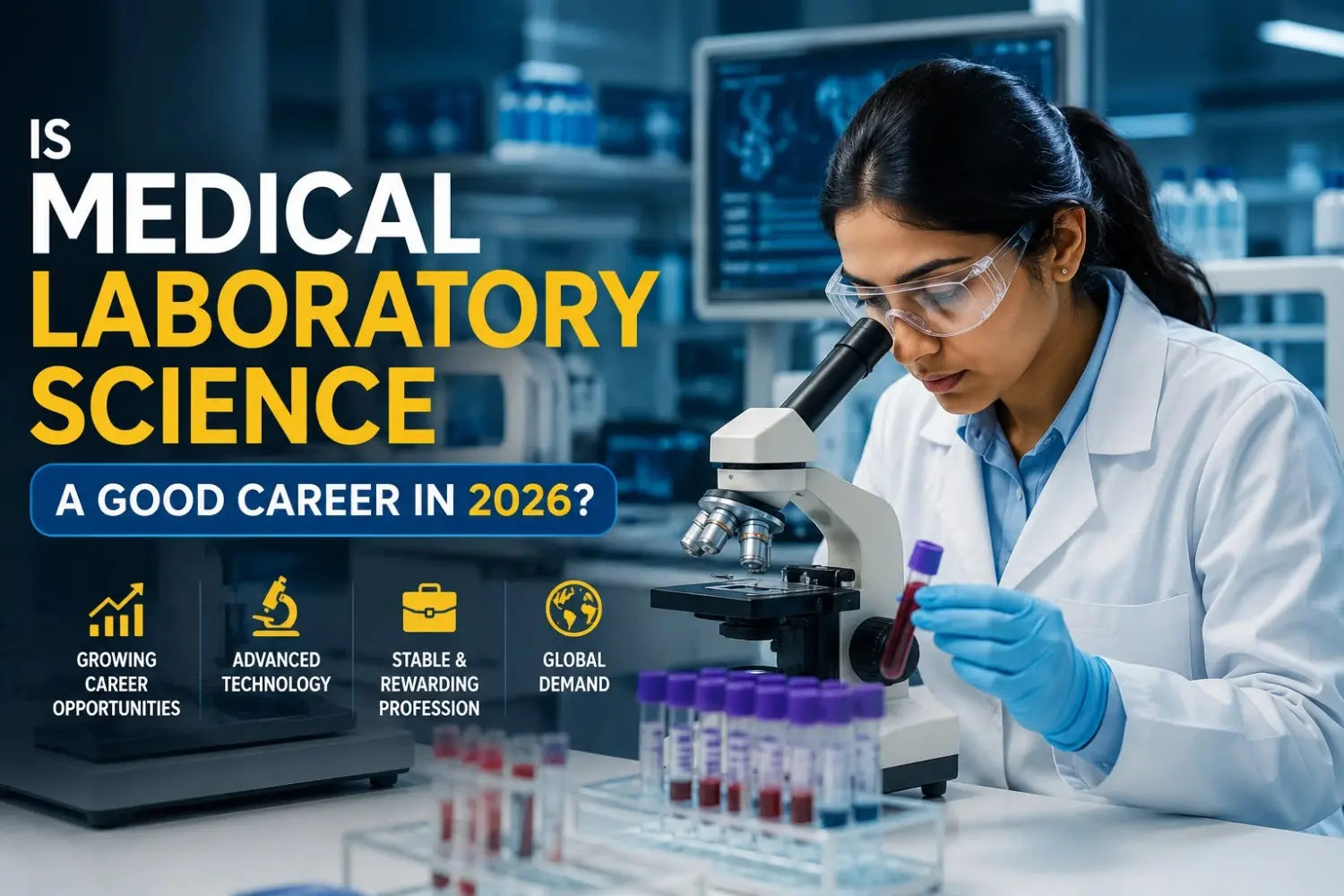
Is Medical Laboratory Science a Good Career in 2026?
Healthcare is changing rapidly, and behind every accurate diagnosis is a team of professionals working silently in laboratories. While doctors and nurses often receive most of the attention, Medical Laboratory Scientists play a critical role in patient care.
If you are considering a healthcare career but do not necessarily want to become a doctor, you might be wondering:
Is Medical Laboratory Science a good career in 2026?
The short answer is yes.
Medical Laboratory Science (MLS) is becoming one of the fastest-growing allied healthcare professions globally. Rising healthcare demands, advancements in diagnostic technologies, preventive healthcare initiatives, and an aging population are creating strong demand for qualified laboratory professionals.
In this comprehensive guide, we will explore everything you need to know about Medical Laboratory Science as a career in 2026.
Quick Answer: Is Medical Laboratory Science a Good Career in 2026?
Yes, Medical Laboratory Science is an excellent career choice in 2026 because:
- Healthcare demand continues to rise worldwide.
- Diagnostic testing is becoming more important than ever.
- Job opportunities exist in hospitals, research centers, diagnostic companies, and public health organizations.
- The profession offers stable employment.
- Career growth opportunities are expanding with the rise of automation and molecular diagnostics.
- It provides a meaningful role in patient care without direct patient interaction in most cases.
For students exploring healthcare careers, Medical Laboratory Science offers a balance of job security, professional growth, and global opportunities.
What is Medical Laboratory Science?
Medical Laboratory Science is a healthcare discipline focused on analyzing biological samples, such as:
- Blood
- Urine
- Tissue
- Body fluids
- Microorganisms
Medical Laboratory Scientists perform tests that help physicians:
- Diagnose diseases
- Monitor treatments
- Detect infections
- Identify genetic disorders
- Evaluate patient health conditions.
In fact, healthcare experts often estimate that a significant percentage of medical decisions are influenced by laboratory test results.
Without laboratory professionals, modern medicine would struggle to provide accurate diagnoses and effective treatments.
Understanding the Role of a Medical Laboratory Scientist
A Medical Laboratory Scientist works behind the scenes to generate accurate diagnostic data.
Key Responsibilities
Sample Collection and Processing
Professionals handle biological specimens carefully to ensure accurate testing.
Laboratory Testing
They perform:
- Hematology tests
- Biochemistry analysis
- Microbiology examinations
- Immunology testing
- Molecular diagnostics
Quality Control
Maintaining accuracy is essential because even small errors can affect patient treatment decisions.
Reporting Results
Laboratory scientists communicate findings to healthcare providers.
Equipment Management
Modern laboratories rely on advanced diagnostic instruments that require regular calibration and monitoring.
Why Medical Laboratory Science is Growing in 2026
Several global trends are driving demand.
1. Increasing Healthcare Needs
The world's population continues to grow and age.
As chronic diseases become more common, healthcare systems require more diagnostic testing than ever before.
2. Rise of Preventive Healthcare
Healthcare is shifting from treatment to prevention.
Routine laboratory screening helps identify diseases before symptoms appear.
3. Growth in Diagnostic Technology
New technologies such as:
- Molecular diagnostics
- Genetic testing
- AI-assisted diagnostics
- Automated laboratory systems
We are expanding the scope of laboratory science.
4. Global Health Preparedness
Recent public health challenges highlighted the importance of laboratory professionals in disease detection and outbreak monitoring.
5. Expansion of Personalized Medicine
Personalized treatments depend heavily on laboratory analysis and genetic testing.
This trend is expected to accelerate throughout 2026 and beyond.
Medical Laboratory Science Career Opportunities
One of the biggest advantages of this profession is its versatility.
Healthcare Settings
Medical Laboratory Scientists can work in:
- Hospitals
- Diagnostic laboratories
- Emergency healthcare facilities
- Specialty clinics
Research Organizations
Research laboratories require skilled professionals for:
- Drug development
- Disease research
- Clinical trials
- Biotechnology projects
Public Health Departments
Government agencies employ laboratory scientists for:
- Disease surveillance
- Public health monitoring
- Epidemic investigation
Pharmaceutical Industry
Many pharmaceutical companies require laboratory experts for:
- Product testing
- Quality assurance
- Clinical studies
Academic Institutions
Experienced professionals may pursue:
- Teaching
- Laboratory training
- Research supervision
Medical Laboratory Science Career Path
| Entry Level | Laboratory Technician | Foundational Experience |
| Early Career | Medical Laboratory Scientist | Specialized Skills |
| Mid Career | Senior Laboratory Scientist | Leadership Roles |
| Advanced Career | Laboratory Manager | Strategic Management |
| Expert Level | Research Scientist or Consultant | Industry Leadership |
This structured progression makes the field attractive for long-term career planning.
Skills Required for Success in Medical Laboratory Science
Technical Skills
Professionals should develop expertise in:
- Laboratory procedures
- Diagnostic instruments
- Data interpretation
- Quality assurance
Analytical Thinking
Laboratory scientists must identify abnormalities and evaluate results carefully.
Attention to Detail
Accuracy is essential because diagnostic decisions depend on laboratory findings.
Problem-Solving Skills
Unexpected test results often require investigation and troubleshooting.
Communication Skills
Even though direct patient interaction may be limited, collaboration with healthcare teams is important.
Educational Requirements
Most students begin by pursuing:
- Bachelor of Medical Laboratory Science (BMLS)
- Bachelor of Medical Laboratory Technology (BMLT)
- Medical Laboratory Technology programs
Students seeking healthcare career guidance can explore educational pathways in the career planning guide available at Vidya Udbhav.
Choosing an accredited and industry-focused program significantly improves employability.
Benefits of Choosing Medical Laboratory Science
Strong Job Stability
Healthcare services remain essential regardless of economic conditions.
Diverse Career Opportunities
Professionals can work across multiple healthcare sectors.
Continuous Learning
New technologies constantly create opportunities to expand expertise.
Global Demand
Many countries actively recruit qualified laboratory professionals.
Meaningful Contribution
Laboratory scientists directly contribute to accurate diagnosis and patient outcomes.
Work-Life Balance
Compared with some healthcare professions, laboratory careers may offer more structured working schedules.
Challenges in Medical Laboratory Science
Every profession has challenges.
High Responsibility
Errors can affect patient treatment decisions.
Continuous Skill Upgrading
Professionals must stay updated with emerging technologies.
Workload During Health Emergencies
Demand for testing can increase significantly during disease outbreaks.
Technology Adaptation
Automation requires ongoing learning and adaptability.
Fortunately, these challenges can be managed through proper training and professional development.
Real-Life Example
Imagine a patient arrives at a hospital with symptoms that could indicate several different illnesses.
Doctors order laboratory tests.
A Medical Laboratory Scientist analyzes blood samples and identifies specific markers that confirm the diagnosis.
Because of accurate laboratory testing:
- Treatment begins sooner
- Recovery improves
- Healthcare costs decrease
- Patient outcomes become better.
This scenario demonstrates how essential laboratory professionals are in modern healthcare.
Case Study: The Growing Importance of Diagnostics
The global healthcare industry has increasingly invested in diagnostics over the past decade.
Healthcare organizations now recognize that early disease detection:
- Saves lives
- Reduces treatment costs
- Improves public health outcomes
As diagnostic services expand, Medical Laboratory Science professionals are becoming indispensable members of healthcare teams.
This trend is expected to continue throughout 2026 and beyond.
Best Tools and Technologies Used in Medical Laboratory Science
Beginner-Friendly Tools
- Basic Microscopes
- Hematology Analyzers
- Chemistry Analyzers
Advanced Technologies
- PCR Systems
- Molecular Diagnostic Platforms
- Automated Laboratory Systems
- AI-Assisted Diagnostic Tools
Research-Oriented Technologies
- Next-Generation Sequencing
- Flow Cytometry
- Mass Spectrometry
Understanding these technologies can significantly improve career prospects.
Beginner Strategy for Entering Medical Laboratory Science
If you are just starting, focus on:
Step 1: Build Strong Science Fundamentals
Pay attention to:
- Biology
- Chemistry
- Physics
Step 2: Choose the Right Program
Select recognized programs with laboratory training components.
Step 3: Gain Practical Experience
Hands-on laboratory exposure is essential.
Step 4: Develop Technical Skills
Become comfortable with laboratory equipment and procedures.
Step 5: Continue Professional Learning
Healthcare technologies evolve continuously.
Advanced Career Growth Strategy
Experienced professionals can accelerate growth by specializing in:
Molecular Diagnostics
One of the fastest-growing laboratory fields.
Clinical Biochemistry
Supports the diagnosis of metabolic and chronic diseases.
Hematology
Focuses on blood-related disorders.
Microbiology
Essential for infectious disease diagnosis.
Laboratory Management
Ideal for professionals interested in leadership roles.
Professionals seeking long-term advancement should combine technical expertise with management skills.
Common Mistakes Students Should Avoid
Choosing the Course Without Research
Always understand the curriculum, career scope, and industry demand.
Ignoring Practical Training
Hands-on laboratory experience is critical.
Neglecting Technology Skills
Automation is transforming laboratories worldwide.
Weak Communication Skills
Healthcare teamwork requires effective communication.
Delaying Professional Development
Certifications and continuing education improve employability.
Expert Tips for Building a Successful Career
Focus on Accuracy
Precision remains the foundation of laboratory science.
Stay Updated
Keep learning about emerging diagnostic technologies.
Build Professional Networks
Industry connections can create valuable opportunities.
Pursue Specializations
Specialized expertise often leads to higher-paying roles.
Develop Digital Competence
Modern laboratories increasingly rely on data systems and automation.
Best Practices for Long-Term Success
- Follow laboratory quality standards.
- Maintain ethical professional conduct.
- Embrace lifelong learning.
- Invest in certifications and advanced training.
- Stay informed about healthcare innovations.
These practices help professionals remain competitive in a rapidly evolving industry.
Future Trends in Medical Laboratory Science
Artificial Intelligence Integration
AI will support faster analysis and decision-making.
Precision Medicine
Personalized treatment plans will require advanced diagnostics.
Automation Expansion
Routine tasks will increasingly be automated.
Genomic Testing Growth
Genetics-based healthcare is becoming mainstream.
Digital Pathology
Remote diagnostics and digital workflows are expanding globally.
Rather than replacing professionals, these innovations are increasing the demand for highly skilled laboratory scientists.
Comparison: Medical Laboratory Science vs Other Healthcare Careers
| Patient Interaction | Moderate to Low | High | High |
| Diagnostic Role | Very High | Moderate | Low |
| Technology Exposure | High | Moderate | Moderate |
| Research Opportunities | High | Moderate | Moderate |
| Global Demand | High | High | High |
| Career Specialization | Extensive | Extensive | Moderate |
This comparison shows why many students are increasingly considering Medical Laboratory Science as a long-term healthcare career.
Why Medical Laboratory Science is a Smart Career Choice in 2026
You might be wondering whether this profession will remain relevant as technology advances.
Here is what actually works in the healthcare industry:
Technology improves efficiency, but healthcare still depends on trained professionals who can interpret results, ensure quality, and make critical laboratory decisions.
As diagnostics become more sophisticated, the value of skilled Medical Laboratory Scientists continues to grow.
For students interested in healthcare careers, scientific analysis, and long-term job security, Medical Laboratory Science offers a strong combination of stability, growth, and purpose.
Students can also strengthen their career planning through the student success roadmap, healthcare career guidance resources, and placement preparation strategies available on Vidya Udbhav.
Actionable Final Advice
If you are considering Medical Laboratory Science in 2026:
- Build a strong science foundation.
- Enroll in a recognized MLS program.
- Prioritize practical laboratory training.
- Learn emerging diagnostic technologies.
- Pursue certifications and specialization.
- Develop communication and analytical skills.
- Stay committed to lifelong learning.
Following these steps can position you for a successful and rewarding healthcare career.
Conclusion
Medical Laboratory Science is unquestionably one of the most promising healthcare careers in 2026.
The profession offers strong job stability, growing global demand, opportunities for specialization, and the chance to make a meaningful impact on patient care.
As healthcare systems increasingly rely on advanced diagnostics, laboratory professionals will continue to play a central role in disease detection, treatment planning, and public health management.
Whether you are a student exploring career options or a professional considering a healthcare transition, Medical Laboratory Science presents an excellent pathway toward long-term career growth and professional fulfillment.
Frequently Asked Questions (FAQs)
1. Is Medical Laboratory Science a good career in 2026?
Yes. Medical Laboratory Science offers strong demand, job stability, career growth opportunities, and increasing importance in modern healthcare systems.
2. What is the future scope of Medical Laboratory Science?
The future scope is excellent due to advancements in diagnostics, genetic testing, automation, personalized medicine, and public health initiatives.
3. Can Medical Laboratory Scientists work internationally?
Yes. Qualified professionals are in demand across many countries and healthcare systems worldwide.
4. What skills are most important for Medical Laboratory Science?
Key skills include analytical thinking, attention to detail, laboratory techniques, problem-solving, quality control, and communication.
5. Is Medical Laboratory Science better than other allied health careers?
It depends on personal interests. However, Medical Laboratory Science offers strong technology exposure, diagnostic involvement, research opportunities, and career specialization options.
6. What are the major specializations in Medical Laboratory Science?
Popular specializations include Hematology, Microbiology, Clinical Biochemistry, Molecular Diagnostics, Immunology, and Laboratory Management.
7. Does automation threaten Medical Laboratory Science jobs?
No. Automation changes workflows but increases demand for professionals who can operate systems, validate results, and ensure quality standards.