

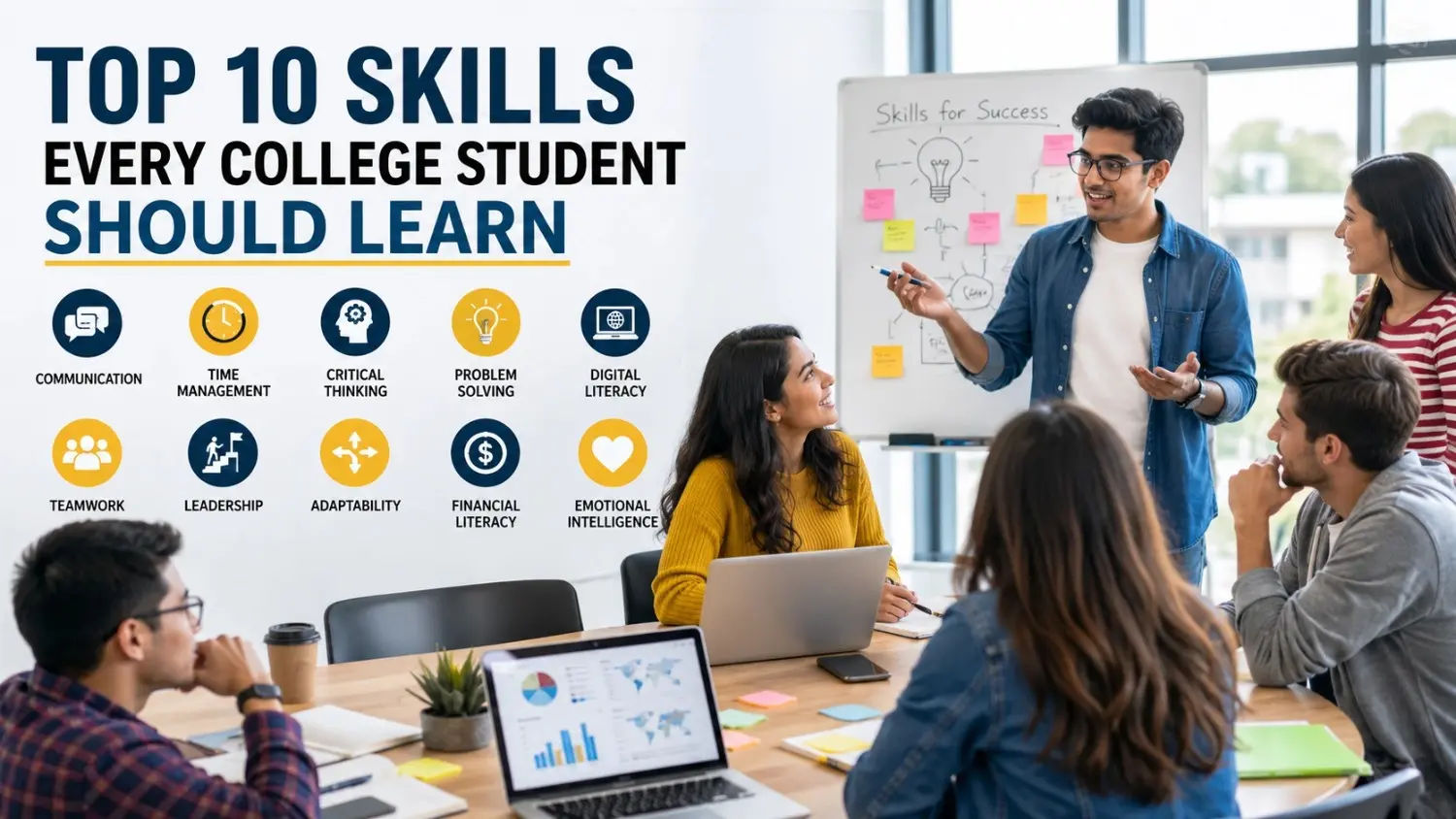
Top 10 Skills Every College Student Should Learn
College is much more than earning a degree. It is the stage where students prepare themselves for the real world by developing skills that employers, entrepreneurs, and organizations value the most.
While academic knowledge remains essential, today's competitive job market demands individuals who can communicate effectively, solve problems creatively, adapt quickly, and work confidently with technology. Employers are increasingly looking for graduates who can contribute from day one rather than those with excellent grades alone.
If you're planning your educational journey, our career planning guide on Vidya Udbhav can help you choose the right path based on your goals and interests.
In this guide, you'll discover the top 10 skills every college student should learn, why they matter, and practical ways to develop them before graduation.
Why Skill Development Matters in College
Today's industries evolve rapidly due to technological advancements, globalization, and changing workplace expectations.
Students who invest time in developing practical skills often enjoy:
- Better internship opportunities
- Higher employability
- Stronger confidence
- Improved academic performance
- Faster career growth
- Better networking opportunities
In many cases, employers value practical skills just as much as technical qualifications.
Quick Overview: Top 10 Essential Skills
| Communication | Clear expression and collaboration |
| Time Management | Better productivity and balance |
| Critical Thinking | Smarter decision-making |
| Problem Solving | Handling real-world challenges |
| Digital Literacy | Working effectively with technology |
| Teamwork | Success in collaborative environments |
| Leadership | Managing responsibilities confidently |
| Adaptability | Thriving in changing environments |
| Financial Literacy | Managing money wisely |
| Emotional Intelligence | Building strong relationships |
1. Communication Skills
Communication is one of the most valuable skills across every profession.
It involves much more than speaking. Good communication includes listening carefully, writing professionally, presenting ideas confidently, and understanding different perspectives.
How to Improve
- Participate in classroom discussions.
- Join debate clubs.
- Practice public speaking.
- Write blogs or reports.
- Learn professional email etiquette.
Real-World Example
A software developer with excellent communication skills often collaborates better with clients and team members than someone who possesses only technical expertise.
2. Time Management
Many college students struggle because they manage tasks instead of managing time.
Learning to prioritize assignments, projects, exams, and personal commitments creates long-term success.
Effective Techniques
- Use digital calendars.
- Break large projects into smaller tasks.
- Follow daily schedules.
- Avoid procrastination.
- Review weekly goals.
One thing many beginners miss is that consistency beats last-minute effort.
3. Critical Thinking
Critical thinking means evaluating information before accepting it as true.
Instead of memorizing facts, students learn to question assumptions, compare evidence, and make informed decisions.
Why It Matters
Critical thinkers:
- Solve problems faster
- Make smarter career decisions
- Perform better during interviews
- Adapt to changing industries
This becomes more important when working on research projects or solving business challenges.
4. Problem-Solving Skills
Every workplace values people who can identify problems and create practical solutions.
Problem-solving combines creativity, logic, observation, and decision-making.
Practical Ways to Build This Skill
- Participate in case study competitions.
- Solve real-world business scenarios.
- Learn coding challenges.
- Volunteer in student organizations.
Employers consistently rank problem-solving among their top hiring priorities.
5. Digital Literacy
Digital skills are no longer optional.
Regardless of your field, employers expect graduates to understand modern digital tools.
Essential Areas
- Microsoft Office
- Google Workspace
- Online collaboration tools
- Presentation software
- Data analysis basics
- Cybersecurity awareness
If you're exploring future-ready courses, our student success roadmap on Vidya Udbhav provides useful career insights.
6. Teamwork and Collaboration
Very few careers involve working completely alone.
Successful professionals know how to collaborate with people from different backgrounds and cultures.
Teamwork Includes
- Respecting different opinions
- Sharing responsibilities
- Giving constructive feedback
- Solving conflicts professionally
Group assignments in college provide excellent opportunities to practice collaboration.
7. Leadership Skills
Leadership isn't limited to managers.
Students can develop leadership by taking initiative, motivating others, and making responsible decisions.
Ways to Develop Leadership
- Become a club coordinator.
- Organize college events.
- Mentor junior students.
- Lead project teams.
Leadership experience often strengthens internship and scholarship applications.
8. Adaptability
Industries change rapidly.
Technology, artificial intelligence, remote work, and automation continue transforming the workplace.
Students who embrace change remain competitive throughout their careers.
How to Become More Adaptable
- Learn continuously.
- Stay updated with industry trends.
- Be open to feedback.
- Experiment with new tools.
- Build resilience.
Here is what actually works: treat every challenge as a learning opportunity instead of a setback.
9. Financial Literacy
Many graduates begin earning without understanding personal finance.
Financial literacy helps students make better decisions about budgeting, saving, investing, and debt management.
Basic Financial Skills
- Budget planning
- Emergency savings
- Understanding taxes
- Responsible credit usage
- Investment basics
Learning these concepts early reduces financial stress later in life.
10. Emotional Intelligence
Technical skills may help you secure a job, but emotional intelligence often determines long-term success.
It includes:
- Self-awareness
- Empathy
- Emotional control
- Relationship management
- Active listening
Professionals with high emotional intelligence usually perform better in leadership roles and customer-facing positions.
Step-by-Step Strategy to Build These Skills During College
Instead of trying to learn everything at once, follow a structured approach.
Step 1
Identify your weakest skills.
Step 2
Set monthly learning goals.
Step 3
Join student organizations.
Step 4
Complete online certifications.
Step 5
Apply new skills during internships.
Step 6
Build a professional portfolio.
Step 7
Seek feedback regularly.
Small improvements every week create remarkable long-term growth.
Common Mistakes College Students Should Avoid
Here is where many people make mistakes.
- Focusing only on grades
- Ignoring communication skills
- Delaying internships
- Avoiding networking opportunities
- Not building a LinkedIn profile
- Resisting constructive feedback
- Waiting until graduation to prepare for jobs
Avoiding these mistakes can significantly improve career readiness.
Beginner Strategy
If you're just starting college, focus on:
- Communication
- Time management
- Digital literacy
These three skills provide the strongest foundation for future growth.
As your confidence increases, begin developing leadership, emotional intelligence, and financial literacy.
Advanced Strategy
Students in their final years should prioritize:
- Industry certifications
- Internship experience
- Networking
- Portfolio development
- Mock interviews
- Leadership responsibilities
Pair these with the placement preparation strategies available on Vidya Udbhav to improve job readiness.
Recommended Learning Tools
Beginner-Friendly
- Google Workspace
- Canva
- Trello
- Grammarly
- Notion
Free Learning Platforms
- Coursera
- edX
- Khan Academy
- Google Digital Garage
Premium Options
- LinkedIn Learning
- Udemy Business
- Pluralsight
Choose tools based on your career goals and learning style.
Future Trends Students Should Prepare For
The future workplace will increasingly value:
- Artificial Intelligence literacy
- Data analysis
- Digital collaboration
- Creativity
- Cross-cultural communication
- Remote work management
- Continuous learning
Students who combine technical expertise with strong soft skills will remain highly competitive.
Expert Tips for Long-Term Success
- Learn one new skill every semester.
- Read industry-related books regularly.
- Build meaningful professional relationships.
- Practice public speaking often.
- Maintain a portfolio of achievements.
- Seek mentors whenever possible.
- Never stop learning after graduation.
Success rarely comes from knowledge alone—it comes from consistently applying what you know.
Conclusion
College provides a unique opportunity to prepare for life beyond the classroom. While earning a degree remains important, the skills you develop during these years often shape your career more than your grades.
By mastering communication, leadership, problem-solving, adaptability, emotional intelligence, and digital literacy, you'll stand out in interviews, perform better at work, and confidently navigate future challenges.
For more educational guidance, career planning resources, and student-focused advice, explore the career planning guide, student success roadmap, and placement preparation strategies on Vidya Udbhav.
Develop these skills consistently, apply them in real situations, and you'll graduate not only with a qualification but with the confidence to succeed anywhere in the world.
Frequently Asked Questions (FAQs)
1. What are the most important skills every college student should learn?
Communication, time management, problem-solving, critical thinking, digital literacy, leadership, teamwork, adaptability, financial literacy, and emotional intelligence are among the most valuable skills.
2. Why are soft skills important for college students?
Soft skills improve collaboration, leadership, communication, and workplace performance, making graduates more attractive to employers.
3. How can students improve communication skills?
Practice public speaking, participate in group discussions, improve writing, join clubs, and actively seek feedback.
4. Which digital skills should college students learn?
Students should become comfortable with productivity software, collaboration tools, presentation software, basic data analysis, and cybersecurity fundamentals.
5. Can these skills improve job opportunities?
Yes. Employers consistently prioritize candidates who demonstrate practical workplace skills alongside academic qualifications.