

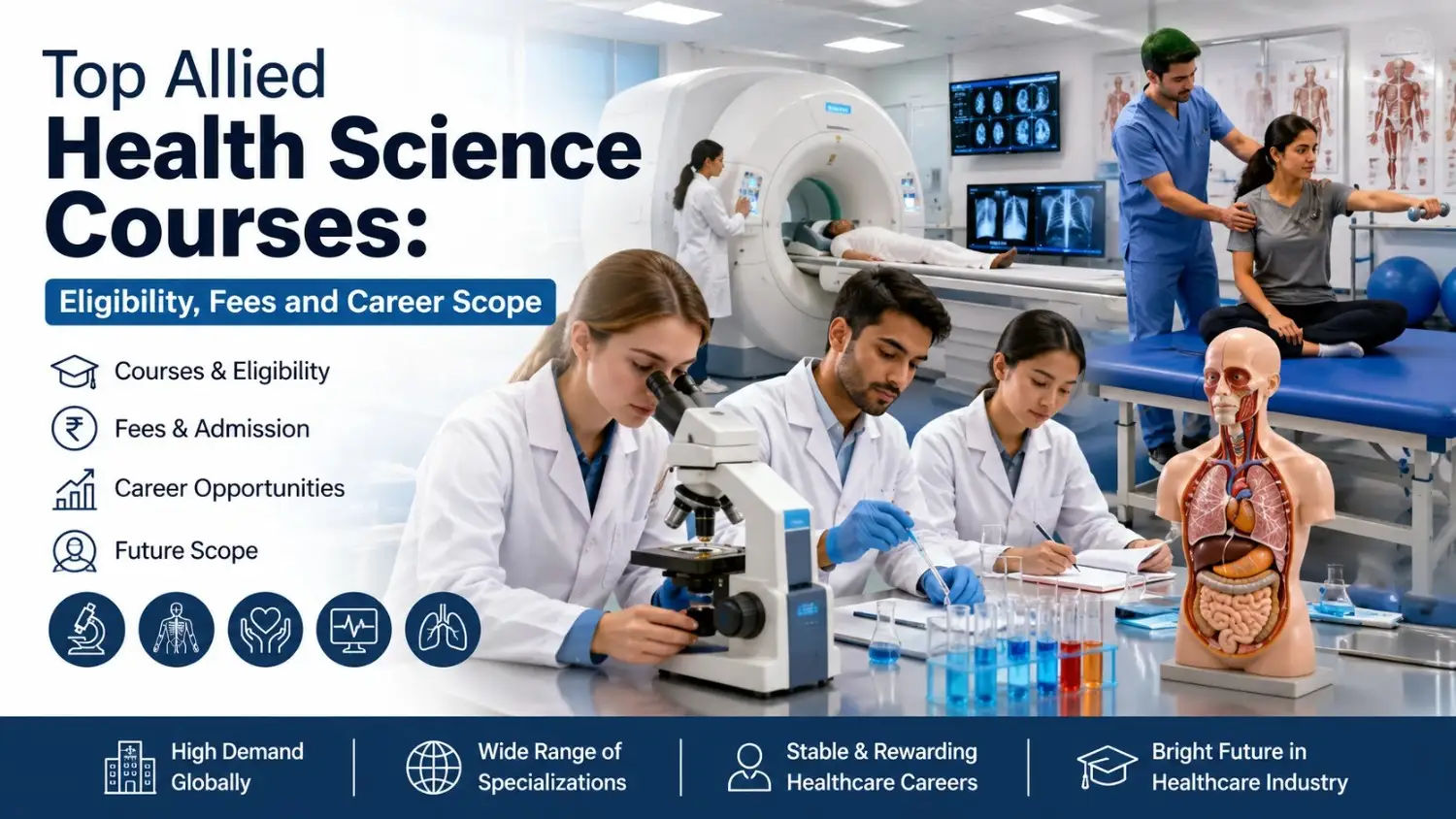
Top Allied Health Science Courses: Eligibility, Fees and Career Scope
Healthcare is no longer limited to doctors and nurses. Behind every successful diagnosis, surgery, rehabilitation, and patient recovery stands a team of highly skilled allied health professionals. As healthcare systems continue to evolve worldwide, the demand for these specialists is growing rapidly.
If you're planning a rewarding career in medicine without pursuing an MBBS degree, allied health science courses offer excellent opportunities. They combine practical skills, modern medical technology, and strong employment prospects across hospitals, laboratories, research centers, rehabilitation clinics, and diagnostic facilities.
If you're still exploring healthcare career options, you may also find the career planning guide on www.vidyaudbhav.com helpful for understanding different professional pathways.
Quick Answer: What Are Allied Health Science Courses?
Allied Health Science courses are professional healthcare programs that prepare students to support doctors and healthcare teams in diagnosis, treatment, rehabilitation, patient care, and medical technology.
These programs focus on practical healthcare services rather than becoming physicians.
Examples include:
- Physiotherapy
- Medical Laboratory Technology
- Radiology & Imaging Technology
- Operation Theatre Technology
- Optometry
- Anaesthesia Technology
- Dialysis Technology
- Emergency Medical Technology
- Respiratory Therapy
- Healthcare Management
Why Allied Health Sciences Are Becoming Popular
Several factors have contributed to the increasing demand for allied health professionals worldwide.
- Growing healthcare infrastructure
- Rising chronic diseases
- Aging populations
- Technological advancements
- Increased demand for diagnostic services
- Expansion of private hospitals
- Global healthcare workforce shortages
One thing many beginners miss is that healthcare careers now extend far beyond traditional medical degrees. Many allied health graduates enjoy stable careers, competitive salaries, and opportunities to work internationally.
Top Allied Health Science Courses
| Bachelor of Physiotherapy (BPT) | 4.5 Years | 10+2 PCB | Physiotherapist, Sports Rehabilitation |
| B.Sc Medical Laboratory Technology | 3-4 Years | 10+2 PCB | Medical Laboratory Technologist |
| B.Sc Radiology & Imaging Technology | 3-4 Years | 10+2 PCB | Radiology Technician |
| B.Sc Optometry | 4 Years | 10+2 PCB | Optometrist |
| B.Sc Operation Theatre Technology | 3-4 Years | 10+2 PCB | OT Technologist |
| B.Sc Anaesthesia Technology | 3-4 Years | 10+2 PCB | Anaesthesia Technician |
| B.Sc Dialysis Technology | 3-4 Years | 10+2 PCB | Dialysis Technologist |
| B.Sc Respiratory Therapy | 4 Years | 10+2 PCB | Respiratory Therapist |
| B.Sc Emergency Medical Technology | 3-4 Years | 10+2 PCB | Emergency Medical Technician |
| B.Sc Healthcare Management | 3 Years | 10+2 Any Stream (varies) | Healthcare Administrator |
Eligibility Criteria
Although requirements vary by institution, most colleges follow similar admission criteria.
Undergraduate Courses
Students generally need:
- 10+2 education
- Physics, Chemistry, and Biology (PCB)
- Minimum 45–60% marks
- Entrance examination (if applicable)
Postgraduate Courses
Applicants usually require:
- Relevant bachelor's degree
- Minimum qualifying percentage
- Entrance exam or merit-based admission
Course Fees
Fees vary by institution, country, and specialization.
| Government Institutions | Lower to Moderate |
| Private Institutions | Moderate to Higher |
| International Universities | Higher |
Before choosing a college, compare infrastructure, clinical exposure, faculty experience, placement support, and accreditation rather than focusing only on tuition fees.
Career Scope After Allied Health Science Courses
The career opportunities are expanding rapidly across public and private healthcare sectors.
Graduates can work in:
- Multi-specialty hospitals
- Diagnostic laboratories
- Rehabilitation centers
- Eye hospitals
- Emergency care units
- Medical imaging centers
- Research laboratories
- Public health organizations
- Medical device companies
- Educational institutions
Healthcare systems increasingly rely on allied professionals to deliver faster, more efficient patient care.
Popular Job Roles
Depending on your specialization, you may work as:
- Physiotherapist
- Medical Laboratory Technologist
- Radiology Technologist
- Optometrist
- Operation Theatre Technologist
- Dialysis Technologist
- Emergency Medical Technician
- Respiratory Therapist
- Anaesthesia Technician
- Clinical Research Assistant
- Healthcare Administrator
Salary Expectations
Salary depends on:
- Country
- Experience
- Specialization
- Employer
- Certifications
- Skills
Professionals with specialized expertise and advanced certifications generally earn significantly higher salaries over time.
As experience grows, opportunities also expand into management, education, research, and international healthcare systems.
Step-by-Step Guide to Start an Allied Health Career
Step 1: Identify Your Interest
Choose a specialization that matches your strengths and career goals.
Step 2: Check Eligibility
Review academic requirements before applying.
Step 3: Research Colleges
Evaluate curriculum, hospital partnerships, faculty, and placements.
You might also explore the student success roadmap available on www.vidyaudbhav.com for practical admission planning.
Step 4: Apply for Admission
Complete applications before deadlines and prepare required documents.
Step 5: Gain Clinical Experience
Hands-on hospital training builds confidence and employability.
Step 6: Build Professional Skills
Focus on communication, teamwork, ethics, and patient interaction.
Benefits of Allied Health Science Courses
These programs offer numerous advantages.
- High employability
- Practical learning
- Diverse specializations
- Global career opportunities
- Healthcare industry stability
- Continuous learning
- Opportunities for higher education
- Patient-centered work
- Strong career growth
- Multiple work environments
Challenges Students Should Know
Like any healthcare profession, allied health careers require commitment.
Common challenges include:
- Intensive practical training
- Shift-based work
- Emotional patient care situations
- Continuous skill development
- Keeping pace with new technologies
However, these challenges also help professionals build resilience and expertise.
Practical Solutions for Career Growth
Here is what actually works for long-term success:
- Pursue internships early.
- Build strong communication skills.
- Learn digital healthcare tools.
- Attend professional workshops.
- Earn relevant certifications.
- Stay updated with medical advancements.
- Develop problem-solving abilities.
Real-Life Example
Imagine a student who chooses Medical Laboratory Technology after high school.
During college, they complete internships in diagnostic labs, gain experience with modern laboratory equipment, and improve analytical skills. After graduation, they secure a position in a reputed hospital. With experience and additional certifications, they later move into laboratory management or specialized diagnostics.
This career path demonstrates how practical experience and continuous learning can accelerate professional growth.
Tools and Technologies Used in Allied Health
Modern healthcare professionals regularly work with advanced technologies.
Beginner-Friendly
- Electronic Health Records (EHR)
- Laboratory Information Systems
- Digital Imaging Software
Intermediate
- Diagnostic Laboratory Equipment
- Radiology Systems
- Patient Monitoring Devices
Advanced
- Artificial Intelligence-assisted Diagnostics
- Robotic Rehabilitation Systems
- Telemedicine Platforms
Understanding these technologies improves employability and future career prospects.
Beginner Strategy
If you're just starting, focus on:
- Building a strong science foundation
- Improving communication skills
- Choosing an accredited institution
- Participating in internships
- Learning basic healthcare technology
Many students also benefit from reading internship preparation resources on www.vidyaudbhav.com to better understand industry expectations.
Advanced Career Strategy
Professionals looking to grow should consider:
- Postgraduate specialization
- International certifications
- Research opportunities
- Healthcare management roles
- Teaching careers
- Clinical specialization
Specialization often leads to better responsibilities and career progression.
Common Mistakes to Avoid
Here is where many people make mistakes.
- Choosing a course only because it's popular
- Ignoring clinical exposure
- Overlooking accreditation
- Neglecting communication skills
- Skipping internships
- Not researching career demand.
- Focusing only on salary
Making informed decisions early leads to better long-term outcomes.
Expert Tips
Healthcare educators often recommend the following:
- Gain hands-on experience whenever possible.
- Build a professional network during internships.
- Stay updated with healthcare innovations.
- Learn patient communication techniques.
- Continue professional development through workshops and certifications.
These habits help graduates remain competitive throughout their careers.
Best Practices for Success
- Stay committed to lifelong learning.
- Develop technical and interpersonal skills.
- Practice ethical healthcare standards.
- Build confidence through clinical exposure.
- Seek mentorship from experienced professionals.
Future Trends in Allied Health Sciences
The future of allied health looks promising due to advancements in healthcare delivery.
Emerging trends include:
- AI-powered diagnostics
- Digital healthcare
- Precision medicine
- Telehealth services
- Wearable health technologies
- Robotic rehabilitation
- Personalized patient care
- Preventive healthcare
Professionals who adapt to these trends will have stronger career opportunities in the years ahead.
Final Advice
Choosing the right allied health science course is about aligning your interests with industry demand and long-term career goals.
Research institutions carefully, understand each specialization, and prioritize practical training. A well-informed decision today can lead to a fulfilling healthcare career that positively impacts countless lives.
For additional guidance on admissions, healthcare programs, and career planning, explore related resources on www.vidyaudbhav.com, including the career planning guide, student success roadmap, and internship preparation resources.
Conclusion
Allied health science courses provide an excellent pathway into one of the world's fastest-growing industries. Whether you're interested in diagnostics, rehabilitation, emergency care, or healthcare management, these programs offer diverse opportunities to build a stable and meaningful career.
With the increasing demand for skilled healthcare professionals worldwide, investing in quality education, practical training, and continuous learning can open doors to rewarding roles across hospitals, research institutions, and healthcare organizations.
Frequently Asked Questions (FAQs)
1. Which is the best allied health science course?
The best course depends on your interests. Popular choices include Physiotherapy, Medical Laboratory Technology, Radiology, Optometry, and Operation Theatre Technology.
2. Can I pursue allied health science courses after 12th?
Yes. Most undergraduate allied health programs are open to students who have completed 10+2 with Physics, Chemistry, and Biology.
3. Are allied health professionals in demand globally?
Yes. The growing healthcare sector has created strong demand for skilled allied health professionals in many countries.
4. What skills are important for allied health careers?
Technical knowledge, communication, teamwork, problem-solving, empathy, and adaptability are highly valued.
5. Can allied health graduates pursue higher studies?
Absolutely. Graduates can continue with postgraduate programs, specialized certifications, research, or healthcare management studies.
6. Is practical training included in allied health courses?
Yes. Most programs include laboratory work, hospital internships, and clinical training to prepare students for real-world healthcare environments.