

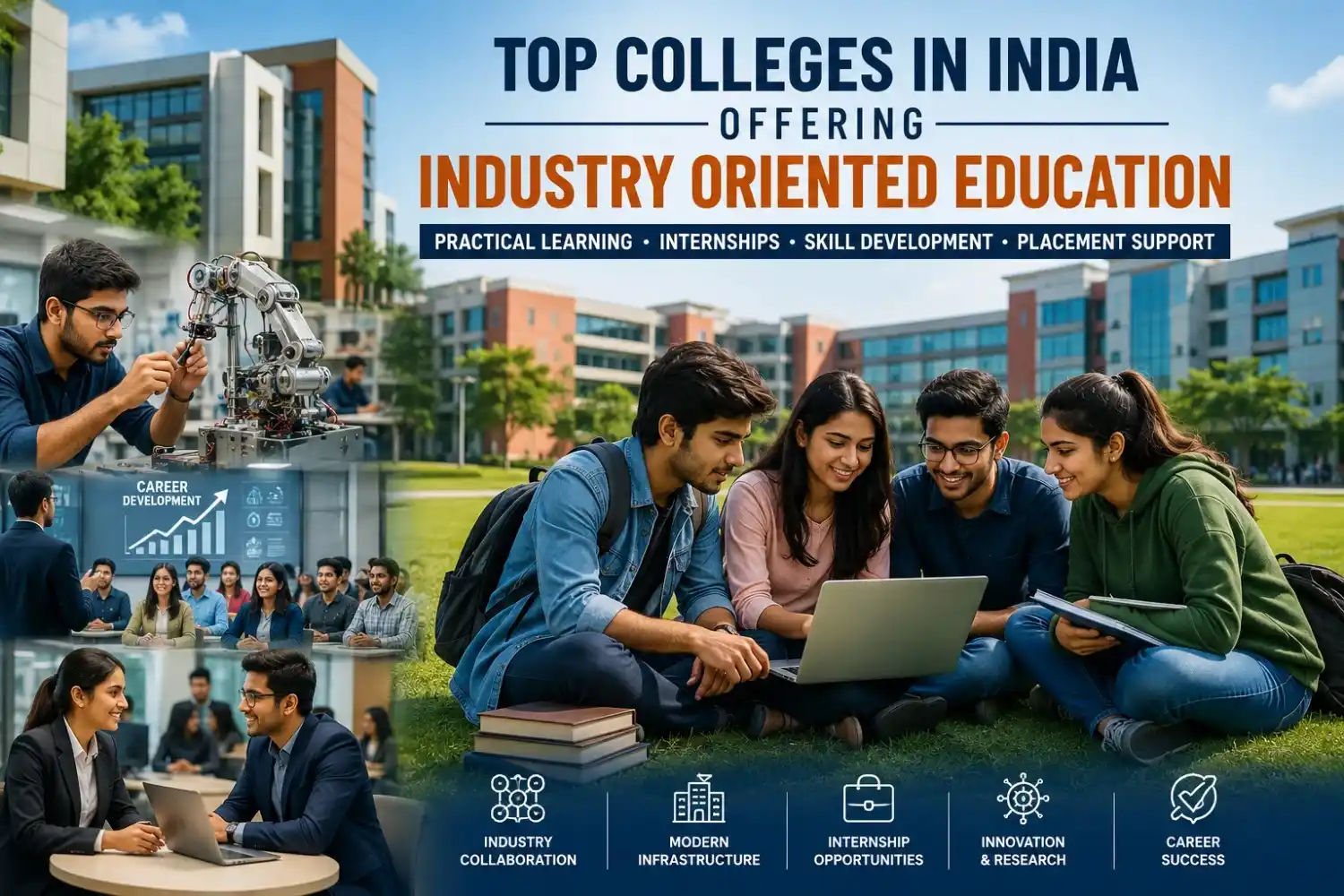
Top Colleges in India Offering Industry-Oriented Education
Choosing the right college is no longer just about reputation or campus size. Today, students and parents are looking for something much more valuable — industry-oriented education.
Companies now expect graduates to be job-ready from day one. They want practical skills, real-world exposure, communication abilities, project experience, and problem-solving capabilities. This shift has changed the way students evaluate colleges across India.
You might be wondering what actually makes a college “industry-oriented.”
It is not only about placements. It is about how well a college prepares students for real careers through internships, live projects, mentorship programs, certifications, startup exposure, and updated curriculum aligned with modern industry needs.
If you are exploring career-focused institutions, the educational guidance resources available on www.vidyaudbhav.com can help students understand admission strategies, career planning, and professional course selection more effectively.
In this detailed guide, we will explore the top colleges in India offering industry-oriented education, what makes them stand out, how students can choose the right institution, and what future-ready education really looks like in today’s competitive world.
What is Industry-Oriented Education?
Industry-oriented education refers to a learning approach designed around practical career requirements rather than only theoretical academics.
It focuses on:
- Real-world applications
- Internship opportunities
- Industry collaborations
- Skill development
- Placement readiness
- Project-based learning
- Corporate exposure
- Technology integration
- Communication training
- Entrepreneurship development
In simple words, students are trained not only to pass exams but also to succeed professionally.
This becomes more important as industries evolve rapidly due to AI, automation, data science, digital marketing, healthcare innovation, and global business expansion.
Why Industry-Oriented Education Matters Today
Traditional education often leaves students with degrees but limited practical knowledge.
Here is where many students struggle:
| Theory-heavy learning | Practical implementation |
| Limited internships | Mandatory internships |
| Outdated syllabus | Updated industry curriculum |
| Minimal skill training | Career-focused skill building |
| Low corporate interaction | Frequent industry exposure |
| Generic projects | Real-world case studies |
| Exam-focused | Career-focused |
Employers today prioritize skills as much as academic performance.
A graduate with hands-on experience, communication abilities, software proficiency, and internship exposure usually has a stronger hiring advantage.
This is why more students are searching for career-focused colleges across India.
Key Features of Industry-Oriented Colleges
Before selecting a college, students should understand what actually indicates strong industry integration.
1. Internship Programs
Top institutions ensure students complete internships during their degree programs.
These internships provide:
- Corporate exposure
- Networking opportunities
- Work culture understanding
- Practical experience
- Resume strength
2. Industry Collaborations
Many leading colleges collaborate with:
- Tech companies
- Healthcare organizations
- Manufacturing firms
- Financial institutions
- Startups
These partnerships improve curriculum relevance.
3. Placement Support
Placement training now includes:
- Mock interviews
- Resume building
- Aptitude preparation
- Group discussions
- Communication workshops
Students exploring placement preparation strategies often benefit from structured career planning guidance available through www.vidyaudbhav.com.
4. Updated Curriculum
Industry-oriented institutions frequently revise syllabi to include:
- Artificial Intelligence
- Cloud Computing
- Cybersecurity
- Business Analytics
- Digital Marketing
- Financial Technology
- Healthcare Technology
5. Skill-Based Certifications
Many colleges now integrate certifications into academic programs.
Examples include:
- Coding certifications
- Data analytics tools
- Foreign language training
- Professional communication
- Design software skills
Top Colleges in India Offering Industry-Oriented Education
India has several institutions known for combining academics with professional readiness.
Below are some of the most recognized names.
Indian Institutes of Technology (IITs)
The IIT system remains one of the strongest examples of industry-aligned education in India.
Why IITs Stand Out
- Strong research ecosystem
- Startup incubation centers
- Corporate collaborations
- Excellent placement records
- Innovation-driven culture
Popular Industry-Oriented Areas
- Artificial Intelligence
- Robotics
- Data Science
- Mechanical Innovation
- Semiconductor Technology
Best Known IITs
- IIT Bombay
- IIT Delhi
- IIT Madras
- IIT Kanpur
- IIT Kharagpur
One thing many beginners miss is that IITs also strongly support entrepreneurship, not just placements.
Indian Institutes of Management (IIMs)
IIMs are globally recognized for business and management education.
Industry-Focused Strengths
- Case-study learning
- Corporate internships
- Leadership development
- Consulting exposure
- Live business projects
Popular Specializations
- Finance
- Marketing
- Business Analytics
- Operations
- International Business
Students preparing for management careers can also explore MBA admission guidance and professional roadmap resources through www.vidyaudbhav.com.
BITS Pilani
BITS Pilani is widely respected for its flexible academic structure and industry integration.
Key Advantages
- Practice the school internship model.
- Strong alumni network
- Industry-funded projects
- Startup ecosystem
Industry Exposure Areas
- Software engineering
- Electronics
- Biotechnology
- Product development
Its internship-focused structure is often considered ahead of traditional academic models.
Vellore Institute of Technology (VIT)
VIT has become one of India’s leading private universities for practical learning and placement support.
Why Students Prefer VIT
- International collaborations
- Coding culture
- Placement preparation
- Modern infrastructure
- Skill-focused curriculum
Strong Career Domains
- Computer Science
- AI & ML
- Cybersecurity
- Mechanical Engineering
- Biotechnology
SRM Institute of Science and Technology
SRM focuses heavily on employability and industry collaboration.
Notable Features
- Corporate partnerships
- Research opportunities
- Industry projects
- Internship-driven programs
Best Known Programs
- Engineering
- Medical Sciences
- Management
- Media Studies
Manipal Academy of Higher Education
Manipal is known for blending academic quality with real-world exposure.
What Makes It Industry-Oriented
- Hospital training partnerships
- International student ecosystem
- Practical lab learning
- Industry mentorship
Strong Fields
- Healthcare
- Engineering
- Hospitality
- Communication
Amity University
Amity has expanded rapidly due to its focus on industry engagement and modern infrastructure.
Industry-Focused Advantages
- Global exposure
- Industry seminars
- Professional certifications
- Corporate internships
Popular Programs
- Business Management
- Journalism
- Law
- Engineering
- Design
Symbiosis International University
Symbiosis is especially known for management, media, and liberal education with a strong practical orientation.
Strength Areas
- Corporate interaction
- Communication training
- International exposure
- Personality development
Top Courses
- MBA
- Media Studies
- Law
- International Relations
NMIMS
NMIMS has become a strong career-focused institution in recent years.
Key Industry Features
- Corporate mentorship
- Placement readiness programs
- Industry certifications
- Modern business education
Popular Fields
- Management
- Finance
- Commerce
- Branding
- Analytics
Chandigarh University
Chandigarh University has gained popularity for its aggressive placement ecosystem and skill-based education.
Why It Is Growing Fast
- Industry tie-ups
- Placement training
- Hackathons
- Startup incubation
Strong Departments
- Computer Science
- Animation
- AI & Robotics
- Business Studies
How to Choose the Right Industry-Oriented College
Selecting the right college requires more than looking at advertisements.
Here is a practical step-by-step approach.
Step 1: Identify Your Career Goal
Ask yourself:
- Do you want placements?
- Higher studies?
- Entrepreneurship?
- Government jobs?
- International opportunities?
Different colleges specialize in different outcomes.
Step 2: Evaluate Placement Quality
Do not focus only on the highest salary packages.
Instead, analyze:
- Average placements
- Internship quality
- Number of recruiters
- Industry diversity
- Placement consistency
Step 3: Check Industry Partnerships
A college with strong company collaborations often provides better practical exposure.
Look for:
- Internship tie-ups
- Research projects
- Industry mentorship
- Guest lectures
- Corporate labs
Step 4: Review Curriculum Updates
Modern industries evolve rapidly.
A future-ready college regularly updates:
- Technology modules
- Software tools
- Industry case studies
- Emerging skills
Step 5: Analyze Skill Development Support
Strong institutions usually provide:
- Communication training
- Soft skills development
- Foreign language learning
- Resume workshops
- Mock interviews
Students often underestimate communication skills, but employers consistently rank them among the top hiring factors.
Best Courses for Industry-Oriented Careers
Some courses naturally align more closely with modern industry needs.
Engineering and Technology
High-demand specializations include:
- AI & Machine Learning
- Data Science
- Cybersecurity
- Cloud Computing
- Robotics
Management and Business
Career-focused management areas include:
- Business Analytics
- Digital Marketing
- Financial Management
- International Business
Healthcare and Allied Sciences
Industry demand is growing rapidly in:
- Nursing
- Healthcare Management
- Medical Technology
- Biotechnology
Students interested in healthcare careers can also explore educational pathways and professional training guidance through www.vidyaudbhav.com.
Design and Media
Modern creative industries now value practical portfolios more than theory.
Growing fields include:
- UI/UX Design
- Animation
- Digital Media
- Film Production
- Content Strategy
Beginner Strategy for Choosing a Career-Focused College
Many students feel overwhelmed while selecting colleges.
Here is a beginner-friendly strategy that actually works.
Focus on Learning Environment
A strong peer group improves:
- Motivation
- Networking
- Innovation
- Communication skills
Prioritize Practical Exposure
Choose institutions offering:
- Labs
- Workshops
- Industry visits
- Internship programs
Research Alumni Outcomes
Alumni success often reflects institutional quality.
Look at:
- Job roles
- Startup founders
- International placements
- Research achievements
Avoid Following Trends Blindly
One mistake many students make is selecting courses purely because they are popular.
Instead, match:
- Interest
- Skill
- Career opportunity
- Industry demand
Advanced Strategy for Career-Focused Students
Students aiming for competitive global careers should go beyond academics.
Build a Skill Portfolio
Employers now evaluate portfolios heavily.
Examples include:
- Coding repositories
- Design portfolios
- Research papers
- Business case studies
- Internship projects
Earn Industry Certifications
Certifications increase employability significantly.
Popular areas include:
- Data analytics
- Digital marketing
- Cloud computing
- Cybersecurity
- Financial modeling
Participate in Competitions
Hackathons, innovation contests, and case competitions improve:
- Problem-solving
- Teamwork
- Networking
- Resume value
Start Networking Early
Professional networking matters more than many students realize.
Attend:
- Industry seminars
- Career fairs
- Student conferences
- Startup events
Common Mistakes Students Make While Choosing Colleges
Here is where many people make mistakes.
Ignoring Skill Development
A degree alone is rarely enough today.
Practical skills matter equally.
Focusing Only on Brand Name
A famous college without strong industry exposure may not provide better career outcomes than a practical institution with strong placement support.
Not Checking Placement Reality
Always verify:
- Placement reports
- Internship quality
- Recruiter diversity
- Salary consistency
Overlooking Communication Training
Communication skills directly affect:
- Interviews
- Leadership
- Team collaboration
- Global opportunities
Choosing Based Only on Peer Pressure
Career decisions should align with personal goals and strengths.
Real-Life Example: How Industry Exposure Changes Careers
Consider two engineering graduates.
Student A
- Strong theoretical marks
- Minimal internships
- Limited practical exposure
Student B
- Average academic scores
- Completed internships
- Built projects
- Participated in hackathons
- Learned communication skills
In many real hiring situations, Student B often secures better opportunities.
Why?
Because employers prioritize practical readiness.
This is exactly why industry-oriented education has become essential.
Industry-Oriented Education and Future Job Trends
The future of work is changing rapidly.
Several industries are evolving due to:
- Artificial Intelligence
- Automation
- Remote work
- Globalization
- Digital transformation
Colleges that adapt quickly will produce more employable graduates.
Future Skills in Demand
Technical Skills
- AI tools
- Data analysis
- Automation
- Programming
- Cybersecurity
Human Skills
- Creativity
- Leadership
- Communication
- Critical thinking
- Adaptability
This combination of technical and human skills will dominate future hiring.
Best Practices for Students During College
Students can maximize career opportunities by following practical strategies.
Focus on Consistency
Small daily improvements matter more than last-minute preparation.
Build LinkedIn Presence
Professional networking platforms help students connect with recruiters and mentors.
Improve Communication Skills
This includes:
- Public speaking
- Presentation abilities
- Professional writing
- Interview communication
Gain Real Experience
Try:
- Freelancing
- Internships
- Startup collaboration
- Research work
Learn Beyond Classroom Curriculum
One thing many successful students do differently is continuous self-learning.
Tools and Platforms Helpful for Industry Readiness
Beginner Friendly Tools
- Canva
- Trello
- Google Workspace
- Notion
Technical Learning Platforms
- Coursera
- Udemy
- edX
- GitHub
Communication Improvement Tools
- Grammarly
- Zoom
- Microsoft Teams
Career Preparation Platforms
- Internshala
- HackerRank
Remember, tools alone do not guarantee success. Consistent implementation matters more.
Why Students Prefer Industry-Oriented Education Today
Modern students are becoming more career-aware.
They want:
- Better placements
- Real-world exposure
- International opportunities
- Skill development
- Entrepreneurial support
Parents are also prioritizing employability while selecting colleges.
This shift is reshaping India’s higher education ecosystem rapidly.
The Growing Role of Internships
Internships are no longer optional.
They now play a critical role in:
- Skill application
- Industry understanding
- Networking
- Resume strength
- Job conversion
Many students secure pre-placement offers through internships themselves.
This is why internship-focused colleges are increasingly preferred.
Final Advice for Students
Choosing among the top colleges in India offering industry-oriented education requires careful research and long-term thinking.
Do not select a college only because of advertisements or popularity.
Instead, evaluate:
- Career alignment
- Practical learning
- Industry exposure
- Internship opportunities
- Placement quality
- Skill development ecosystem
Education today is no longer only about earning degrees.
It is about becoming future-ready.
Students who combine academics with practical skills, communication abilities, networking, and real-world exposure will have a major advantage in the coming years.
For students looking to improve career planning, course selection, admission preparation, and educational guidance, the student success roadmap available on www.vidyaudbhav.com can be highly useful.
Conclusion
The demand for industry-oriented education in India is growing faster than ever.
As industries evolve, students need colleges that prepare them not only academically but also professionally.
Institutions such as IITs, IIMs, BITS Pilani, VIT, SRM, Manipal, Symbiosis, NMIMS, and others are actively integrating practical learning, internships, innovation, and industry collaboration into their academic models.
However, the best college is ultimately the one that aligns with your career goals, learning style, and future ambitions.
The smartest students today are not only chasing degrees.
They are building skills, experience, confidence, and adaptability.
That is what truly creates long-term career success.
Frequently Asked Questions (FAQs)
1. What is industry-oriented education?
Industry-oriented education focuses on practical learning, internships, skill development, and real-world career preparation instead of only theoretical knowledge.
2. Which colleges in India are best for industry-oriented education?
Some of the leading institutions include IITs, IIMs, BITS Pilani, VIT, SRM, Manipal, Symbiosis, NMIMS, and Chandigarh University.
3. Why are internships important during college?
Internships help students gain practical experience, industry exposure, networking opportunities, and improve their employability before graduation.
4. How can students choose the right career-focused college?
Students should evaluate placement records, internships, curriculum quality, skill development programs, faculty expertise, and industry collaborations.
5. Which courses offer strong industry opportunities in India?
Courses in AI, data science, cybersecurity, business analytics, healthcare, digital marketing, finance, and design currently offer strong career potential.
6. Are private universities good for industry-oriented education?
Many private universities now provide strong placement support, modern curriculum, practical training, and industry collaboration opportunities.
7. What skills do employers value most today?
Employers prioritize communication skills, problem-solving, adaptability, teamwork, technical knowledge, and practical experience.