

Introduction
Engineering continues to be one of the most respected and future-focused fields of study worldwide. From artificial intelligence and robotics to renewable energy and aerospace innovation, engineers play a critical role in shaping modern society.
As competition increases, students are actively searching for the top engineering colleges worldwide that offer world-class education, cutting-edge research opportunities, strong industry connections, and exceptional career outcomes.
Choosing the right engineering university can significantly influence your academic journey, professional network, and long-term career growth. Whether you are a high school student planning your future or a professional considering advanced studies, understanding the global engineering education landscape is essential.
Students exploring international education pathways may also benefit from related resources on the career planning guide and student success roadmap available at Vidya Udbhav.
What Are the Top Engineering Colleges in the world?
Quick Answer
The top engineering colleges in the world are institutions recognized for:
- Academic excellence
- Research output
- Innovation and patents
- Industry collaboration
- Graduate employability
- Global reputation
- State-of-the-art laboratories
These universities consistently rank among the best due to their contributions to science, technology, and engineering advancement.
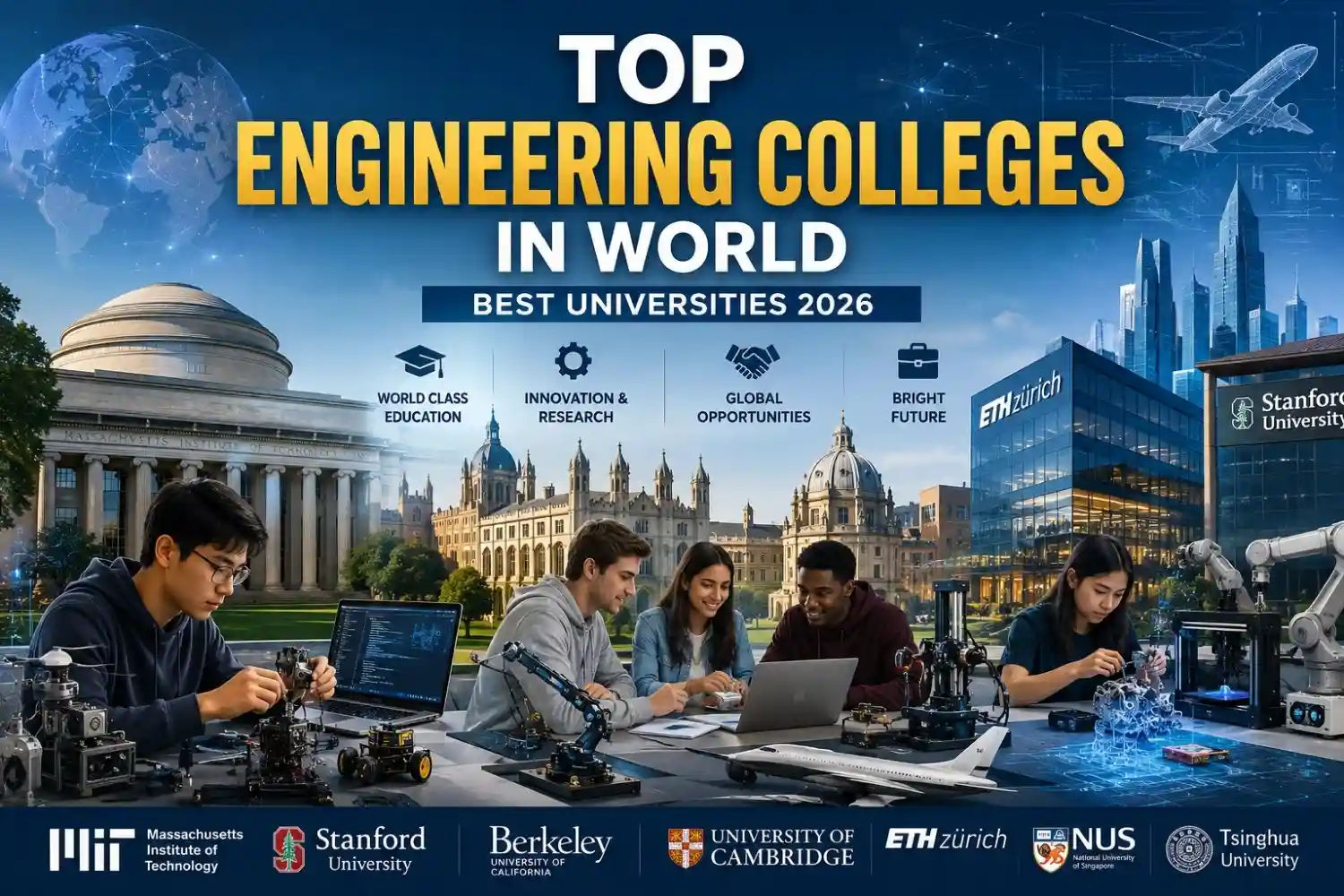
Top Engineering Colleges in the World (2026 Overview)
| 1 | Massachusetts Institute of Technology (MIT) | United States | Computer Engineering, AI, Robotics |
| 2 | Stanford University | United States | Electrical Engineering, Computer Science |
| 3 | University of California, Berkeley | United States | Civil, Mechanical, Electrical Engineering |
| 4 | University of Cambridge | United Kingdom | Aerospace, Mechanical Engineering |
| 5 | University of Oxford | United Kingdom | Biomedical, Chemical Engineering |
| 6 | ETH Zurich | Switzerland | Mechanical, Robotics, Materials Science |
| 7 | National University of Singapore | Singapore | Electronics, Computer Engineering |
| 8 | Imperial College London | United Kingdom | Chemical, Civil Engineering |
| 9 | Tsinghua University | China | Electrical, Mechanical Engineering |
| 10 | Nanyang Technological University | Singapore | AI, Automation, Electronics |
Why These Universities Rank So Highly
Research Excellence
Top engineering universities invest billions in research annually.
Students often gain access to:
- Advanced laboratories
- Research grants
- Industry-funded projects
- Innovation centers
- Startup incubators
Strong Industry Partnerships
One thing many beginners miss is that rankings are not only about academics.
Leading engineering colleges maintain partnerships with:
- Technology companies
- Aerospace organizations
- Manufacturing leaders
- Healthcare innovators
- Energy corporations
These relationships improve internship and employment opportunities.
Global Faculty and Talent
Students learn from internationally recognized professors, researchers, inventors, and industry experts.
This creates an environment that encourages innovation and problem-solving.
Major Engineering Disciplines Offered
Computer Engineering
Focuses on:
- Artificial Intelligence
- Cybersecurity
- Cloud Computing
- Data Science
- Software Systems
Mechanical Engineering
Covers:
- Machine Design
- Robotics
- Manufacturing
- Thermal Systems
Electrical Engineering
Includes:
- Electronics
- Telecommunications
- Power Systems
- Embedded Technologies
Civil Engineering
Concentrates on:
- Infrastructure
- Transportation
- Urban Planning
- Structural Design
Aerospace Engineering
Specializes in:
- Aircraft Design
- Space Systems
- Propulsion Technologies
Biomedical Engineering
Combines engineering with healthcare innovation and medical technology.
How to Get Admission into Top Engineering Colleges
Step 1: Build Strong Academic Performance
Most top universities expect excellent grades in:
- Mathematics
- Physics
- Chemistry
- Computer Science
Strong academic foundations remain essential.
Step 2: Develop Extracurricular Achievements
Universities increasingly evaluate:
- Robotics competitions
- Science fairs
- Coding contests
- Research projects
- Leadership activities
Step 3: Prepare for Standardized Tests
Depending on the institution, students may need:
- SAT
- ACT
- GRE
- IELTS
- TOEFL
Requirements vary across universities.
Step 4: Create an Outstanding Personal Statement
Admissions officers look for:
- Passion for engineering
- Problem-solving ability
- Innovation mindset
- Leadership qualities
Step 5: Obtain Strong Recommendations
Recommendations from teachers, mentors, or researchers can strengthen applications significantly.
For students planning overseas admissions, the placement preparation strategies and internship preparation resources at Vidya Udbhav can provide additional guidance.
Cost of Studying at Top Engineering Universities
Typical Annual Expenses
| Expense Category | Estimated Range |
| Tuition Fees | $15,000 – $70,000 |
| Accommodation | $5,000 – $20,000 |
| Living Expenses | $4,000 – $15,000 |
| Insurance | $500 – $3,000 |
| Books & Supplies | $500 – $2,500 |
Actual costs vary by country and institution.
Scholarships Available for Engineering Students
Many students assume elite universities are unaffordable.
In reality, numerous scholarships are available.
Merit-Based Scholarships
Awarded based on:
- Academic performance
- Competitive achievements
- Research excellence
Need-Based Financial Aid
Designed for students requiring financial support.
Government Scholarships
Several countries offer scholarship programs to attract international talent.
University Grants
Many engineering institutions provide internal funding opportunities.
Benefits of Studying at Top Engineering Colleges
Access to Cutting-Edge Technology
Students work with:
- Advanced robotics
- AI systems
- Research equipment
- Industry-grade software
Strong Career Opportunities
Graduates often secure positions in:
- Technology firms
- Aerospace organizations
- Automotive industries
- Healthcare technology companies
International Exposure
Global classrooms help students develop:
- Cross-cultural communication
- International collaboration skills
- Global professional networks
Entrepreneurial Opportunities
Many leading universities operate startup incubators and innovation hubs.
Real-Life Example
Consider two engineering graduates with similar technical abilities.
The first student attends a globally recognized engineering university with access to research projects, internships, and networking opportunities.
The second student studies at a less-connected institution.
Over time, the first student often gains broader exposure, stronger professional connections, and access to high-impact projects.
This example highlights why the university ecosystem matters alongside individual talent.
Common Challenges Students Face
High Competition
Admission rates at top engineering schools can be extremely selective.
Financial Constraints
Tuition and living costs can be substantial.
Academic Pressure
Engineering programs are demanding and require discipline.
Cultural Adjustment
International students may need time to adapt to new environments.
Practical Solutions
Start Preparation Early
Begin planning at least 18–24 months before application deadlines.
Build a Strong Portfolio
Document:
- Projects
- Certifications
- Competitions
- Internships
Apply for Multiple Scholarships
Diversifying scholarship applications increases funding opportunities.
Strengthen Communication Skills
Strong English proficiency can improve both admissions and career outcomes.
Beginner Strategy for Engineering Aspirants
If you are just starting, focus on:
- Mathematics fundamentals
- Physics concepts
- Coding basics
- Problem-solving skills
- Science competitions
These foundational areas provide long-term advantages.
Advanced Strategy for Competitive Applicants
Highly competitive applicants often:
- Publish research papers
- Participate in international competitions.
- Build engineering projects
- Launch startups
- Complete advanced certifications
This becomes more important when targeting elite engineering institutions.
Mistakes to Avoid
Choosing Based Only on Rankings
A university's specialization may matter more than overall rank.
Ignoring Financial Planning
Many students underestimate total study costs.
Weak Application Essays
Generic essays reduce admission chances.
Missing Deadlines
Even strong applicants can lose opportunities due to late submissions.
Lack of Research
Understanding program structure is critical before applying.
Best Tools for Engineering Students
Beginner-Friendly Tools
- MATLAB
- AutoCAD
- Arduino
- Tinkercad
Free Learning Platforms
- Coursera
- edX
- Khan Academy
Advanced Engineering Tools
- SolidWorks
- ANSYS
- CATIA
- LabVIEW
Expert Tips for Success
Focus on Practical Learning
Employers increasingly value real-world problem-solving experience.
Build a Project Portfolio
Projects demonstrate skills more effectively than grades alone.
Develop Communication Skills
Technical expertise combined with communication abilities creates stronger career prospects.
Network Early
Relationships built during university often influence future opportunities.
Future Trends in Engineering Education
Engineering education is rapidly evolving.
Key trends include:
- Artificial Intelligence integration
- Sustainable engineering solutions
- Quantum computing research
- Smart manufacturing
- Robotics automation
- Green energy innovation
- Space technology development
Universities investing heavily in these areas are likely to dominate future rankings.
Actionable Final Advice
If your goal is admission into one of the top engineering colleges in the world, start by building strong academic foundations and practical skills.
Research universities carefully, understand admission requirements, develop meaningful projects, and seek scholarship opportunities early.
Combine academic excellence with curiosity, innovation, and persistence.
Students can further strengthen their preparation through the career planning guide, student success roadmap, and placement preparation strategies available at Vidya Udbhav.
Conclusion
The top engineering colleges in the world offer far more than prestigious degrees. They provide access to groundbreaking research, global networks, industry partnerships, entrepreneurial ecosystems, and exceptional career opportunities.
While gaining admission can be challenging, strategic preparation, academic dedication, and a clear vision can significantly improve your chances.
The best engineering university for you is not simply the highest-ranked institution but the one that aligns with your goals, interests, financial situation, and career aspirations.
Invest time in research, preparation, and skill development today to build a successful engineering future tomorrow.
Frequently Asked Questions (FAQs)
1. Which is the number one engineering college in the world?
Massachusetts Institute of Technology (MIT) is widely considered one of the top engineering institutions globally.
2. Which country is best for engineering studies?
The United States, the United Kingdom, Germany, Switzerland, Singapore, and Canada are among the most popular destinations.
3. Are scholarships available for international engineering students?
Yes. Most leading universities offer merit-based and need-based scholarships.
4. What GPA is required for top engineering colleges?
Requirements vary, but competitive applicants generally maintain excellent academic records.
5. Which engineering branch has the highest future demand?
Artificial Intelligence, Computer Engineering, Robotics, Data Engineering, and Renewable Energy Engineering show strong growth potential.
6. Can international students work while studying engineering abroad?
Many countries allow limited part-time work opportunities for international students.
7. Is engineering still a good career choice in the future?
Yes. Engineering remains one of the most future-proof professions due to ongoing technological advancement.