

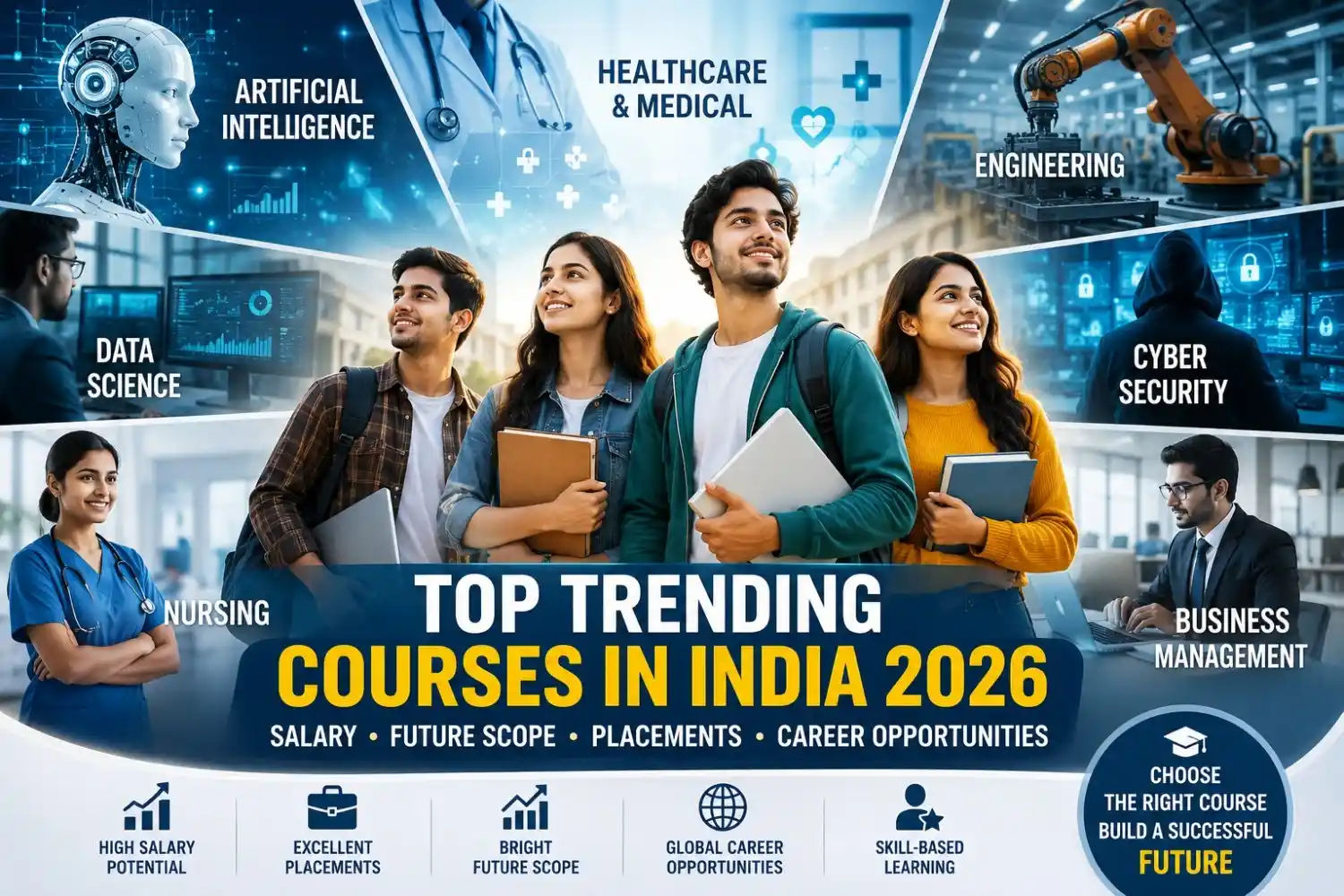
Introduction
Choosing the right course is one of the biggest decisions in a student's life. As industries continue to evolve amid technological innovation, automation, and global employment opportunities, selecting a future-ready course has become more important than ever.
If you're planning your higher education in 2026, you're probably wondering which courses offer strong placement opportunities, excellent salary packages, and long-term career growth.
This comprehensive guide explores the Top Trending Courses in India 2026, covering eligibility, career prospects, expected salaries, industry demand, and expert recommendations to help you make an informed decision.
If you're exploring healthcare careers, our Healthcare Career Guide at Vidya Udbhav can also help you compare specialized medical programs before making your final choice.
Quick Answer
What are the top trending courses in India in 2026?
Some of the most in-demand courses include:
- Artificial Intelligence & Machine Learning
- Data Science
- Cyber Security
- Nursing
- Dialysis Technology
- Radiology & Medical Imaging
- Operation Theatre Technology
- Physiotherapy
- Computer Science Engineering
- Digital Marketing
- Cloud Computing
- Robotics
- Biotechnology
- Pharmacy
- Healthcare Management
Why Course Selection Matters More Than Ever
The job market is changing rapidly. Employers today value practical skills, industry certifications, internships, and specialization just as much as academic degrees.
A course with strong industry demand can provide:
- Better placements
- Higher starting salaries
- Faster career growth
- International opportunities
- Job security
- Continuous learning prospects
One thing many students overlook is that choosing a course solely based on popularity may not lead to long-term satisfaction. Your interests, aptitude, and career goals should always play a role in your decision.
Top Trending Courses in India 2026
| Artificial Intelligence | 4 Years | ₹8–18 LPA | Excellent |
| Data Science | 3–4 Years | ₹7–15 LPA | Excellent |
| Cyber Security | 3–4 Years | ₹6–14 LPA | High |
| Computer Science Engineering | 4 Years | ₹5–18 LPA | Excellent |
| Nursing | 4 Years | ₹4–10 LPA | Excellent |
| Dialysis Technology | 3–4 Years | ₹3–8 LPA | High |
| Radiology Technology | 3 Years | ₹4–9 LPA | High |
| Physiotherapy | 4.5 Years | ₹4–10 LPA | Excellent |
| Pharmacy | 4 Years | ₹4–9 LPA | High |
| Healthcare Management | 2 Years | ₹6–15 LPA | Growing |
Salary ranges vary by employer, location, skills, and experience.
Artificial Intelligence and Machine Learning
Artificial Intelligence is transforming nearly every industry, from healthcare and finance to manufacturing and education.
Career Opportunities
- AI Engineer
- Machine Learning Engineer
- NLP Specialist
- Robotics Engineer
- AI Consultant
Future Scope
Global demand for AI professionals continues to grow, making it one of the safest long-term career choices.
Data Science
Organizations generate enormous amounts of data every day. Data scientists help businesses make informed decisions using analytics and predictive models.
Skills Required
- Statistics
- Python
- SQL
- Data Visualization
- Machine Learning
Healthcare Courses Continue to Dominate
Healthcare remains one of the fastest-growing industries worldwide. Even during economic slowdowns, healthcare professionals remain in demand.
Popular healthcare programs include:
- Nursing
- Dialysis Technology
- Operation Theatre Technology
- Medical Laboratory Technology
- Radiology & Imaging Technology
- Physiotherapy
- Emergency Medical Technology
Students interested in allied healthcare can also explore the Healthcare Courses section available on Vidya Udbhav for detailed admission guidance.
Engineering Specializations with Strong Growth
Traditional engineering continues to evolve with emerging technologies.
Highly sought-after branches include:
Computer Science Engineering
Ideal for students interested in:
- Software Development
- Artificial Intelligence
- Cloud Computing
- Cyber Security
Robotics Engineering
Industries adopting automation require robotics engineers capable of designing intelligent systems.
Electronics and IoT
Connected devices are becoming part of daily life, creating exciting opportunities in smart infrastructure and automation.
Emerging Career Opportunities
Some careers expected to experience significant growth include:
- Cloud Architect
- AI Researcher
- Digital Health Specialist
- Cyber Security Analyst
- Data Engineer
- Healthcare Administrator
- Biomedical Engineer
- Digital Marketing Strategist
- Business Intelligence Analyst
- Product Manager
Step-by-Step Guide to Choosing the Right Course
Step 1: Identify Your Interests
Choose a field that genuinely excites you.
Step 2: Research Industry Demand
Understand future hiring trends before making a decision.
Step 3: Compare Placement Records
Institutions with strong industry partnerships often provide better career opportunities.
Step 4: Evaluate Course Curriculum
Look for practical training, internships, projects, and industry exposure.
Step 5: Consider Higher Education Opportunities
Select courses that offer flexibility for future specialization.
For admission planning, students can also explore the Career Planning Resources available on Vidya Udbhav.
Benefits of Choosing Future-Ready Courses
- Better employability
- Higher salary potential
- Global career opportunities
- Faster professional growth
- Greater job stability
- Industry-relevant skills
- Continuous innovation
Common Challenges Students Face
Many students experience confusion due to:
- Family expectations
- Peer influence
- Lack of career guidance
- Salary misconceptions
- Limited awareness of emerging industries
Here is where many people make mistakes: they choose a course solely because it is popular rather than aligning it with their strengths and long-term goals.
Practical Solutions
To make a confident decision:
- Attend career counseling sessions.
- Explore internship opportunities.
- Speak with industry professionals.
- Compare placement statistics.
- Assess your strengths and interests honestly.
Real-Life Example
Consider two students with similar academic scores.
One chose Computer Science because friends recommended it, but had little interest in coding. The other selected Radiology Technology after researching healthcare demand and practical work environments.
Within a few years, the second student secured stable employment and found greater job satisfaction because the course matched both industry demand and personal interest.
The lesson is simple: informed choices often lead to better outcomes than following trends alone.
Beginner Strategy
If you're still unsure, begin by exploring broad career categories:
- Technology
- Healthcare
- Business
- Engineering
- Creative Industries
Then narrow your options based on aptitude, future demand, and learning preferences.
Advanced Strategy
Students aiming for highly competitive careers should focus on:
- Industry certifications
- Internship experience
- Research projects
- Communication skills
- Professional networking
- Continuous upskilling
Employers increasingly value practical experience alongside academic qualifications.
Best Tools for Career Planning
Free Options
- Google Career Resources
- LinkedIn Learning (selected free content)
- Coursera (free audit)
- Naukri Career Insights
Premium Options
- Coursera Plus
- Udemy Business
- Simplilearn
- UpGrad
Mistakes to Avoid
- Choosing a course only because friends selected it
- Ignoring placement opportunities
- Overlooking practical training
- Focusing only on the starting salary
- Not researching future industry trends.
- Ignoring personal interests
Expert Tips
- Prioritize institutions with strong internship programs.
- Build practical skills throughout your course.
- Develop communication and teamwork abilities.
- Stay updated with industry trends.
- Create a professional portfolio before graduation.
Future Trends
The next decade will likely see rapid growth in:
- Artificial Intelligence
- Healthcare Technology
- Renewable Energy
- Robotics
- Digital Healthcare
- Biotechnology
- Cyber Security
- Cloud Computing
- Space Technology
- Precision Medicine
Students entering these sectors today may benefit from sustained demand and continuous innovation.
Actionable Final Advice
Before finalizing your admission:
- Research the course thoroughly.
- Compare institutions.
- Understand placement opportunities.
- Evaluate long-term career growth.
- Seek professional career counseling if needed.
For additional guidance on admissions, healthcare education, and career planning, explore the student resources available at Vidya Udbhav.
Conclusion
The best course in 2026 is not necessarily the one with the highest salary—it is the one that aligns with your interests, strengths, and long-term career aspirations while offering strong industry demand.
Whether you're considering Artificial Intelligence, Data Science, Healthcare, Engineering, or emerging technologies, taking the time to research your options will help you build a rewarding career.
Remember, education is an investment in your future. Make your decision based on informed research rather than short-term trends.
Frequently Asked Questions
1. Which course has the highest salary in India in 2026?
Artificial Intelligence, Data Science, and specialized Computer Science programs are among the highest-paying career paths.
2. Which healthcare course has the best future scope?
Nursing, Physiotherapy, Radiology Technology, and Dialysis Technology continue to show strong demand across hospitals and healthcare organizations.
3. Which course offers the best placement opportunities?
Courses in Computer Science, AI, Healthcare, Cyber Security, and Data Science generally have strong placement records.
4. How should students choose the right course?
Consider your interests, aptitude, career goals, industry demand, placement records, and long-term growth opportunities.
5. Are healthcare courses a good career choice in 2026?
Yes. Healthcare continues to expand globally due to increasing demand for skilled professionals and advances in medical technology.