


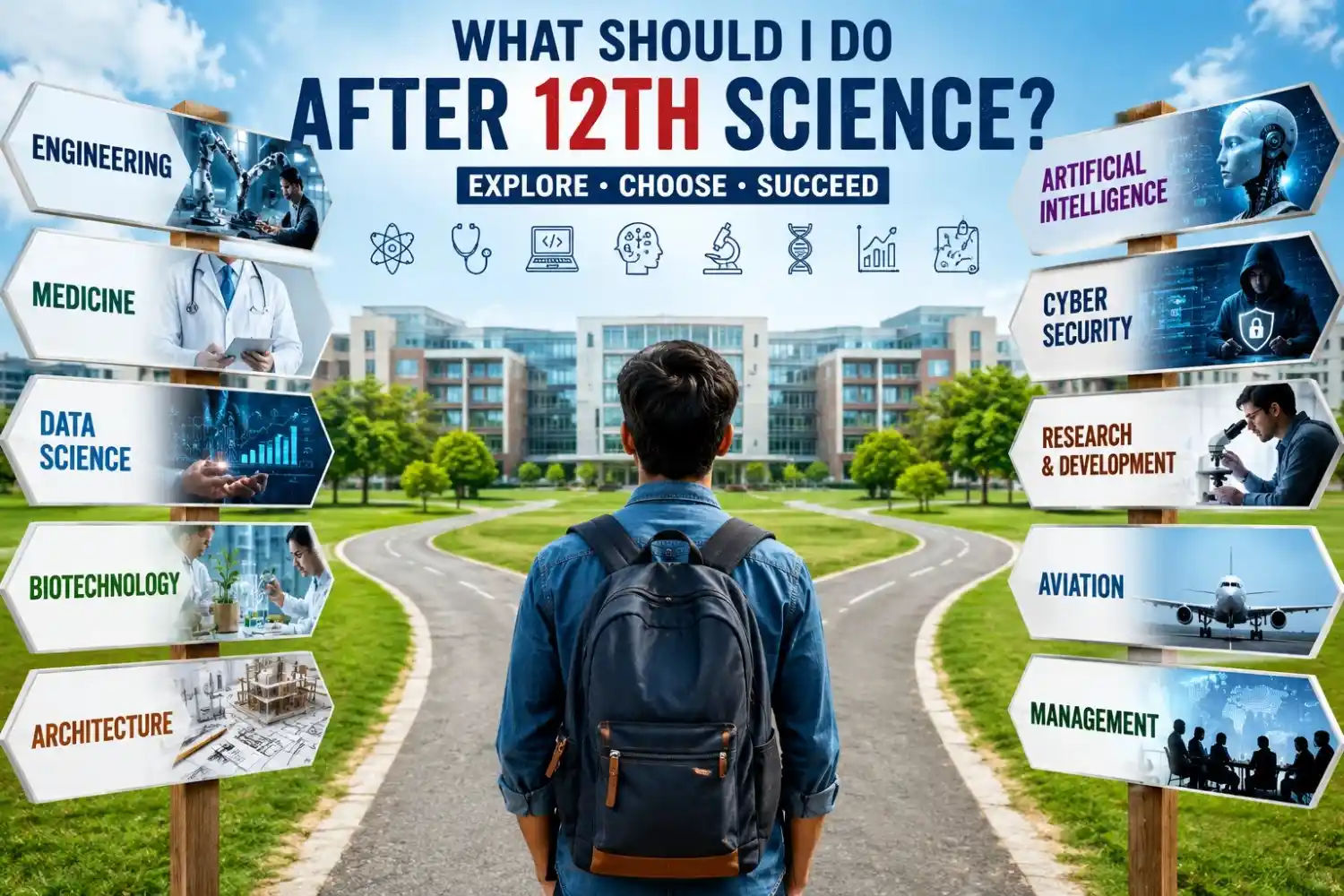
What Should I Do After 12th Science? Complete Career Guide for Students
Choosing a career after completing 12th science is one of the most important decisions in a student's life. Many students feel confused because there are hundreds of courses, career paths, and professional opportunities available today.
If you are asking yourself, "What should I do after 12th science?", you are not alone.
The good news is that science students have access to some of the widest career opportunities across technology, healthcare, research, management, design, entrepreneurship, and emerging industries.
Whether you studied PCM (Physics, Chemistry, Mathematics), PCB (Physics, Chemistry, Biology), or PCMB, this guide will help you understand your options and make a confident career decision.
For additional career planning support, students can also explore career guidance resources on Vidya Udbhav through topics such as student success roadmap, career planning guide, and higher education counseling resources.
Understanding Your Career Options After 12th Science
Before selecting a course, it is important to understand that your career choice should not be based solely on:
- Peer pressure
- Family expectations
- Popular trends
- Social media influence
- Salary alone
Instead, consider:
- Your interests
- Academic strengths
- Personality traits
- Career goals
- Future industry demand
A good career is the combination of passion, skills, and opportunities.
Quick Answer: What Should I Do After 12th Science?
If you are looking for a short answer, here are the most popular options:
| PCM | Engineering, Architecture, Data Science, Computer Science, Aviation |
| PCB | MBBS, BDS, Nursing, Pharmacy, Biotechnology |
| PCMB | Medical, Engineering, Research, Artificial Intelligence |
| Science Any Stream | BCA, BSc, Design, Management, Law, Defence Services |
The best choice depends on your interests and long-term goals.
Why Science Students Have More Career Opportunities
One major advantage of the science stream is flexibility.
Science students can often move into:
- Engineering
- Medical fields
- Commerce-related careers
- Management programs
- Government jobs
- Research careers
- Creative industries
Many non-science students cannot access some science-based professional courses, but science students often have broader eligibility.
Career Options After 12th Science (PCM Students)
Students with Physics, Chemistry, and Mathematics have several high-growth career paths.
Engineering
Engineering remains one of the most popular choices worldwide.
Popular branches include:
- Computer Science Engineering
- Artificial Intelligence
- Data Science
- Mechanical Engineering
- Civil Engineering
- Electrical Engineering
- Aerospace Engineering
- Robotics Engineering
Computer Science and IT
Technology continues to create enormous opportunities.
Popular courses:
- BCA
- B.Tech Computer Science
- Software Engineering
- Data Analytics
- Cybersecurity
- Cloud Computing
Career roles:
- Software Developer
- Data Analyst
- AI Engineer
- Cybersecurity Specialist
- Product Manager
Architecture
Students interested in creativity and technical design can pursue:
- Bachelor of Architecture (B.Arch)
Career opportunities:
- Architect
- Urban Planner
- Interior Designer
- Landscape Architect
Aviation
The aviation industry offers exciting careers.
Options include:
- Commercial Pilot
- Aircraft Maintenance Engineer
- Aviation Management
Career Options After 12th Science (PCB Students)
Biology students have many healthcare and life science opportunities.
MBBS
Medicine remains one of the most respected professions globally.
Benefits:
- High societal impact
- Long-term career stability
- Global opportunities
Dentistry (BDS)
Dentistry is ideal for students interested in oral healthcare.
Career opportunities:
- Dental Practitioner
- Orthodontist
- Oral Surgeon
Nursing
Healthcare systems worldwide increasingly require skilled nurses.
Popular options:
- BSc Nursing
- Advanced Nursing Programs
Pharmacy
A pharmacy combines healthcare and science.
Career roles:
- Pharmacist
- Drug Research Associate
- Clinical Research Professional
Biotechnology
Biotechnology is one of the fastest-growing scientific fields.
Applications include:
- Genetics
- Pharmaceuticals
- Agriculture
- Healthcare Innovation
Career Options for PCMB Students
Students with both Mathematics and Biology enjoy maximum flexibility.
Possible paths:
- Engineering
- Medicine
- Biotechnology
- Artificial Intelligence
- Biomedical Engineering
- Research Sciences
- Healthcare Technology
This combination opens multiple future opportunities.
Emerging Career Options After 12th Science
The job market is changing rapidly.
Many students overlook these modern fields.
Artificial Intelligence
AI is transforming every industry.
Career opportunities:
- AI Engineer
- Machine Learning Specialist
- Data Scientist
Data Science
Organizations rely heavily on data-driven decision-making.
Skills needed:
- Statistics
- Programming
- Analytics
Cybersecurity
As digital systems expand, security professionals are in high demand.
Career opportunities:
- Ethical Hacker
- Security Analyst
- Risk Consultant
Robotics
Robotics combines engineering, software, and automation.
Industries include:
- Manufacturing
- Healthcare
- Defence
- Logistics
Environmental Science
Sustainability is becoming a global priority.
Career options:
- Environmental Consultant
- Climate Researcher
- Sustainability Specialist
Step-by-Step Guide to Choosing the Right Career
Many students ask, "How do I know which course is right for me?"
Follow this practical process.
Step 1: Identify Your Interests
Ask yourself:
- Do I enjoy solving technical problems?
- Am I interested in healthcare?
- Do I like research?
- Do I enjoy creativity and design?
Step 2: Evaluate Your Strengths
Consider:
- Academic performance
- Skills
- Aptitude
- Personality
Step 3: Research Career Demand
Look at:
- Industry growth
- Future trends
- Employment opportunities
- Global demand
Step 4: Compare Courses
Create a comparison chart.
| Duration | ||
| Cost | ||
| Job Scope | ||
| Salary Potential | ||
| Future Demand |
Step 5: Seek Expert Guidance
Professional career counseling can help clarify:
- Strengths
- Suitable careers
- Industry opportunities
Students can also explore educational planning and admission guidance resources through the career development sections of Vidya Udbhav.
Benefits of Choosing the Right Career Early
A well-planned decision can provide:
- Better academic focus
- Reduced stress
- Clear goals
- Improved confidence
- Higher job satisfaction
- Better financial outcomes
Career planning is not about finding the perfect option. It is about finding the most suitable option.
Common Challenges Students Face
Many students experience:
Information Overload
Thousands of courses create confusion.
Family Pressure
Parents often suggest careers based on traditional expectations.
Fear of Failure
Students worry about making the wrong choice.
Lack of Awareness
Many high-growth careers are not widely known.
Practical Solutions to Career Confusion
Here is what actually works.
Take Career Assessments
Aptitude and personality assessments provide valuable insights.
Speak With Professionals
Learn from people already working in your desired field.
Explore Internships
Real-world exposure helps clarify interests.
Attend Career Counseling Sessions
Professional guidance can eliminate uncertainty.
Real-Life Career Examples
Student A: PCM Background
Initially wanted to be an engineer because my friends chose it.
After exploring interests, I discovered a passion for programming.
Pursued Computer Science and became a software developer.
Student B: PCB Background
Dreamed of becoming a doctor.
Prepared consistently and entered medical school.
Now working in healthcare with strong career growth.
Student C: Science Student Interested in Creativity
Combined science and design skills.
Pursued architecture and built a successful design career.
Best Tools for Career Exploration
Beginner Friendly
- Career Aptitude Tests
- Personality Assessments
- Interest Inventories
Free Options
- Career Research Platforms
- Government Education Portals
- Industry Reports
Premium Options
- Professional Career Counseling
- Psychometric Assessments
- Personalized Career Planning Programs
Beginner Strategy for Success
If you are still unsure, follow this strategy.
Year 1
- Explore interests
- Research industries
- Develop foundational skills
Year 2
- Gain practical exposure
- Build projects
- Network with professionals
Year 3 and Beyond
- Specialize in your chosen field
- Pursue internships
- Build employability skills
This gradual approach reduces risk and improves clarity.
Advanced Career Growth Strategy
Top-performing students often:
- Learn emerging technologies
- Build personal projects
- Develop communication skills
- Participate in competitions
- Earn industry certifications
- Create professional portfolios
Technical knowledge alone is no longer enough.
Employers increasingly value adaptability and problem-solving skills.
Mistakes to Avoid After 12th Science
Here is where many people make mistakes.
Choosing a Course Only for Salary
High salaries often come after years of expertise.
Following Friends Blindly
Your strengths may differ from theirs.
Ignoring Industry Trends
Career demand changes over time.
Not Researching Course Outcomes
Always understand:
- Job roles
- Salary potential
- Growth opportunities
before making a decision.
Avoiding Skill Development
Degrees matter.
Skills matter even more.
Expert Tips for Career Selection
Experienced career counselors often recommend:
- Focus on long-term growth.
- Evaluate industry demand.
- Develop transferable skills.
- Keep learning continuously.
- Build practical experience early.
- Stay open to new opportunities.
One thing many beginners miss is that career success depends more on continuous improvement than on the initial course selection.
Best Practices for Building a Successful Career
Develop Communication Skills
Strong communication helps in every profession.
Build Digital Skills
Technology affects nearly every industry.
Network Professionally
Connections often create opportunities.
Stay Updated
Industries evolve rapidly.
Continuous learning is essential.
Future Trends Students Should Know
The future job market will increasingly focus on:
- Artificial Intelligence
- Automation
- Robotics
- Healthcare Innovation
- Biotechnology
- Renewable Energy
- Cybersecurity
- Data Analytics
- Space Technology
- Sustainability
Students entering these sectors may benefit from strong long-term demand.
Related Learning Resources
To strengthen your career planning journey, explore educational resources available on Vidya Udbhav, including:
- Career planning guide
- Student success roadmap
- Admission counseling resources
- Scholarship guidance strategies
- Higher education decision-making frameworks
These interconnected learning topics help students make informed educational choices.
Actionable Final Advice
If you are asking, "What should I do after 12th science?", start by understanding yourself before choosing a course.
Do not rush.
Research thoroughly.
Talk to professionals.
Explore real-world opportunities.
Develop practical skills.
Most importantly, choose a path that aligns with your interests, strengths, and future aspirations.
The right decision today can create opportunities for decades.
Conclusion
Science students have access to some of the most diverse and rewarding career opportunities available today.
Whether you choose engineering, medicine, computer science, biotechnology, architecture, data science, research, or an emerging technology field, success depends on thoughtful planning and continuous learning.
Instead of focusing only on popular careers, focus on finding the path that matches your skills and goals.
With proper guidance, research, and commitment, you can build a fulfilling and future-ready career after 12th science.
Frequently Asked Questions (FAQs)
1. What is the best career option after 12th science?
There is no single best option. Engineering, medicine, computer science, biotechnology, data science, and architecture are among the most popular choices depending on your interests.
2. Can I switch to management after 12th science?
Yes. Science students can pursue management-related courses and later complete programs such as BBA or MBA.
3. Which course has the highest salary potential?
Fields such as Artificial Intelligence, Data Science, Medicine, Software Engineering, and specialized engineering disciplines often offer strong salary potential.
4. Can science students pursue careers outside engineering and medicine?
Absolutely. Science students can enter law, design, management, finance, entrepreneurship, aviation, and many other industries.
5. What should I do if I am confused after 12th science?
Take aptitude assessments, research career options, speak with professionals, and seek expert career counseling before making a decision.
6. Is BCA a good option after 12th science?
Yes. BCA is a popular choice for students interested in software development, programming, cybersecurity, cloud computing, and IT careers.
7. Which emerging careers are best for science students?
Artificial Intelligence, Cybersecurity, Data Science, Robotics, Biotechnology, Renewable Energy, and Environmental Science are among the fastest-growing fields.