

Introduction
Completing a Bachelor of Computer Applications (BCA) is an important milestone for students interested in technology, software development, and the digital world. However, one question often creates confusion among graduates:
What to do after BCA?
The answer depends on your career goals, interests, skills, and long-term aspirations. Some students choose higher education, while others prefer entering the workforce immediately. Many also combine professional certifications with practical experience to accelerate their careers.
The good news is that a BCA degree opens doors to numerous opportunities across industries worldwide. Whether you want to become a software developer, data analyst, cybersecurity expert, cloud engineer, entrepreneur, or business leader, there is a pathway available.
If you are currently planning your future after graduation, you may also explore the student-focused resources and career planning guides available on Vidya Udbhav to better understand emerging opportunities.
Quick Answer: What to Do After BCA?
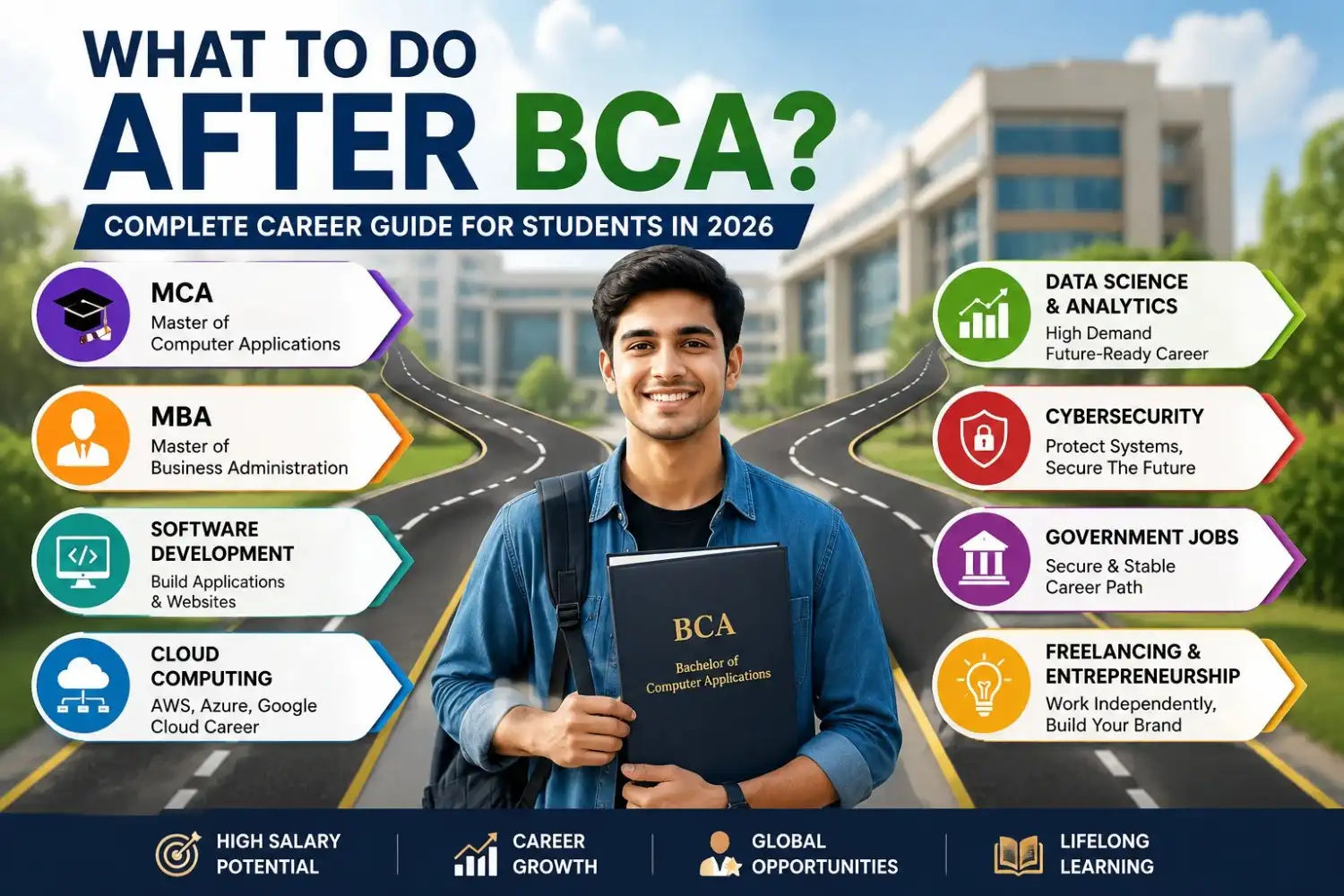
After completing BCA, students can:
- Pursue MCA (Master of Computer Applications)
- Pursue an MBA (Master of Business Administration)
- Apply for software development jobs.
- Learn Data Science and AI
- Enter Cybersecurity
- Become a Cloud Computing Professional
- Prepare for Government Jobs
- Learn Full Stack Development
- Start Freelancing
- Build a Technology Startup
The best choice depends on your career objectives and preferred industry.
Understanding the Scope of BCA
BCA is a professional undergraduate degree focused on:
- Programming
- Software Development
- Database Management
- Networking
- Operating Systems
- Web Technologies
- Computer Applications
With digital transformation accelerating worldwide, organizations require professionals who understand technology and business processes.
This makes BCA graduates highly valuable in today's job market.
Career Options After BCA: Overview Table
| MCA | 2 Years | Medium | High | Excellent |
| MBA | 2 Years | Medium | High | Excellent |
| Software Developer | Immediate | Medium | High | Excellent |
| Data Science | 6-12 Months | High | Very High | Excellent |
| Cybersecurity | 6-12 Months | Medium | Very High | Excellent |
| Cloud Computing | 6-12 Months | Medium | High | Excellent |
| Government Jobs | Variable | Medium | Stable | Good |
| Freelancing | Immediate | Medium | Unlimited | High |
| Entrepreneurship | Variable | High | Unlimited | Very High |
Option 1: Pursue MCA After BCA
Why MCA is Popular
MCA remains one of the most preferred choices for BCA graduates.
It provides advanced knowledge in:
- Software Engineering
- Artificial Intelligence
- Machine Learning
- Data Analytics
- Cloud Computing
- System Architecture
Benefits of MCA
- Better job opportunities
- Higher salary packages
- Strong technical expertise
- Eligibility for senior IT roles
- Better placement opportunities
Who Should Choose MCA?
MCA is ideal for students who:
- Enjoy coding
- Want technical careers
- Plan to work in a software company.
- Aim for research and development roles.
Option 2: Pursue an MBA After BCA
Many students ask:
Can I do an MBA After BCA?
Yes.
An MBA is an excellent option if you want to move into management and leadership positions.
MBA Specializations
- Information Technology
- Marketing
- Finance
- Human Resources
- Business Analytics
- Operations Management
Benefits
- Leadership skills
- Higher managerial positions
- Better corporate exposure
- Entrepreneurship opportunities
This path is suitable for students who prefer managing teams rather than coding full-time.
Option 3: Start Working as a Software Developer
Many global companies hire BCA graduates directly.
Common Roles
- Software Developer
- Web Developer
- Front-End Developer
- Back-End Developer
- Full Stack Developer
- Application Developer
Required Skills
- Java
- Python
- JavaScript
- React
- Node.js
- SQL
- Git
One thing many beginners miss is that practical projects often matter more than theoretical knowledge during interviews.
Option 4: Build a Career in Data Science
Data Science continues to be among the fastest-growing fields globally.
Skills Required
- Python
- Statistics
- Machine Learning
- SQL
- Data Visualization
Job Roles
- Data Analyst
- Data Scientist
- Business Analyst
- Machine Learning Engineer
Why Data Science?
Organizations increasingly rely on data-driven decision-making.
As a result, demand remains consistently strong.
Option 5: Enter Cybersecurity
Cybersecurity professionals protect systems, networks, and digital assets from threats.
Popular Roles
- Security Analyst
- Ethical Hacker
- Security Consultant
- SOC Analyst
- Penetration Tester
Certifications
- CEH
- Security+
- CISSP
- CompTIA Security
This becomes more important when cyberattacks continue to rise globally.
Option 6: Learn Cloud Computing
Cloud computing powers modern businesses.
Major Platforms
- AWS
- Microsoft Azure
- Google Cloud
Career Opportunities
- Cloud Engineer
- Cloud Architect
- DevOps Engineer
- Site Reliability Engineer
Cloud professionals are among the highest-paid technology specialists today.
Option 7: Become a Full Stack Developer
Full Stack Development combines front-end and back-end technologies.
Technologies to Learn
Front-End:
- HTML
- CSS
- JavaScript
- React
Back-End:
- Node.js
- Python
- Java
- Databases
Advantages
- High employability
- Freelancing opportunities
- Startup opportunities
- Global demand
Option 8: Prepare for Government Jobs
Not every BCA graduate wants a private-sector career.
Government jobs provide:
- Job security
- Stable income
- Work-life balance
- Long-term benefits
Popular Exams
- SSC
- Banking Exams
- UPSC
- State PSC
- Railway Recruitment
Students preparing for competitive exams should follow structured preparation strategies and career planning resources available on Vidya Udbhav.
Option 9: Start Freelancing
Freelancing allows BCA graduates to earn independently.
Services You Can Offer
- Website Development
- App Development
- Graphic Design
- Digital Marketing
- Technical Writing
- Software Consulting
Benefits
- Flexible schedule
- Global clients
- Remote work
- Unlimited income potential
Many successful freelancers eventually build their own agencies.
Option 10: Launch a Startup
Technology entrepreneurship has never been more accessible.
Startup Ideas
- SaaS Products
- Mobile Applications
- Educational Platforms
- AI Solutions
- Digital Agencies
Many globally recognized companies began as small startup projects.
Best Professional Certifications After BCA
Certifications can significantly improve employability.
Beginner-Friendly Certifications
- Google Data Analytics
- AWS Cloud Practitioner
- Microsoft Fundamentals
- Tableau Certification
Intermediate Certifications
- AWS Solutions Architect
- Azure Administrator
- CEH
- Scrum Master
Advanced Certifications
- CISSP
- PMP
- AWS Professional Certifications
Salary Expectations After BCA
Entry-Level Salary
| Role | Average Starting Salary |
| Software Developer | Moderate to High |
| Data Analyst | Moderate |
| Cybersecurity Analyst | Moderate to High |
| Cloud Engineer | High |
| Full Stack Developer | High |
| Government Employee | Stable |
Actual salary depends on:
- Skills
- Location
- Experience
- Industry
- Certifications
Real-Life Career Paths After BCA
Example 1: Technical Specialist
BCA → MCA → Software Developer → Senior Engineer → Technical Architect
Example 2: Management Professional
BCA → MBA → Business Analyst → Project Manager → Director
Example 3: Data Expert
BCA → Data Science Certification → Data Analyst → Data Scientist
Example 4: Entrepreneur
BCA → Freelancing → Agency Owner → Technology Startup Founder
Common Mistakes to Avoid After BCA
Here is where many people make mistakes.
1. Delaying Career Decisions
Waiting too long can slow professional growth.
2. Ignoring Skill Development
Technology changes rapidly.
Continuous learning is essential.
3. Choosing Courses Without Research
Select programs aligned with your goals.
4. Focusing Only on Degrees
Practical skills matter equally.
5. Avoiding Networking
Professional relationships often create career opportunities.
Beginner Strategy After BCA
If you are unsure what to do next, follow this roadmap:
Step 1
Identify your interest area.
Step 2
Choose a specialization.
Step 3
Build practical projects.
Step 4
Gain certifications.
Step 5
Create a professional portfolio.
Step 6
Apply for internships and jobs.
Step 7
Continue learning consistently.
Advanced Career Strategy
Professionals aiming for rapid growth should:
- Learn emerging technologies
- Build industry certifications
- Develop communication skills
- Gain leadership experience
- Contribute to open-source projects.
- Build a personal brand.
These strategies often accelerate promotions and salary growth.
Future Trends for BCA Graduates
The technology industry continues evolving.
High-growth areas include:
- Artificial Intelligence
- Machine Learning
- Cloud Computing
- Cybersecurity
- Blockchain
- Internet of Things
- Data Engineering
- Automation
- Generative AI
Students entering these fields today may benefit from strong future demand.
Expert Tips for Career Success After BCA
Focus on Skills First
Employers increasingly prioritize practical capabilities.
Build Real Projects
Projects demonstrate competency better than certificates alone.
Learn Communication Skills
Technical knowledge and communication together create powerful career advantages.
Stay Updated
Technology evolves quickly.
Continuous learning is essential.
Network Consistently
Many opportunities come through professional connections.
Actionable Final Advice
If your goal is a highly technical career, an MCA combined with modern technical skills can be an excellent choice.
If leadership and business attract you, an MBA offers strong opportunities.
If you want immediate earnings, software development, freelancing, cloud computing, cybersecurity, and data analytics provide excellent career paths.
The key is not choosing the most popular option but selecting the one that aligns with your strengths, interests, and long-term goals.
For additional educational guidance, student success roadmaps, and career planning insights, explore relevant resources on Vidya Udbhav.
Conclusion
The answer to what to do after BCA depends on your personal ambitions and professional interests.
Fortunately, BCA is one of the most versatile degrees in the technology sector. Whether you pursue MCA, MBA, certifications, government jobs, software development, cybersecurity, cloud computing, freelancing, or entrepreneurship, there are abundant opportunities available globally.
Focus on building valuable skills, gaining practical experience, and staying adaptable to industry trends. With the right strategy, a BCA degree can become the foundation for a highly successful and rewarding career.
Frequently Asked Questions (FAQs)
1. What is the best option after BCA?
MCA, MBA, Data Science, Cybersecurity, Cloud Computing, and Software Development are among the best options depending on your career goals.
2. Can I do an MBA after BCA?
Yes. BCA graduates are fully eligible for MBA programs and can specialize in various management fields.
3. Is MCA better than MBA after BCA?
MCA is generally better for technical careers, while MBA is ideal for management and leadership roles.
4. Which job has the highest salary after BCA?
Cloud Architect, Data Scientist, Cybersecurity Specialist, AI Engineer, and Technical Architect roles often offer high salary potential.
5. Can I get a job directly after BCA?
Yes. Many companies hire BCA graduates for software development, web development, technical support, testing, and IT operations roles.
6. Is Data Science a good career after BCA?
Yes. Data Science remains one of the fastest-growing and highest-demand career fields globally.
7. Can I become a software engineer after BCA?
Absolutely. By strengthening programming skills and building projects, BCA graduates can successfully become software engineers.