

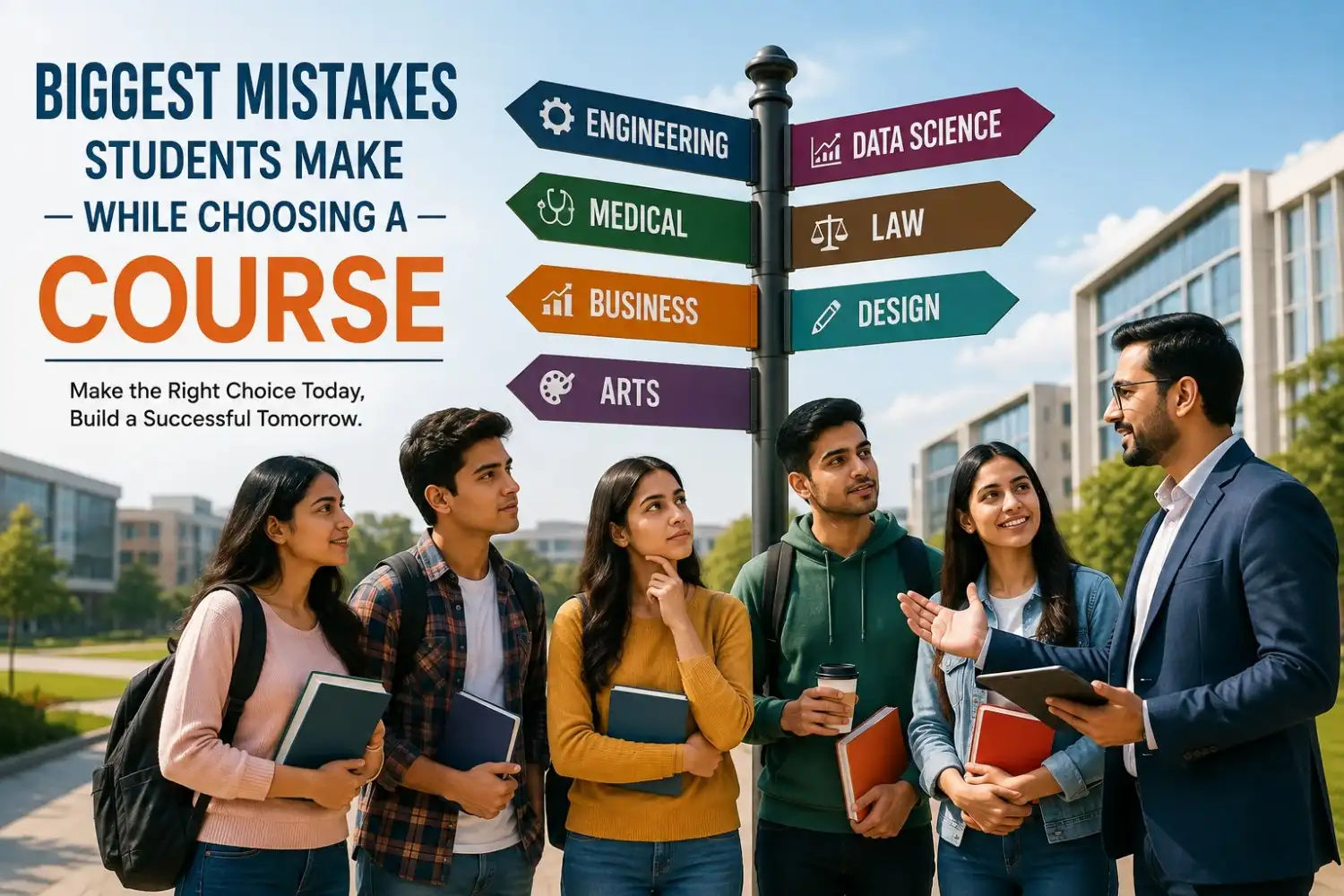
Biggest Mistakes Students Make While Choosing a Course
Choosing the right course is one of the biggest decisions a student will ever make. It influences future career opportunities, earning potential, personal satisfaction, and long-term growth. Yet many students make this decision based on incomplete information, outside pressure, or temporary trends.
If you are confused about your next academic step, you are not alone. Thousands of students around the world face the same challenge every year. The good news is that most course selection mistakes can be avoided with proper planning and research.
If you're beginning your journey, explore Vidya Udbhav's career planning guide to understand different educational pathways before making your final decision.
What Does Choosing the Right Course Mean?
Choosing the right course means selecting an academic program that aligns with:
- Your interests
- Your strengths
- Career goals
- Future industry demand
- Financial situation
- Learning style
It is not simply about selecting the most popular degree. Instead, it is about finding a course that helps you build a successful and fulfilling future.
Quick Answer
Students often make mistakes when choosing a course based on peer pressure, salary expectations, or trends rather than considering their own abilities, interests, and long-term career goals.
Why Course Selection Matters
A well-chosen course can provide:
- Better career opportunities
- Higher job satisfaction
- Improved motivation
- Stronger academic performance
- Long-term professional growth
On the other hand, selecting the wrong course may lead to frustration, poor performance, career changes, and additional education costs.
Biggest Mistakes Students Make While Choosing a Course
1. Following Friends Instead of Personal Interests
One of the most common mistakes is choosing the same course as friends.
While studying together may seem exciting, career goals are personal. Every student has different skills, ambitions, and learning preferences.
Here is what actually works: focus on your own strengths rather than someone else's decision.
2. Choosing a Course Only Because It Pays Well
High salaries attract many students toward certain professions.
However, a high-paying career requires genuine interest, continuous learning, and commitment. Without motivation, success becomes difficult.
Instead of asking:
"Which course pays the most?"
Ask:
"Which course matches my skills and has long-term growth?"
3. Ignoring Your Strengths and Weaknesses
Many students overlook their natural abilities.
For example:
| Creativity | Graphic Design, Architecture, Animation |
| Problem Solving | Engineering, Computer Science |
| Communication | Journalism, Law, Marketing |
| Helping Others | Nursing, Psychology, Education |
| Business Thinking | BBA, Finance, Entrepreneurship |
Understanding yourself first makes course selection much easier.
4. Not Researching Career Opportunities
Some students only look at the course syllabus without exploring career outcomes.
Before selecting any program, research:
- Job roles
- Industry demand
- Average salary
- Required skills
- Future growth
- Global opportunities
One thing many beginners miss is that industries change rapidly. A course should prepare you for future careers—not only today's jobs.
5. Ignoring Skill Development
A degree alone is no longer enough.
Employers increasingly value practical skills such as:
- Communication
- Digital literacy
- Problem-solving
- Leadership
- Critical thinking
- Technical expertise
Students who combine education with practical skills often have better career prospects.
You may also benefit from the student success roadmap available on Vidya Udbhav, which explains how to build employability alongside academics.
6. Choosing a Course Under Family Pressure
Parents often provide valuable guidance.
However, choosing a career solely to satisfy family expectations can create long-term dissatisfaction.
Healthy discussions combined with professional career counseling usually lead to better decisions for everyone involved.
7. Overlooking Course Curriculum
Many students focus only on the course title.
Instead, carefully review:
- Subjects covered
- Practical training
- Projects
- Internship opportunities
- Industry exposure
- Assessment methods
Two courses with similar names may offer completely different learning experiences.
8. Ignoring College Quality
The institution matters almost as much as the course itself.
Consider:
- Faculty experience
- Accreditation
- Placement record
- Industry partnerships
- Campus facilities
- Alumni success
Now let us understand why this becomes more important when employers evaluate graduates from different institutions.
9. Depending Only on Social Media Advice
Social media can introduce career ideas, but it should never be your only source of information.
Many viral career recommendations highlight only success stories while ignoring challenges.
Always verify information through trusted educational resources and professional career counselors.
10. Not Thinking About the Future
Technology is transforming nearly every industry.
Before choosing a course, ask yourself:
- Will this field continue growing?
- Will automation affect this profession?
- Can I continue learning after graduation?
- Are global opportunities available?
Future-ready thinking helps students remain competitive throughout their careers.
Step-by-Step Guide to Choosing the Right Course
Step 1: Understand Yourself
Identify your:
- Interests
- Skills
- Personality
- Values
- Career aspirations
Step 2: Explore Career Options
Research different industries and professions before selecting a course.
Step 3: Compare Courses
Evaluate multiple programs rather than selecting the first option.
Step 4: Check College Reputation
Review placements, curriculum, faculty, and industry connections.
Step 5: Seek Professional Guidance
Career counselors can provide objective recommendations based on your profile.
For additional insights, explore the career counseling resources and admission guidance articles on Vidya Udbhav.
Benefits of Making the Right Course Choice
Choosing wisely can lead to:
- Higher confidence
- Better academic performance
- Improved career satisfaction
- Strong employability
- Greater earning potential
- Continuous professional growth
Common Challenges Students Face
Students often struggle with:
- Information overload
- Family expectations
- Financial concerns
- Fear of making the wrong choice
- Limited awareness of emerging careers
Recognizing these challenges early makes decision-making easier.
Real-Life Example
Imagine two students interested in technology.
Student A chooses Computer Science simply because friends enrolled.
Student B researches different technology fields, discovers an interest in Data Science, learns Python independently, completes internships, and builds a portfolio.
After graduation, Student B enters the job market with stronger practical skills and clearer career direction.
The difference was not intelligence—it was informed decision-making.
Useful Tools for Course Research
Beginner-Friendly
- Google Career Exploration
- Career aptitude tests
- College brochures
Free Options
- Government education portals
- University webinars
- Career seminars
Premium Options
- Professional career counseling
- Psychometric assessments
- Industry mentoring programs
Beginner Strategy
If you're unsure where to begin:
- List your interests.
- Research matching careers.
- Compare multiple courses.
- Speak with professionals.
- Evaluate long-term opportunities.
- Make an informed decision—not an emotional one.
Advanced Strategy
Students aiming for highly competitive careers should:
- Build technical skills early.
- Gain internship experience.
- Earn relevant certifications.
- Develop communication skills.
- Follow industry trends regularly.
Combining academic knowledge with practical experience creates a significant competitive advantage.
Best Practices
- Research before deciding.
- Think long term.
- Focus on skills, not just degrees.
- Consider future job markets.
- Balance passion with practicality.
- Seek professional guidance when needed.
Future Trends in Education
The future of education is becoming increasingly interdisciplinary.
Growing fields include:
- Artificial Intelligence
- Data Science
- Cybersecurity
- Digital Marketing
- Healthcare Technology
- Renewable Energy
- Business Analytics
Students who remain adaptable and continue learning throughout their careers will be better prepared for changing job markets.
Actionable Final Advice
Course selection should never be rushed.
Take time to understand yourself, research available options, compare institutions, and evaluate future career opportunities. The right course is not necessarily the most popular one—it is the one that aligns with your abilities, ambitions, and long-term goals.
For additional support, browse the career planning guide, placement preparation strategies, and other educational resources available on Vidya Udbhav.
Conclusion
Choosing a course is more than selecting subjects for the next few years. It is an investment in your future.
Avoid common mistakes such as following friends, chasing salaries without passion, ignoring industry trends, or overlooking practical skill development. A thoughtful, research-based decision can help you build a rewarding career while reducing unnecessary stress and costly changes later.
The best course is the one that fits your unique strengths, interests, and future aspirations—not someone else's expectations.
Frequently Asked Questions
1. What is the biggest mistake students make while choosing a course?
The most common mistake is choosing a course based on peer pressure or popularity instead of personal interests and career goals.
2. How can I know which course is right for me?
Assess your interests, strengths, career aspirations, and industry demand. Professional career counseling can also help.
3. Should salary be the main factor when choosing a course?
No. Salary is important, but long-term success depends on your skills, interests, and willingness to grow in the field.
4. Is it okay to change my course later?
Yes. Many successful professionals change academic paths after discovering their true interests. However, making an informed decision initially can save time and resources.
5. Why is career counseling important before choosing a course?
Career counseling provides personalized guidance based on your abilities, personality, interests, and future career opportunities, helping you make a more confident decision.