

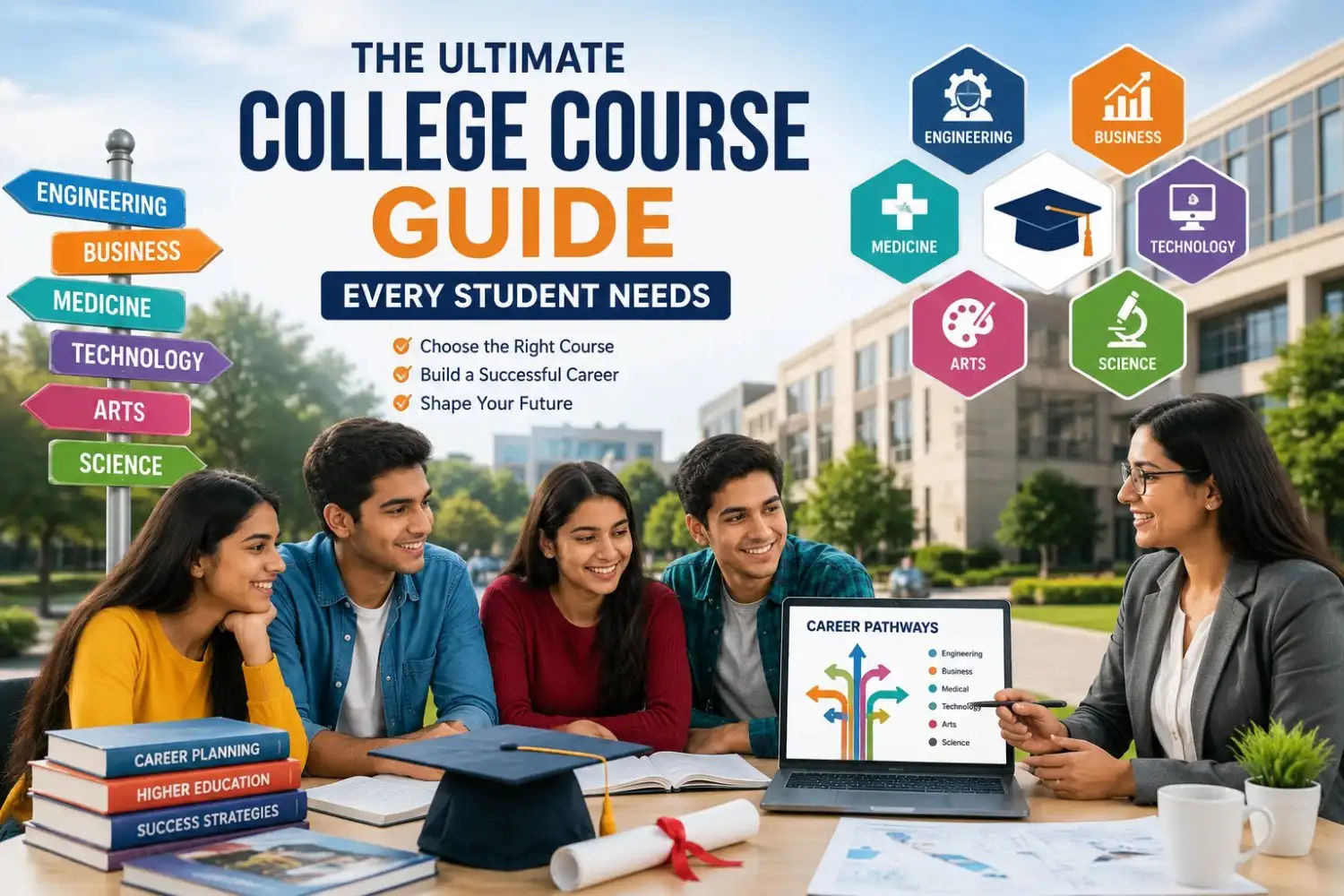
The Ultimate College Course Guide Every Student Needs
Choosing a college course is one of the biggest decisions in a student's life. The program you select influences your skills, career opportunities, earning potential, and even your personal growth. Yet, many students feel overwhelmed because there are hundreds of options available.
Whether you're finishing high school, considering a career change, or helping someone make an informed decision, this guide simplifies the entire process.
If you're still exploring career possibilities, our career planning guide on Vidya Udbhav can help you understand how your interests align with future opportunities.
Why Choosing the Right College Course Matters
A college course is much more than a degree certificate. It provides specialized knowledge, develops practical skills, and prepares you for professional life.
Selecting the wrong course may lead to:
- Lack of interest in studies
- Limited career opportunities
- Difficulty finding suitable employment
- Higher chances of changing careers later
Choosing wisely helps build confidence and creates a strong foundation for long-term success.
Quick Answer: How Do You Choose the Right College Course?
Many students ask this question.
The best college course depends on:
| Interests | Keeps you motivated throughout your studies |
| Skills | Helps you perform better academically |
| Career Goals | Aligns education with future jobs |
| Job Market | Increases employability |
| Budget | Ensures affordability |
| Course Duration | Fits your personal timeline |
| Future Scope | Supports long-term career growth |
Understanding Different Types of College Courses
There isn't a single "best" course for everyone.
Professional Courses
Designed for specific careers.
Examples include:
- Engineering
- Medicine
- Law
- Nursing
- Architecture
- Pharmacy
These programs usually include practical training and professional certifications.
Business and Management Courses
Ideal for students interested in leadership and entrepreneurship.
Popular options include:
- BBA
- MBA
- Finance
- Marketing
- Human Resource Management
- International Business
Computer and Technology Courses
Technology continues to create new career opportunities worldwide.
Popular choices:
- Computer Science
- Information Technology
- Artificial Intelligence
- Data Science
- Cyber Security
- Cloud Computing
- Software Engineering
One thing many beginners miss is that many technology careers value practical skills alongside academic qualifications.
Arts, Humanities and Social Sciences
Perfect for students who enjoy creativity, communication, and understanding society.
Examples:
- English
- Psychology
- Sociology
- Political Science
- Journalism
- History
- Economics
These fields offer careers in education, media, public administration, research, and corporate sectors.
Commerce and Finance Courses
Students interested in business, accounting, and financial management often choose:
- B.Com
- Accounting
- Banking
- Taxation
- Financial Planning
- Investment Analysis
Healthcare Courses
Healthcare continues to remain one of the fastest-growing industries globally.
Popular programs include:
- Nursing
- Physiotherapy
- Medical Laboratory Technology
- Radiology
- Public Health
- Nutrition
- Occupational Therapy
Step-by-Step Guide to Choosing the Best College Course
Step 1: Identify Your Interests
Ask yourself:
- What subjects do I enjoy?
- Which activities excite me?
- What problems do I enjoy solving?
Interest often leads to better academic performance.
Step 2: Evaluate Your Strengths
Some students excel in mathematics.
Others perform better in communication, creativity, research, or analytical thinking.
Understanding your strengths makes course selection easier.
Step 3: Research Career Opportunities
Before enrolling, learn about:
- Career growth
- Salary expectations
- Industry demand
- Future technologies
- Global opportunities
This becomes more important when choosing rapidly changing industries like technology.
Step 4: Compare Colleges
Consider:
- Accreditation
- Faculty
- Campus facilities
- Placement support
- Industry collaborations
- Internship opportunities
Our student success roadmap on Vidya Udbhav offers additional guidance for evaluating colleges effectively.
Step 5: Speak With Career Counselors
Professional guidance helps you avoid common mistakes and understand which course fits your long-term goals.
Benefits of Choosing the Right College Course
A well-chosen course can provide:
- Better job opportunities
- Higher earning potential
- Greater career satisfaction
- Strong professional network
- Continuous learning opportunities
- Better work-life balance
Common Challenges Students Face
Many students experience:
- Family pressure
- Peer influence
- Lack of information
- Confusion about career paths
- Fear of making the wrong decision
Here is what actually works.
Take time to research instead of rushing because others have already made their choices.
Practical Solutions
If you're uncertain:
- Attend career counseling sessions.
- Research multiple career options.
- Talk with industry professionals.
- Participate in internships.
- Explore online certification programs.
- Compare multiple colleges before applying.
Real-Life Example
Imagine two students who both enjoy science.
Student A chooses engineering simply because friends are enrolling.
Student B researches various science careers, discovers an interest in biotechnology, and selects a related degree.
Several years later, Student B enjoys higher job satisfaction because the decision matched personal interests rather than social pressure.
Beginner Strategy
If you're just starting your college search:
- Shortlist five courses.
- Compare their career opportunities.
- Review college admission requirements.
- Attend counseling sessions.
- Speak with current students whenever possible.
Small steps often lead to better decisions.
Advanced Strategy
Students who already know their career goals should:
- Build technical skills early.
- Complete internships.
- Participate in research projects.
- Earn industry certifications.
- Develop communication and leadership skills.
- Build a professional portfolio.
Useful Tools for Course Planning
Beginner-Friendly
- Google Sheets
- Notion
- Trello
Free Career Assessment Tools
- Career interest assessments
- Personality tests
Premium Learning Platforms
- Coursera
- Udemy
- LinkedIn Learning
These tools can support planning and skill development without replacing formal education.
Common Mistakes to Avoid
Many students make these mistakes:
- Choosing based only on salary
- Following friends blindly
- Ignoring personal interests
- Skipping career research
- Not comparing colleges
- Underestimating internship opportunities
Avoiding these mistakes increases your chances of long-term success.
Expert Tips
Education experts generally recommend:
- Think long-term instead of focusing only on immediate trends.
- Balance passion with career opportunities.
- Develop practical skills alongside academic knowledge.
- Stay updated with industry developments.
- Continue learning even after graduation.
Future Trends in Higher Education
Higher education continues to evolve.
Growing fields include:
- Artificial Intelligence
- Data Science
- Cybersecurity
- Renewable Energy
- Healthcare Technology
- Digital Marketing
- Robotics
- Sustainability
Students preparing for these industries may enjoy stronger career prospects in the coming years.
Actionable Final Advice
Before submitting your college application:
- Define your career goals.
- Research multiple programs.
- Compare institutions carefully.
- Understand admission requirements.
- Seek professional career guidance.
You can also explore placement preparation strategies, a career planning guide, and a student success roadmap available on Vidya Udbhav to make more informed educational decisions.
Conclusion
Selecting the right college course is not about following trends—it's about finding the path that aligns with your interests, strengths, and aspirations. With careful research, realistic planning, and the right guidance, you can choose a program that supports both personal growth and professional success.
The ultimate goal isn't simply earning a degree; it's building a rewarding career and a fulfilling future. Take your time, ask questions, and make a decision that reflects your ambitions.
https://vidyaudbhav.com/blogs/biggest-mistakes-students-make-while-choosing-a-course
Frequently Asked Questions
1. How do I know which college course is right for me?
Assess your interests, strengths, career goals, and the future demand for the field before making a decision.
2. Which college courses have the best future scope?
Fields such as Artificial Intelligence, Data Science, Healthcare, Cybersecurity, Engineering, Business, and Digital Marketing currently offer strong growth prospects.
3. Should I choose a course based only on salary?
No. Salary is important, but your interests, skills, and long-term career satisfaction should also play a major role.
4. Is career counseling helpful before choosing a course?
Yes. Career counseling provides personalized guidance and helps students understand suitable academic and professional pathways.
5. Can I change my career after choosing a college course?
Yes. Many professionals transition into new industries through additional education, certifications, and practical experience.